
West Ham Board Considers 15 Per Cent Wage Cut After Newcastle Defeat as Relegation Fears Intensify
West Ham United’s difficult season took another dramatic turn following their 3-1 defeat to Newcastle United, with growing reports that the club’s hierarchy is prepared to trigger a 15 per cent wage reduction for players and members of the coaching staff if relegation becomes reality.
The defeat at St James’ Park was already enough to deepen concerns among supporters, but discussion surrounding potential financial penalties has now pushed tensions around the club to another level. Fans across East London reacted strongly online after rumours emerged that senior executives are reviewing contingency plans designed to protect the club financially in the event of dropping into the Championship.
For many supporters, the concern is not only the possibility of relegation itself, but also what such measures say about the current atmosphere behind the scenes at the London Stadium.
Newcastle Defeat Adds to Mounting Pressure
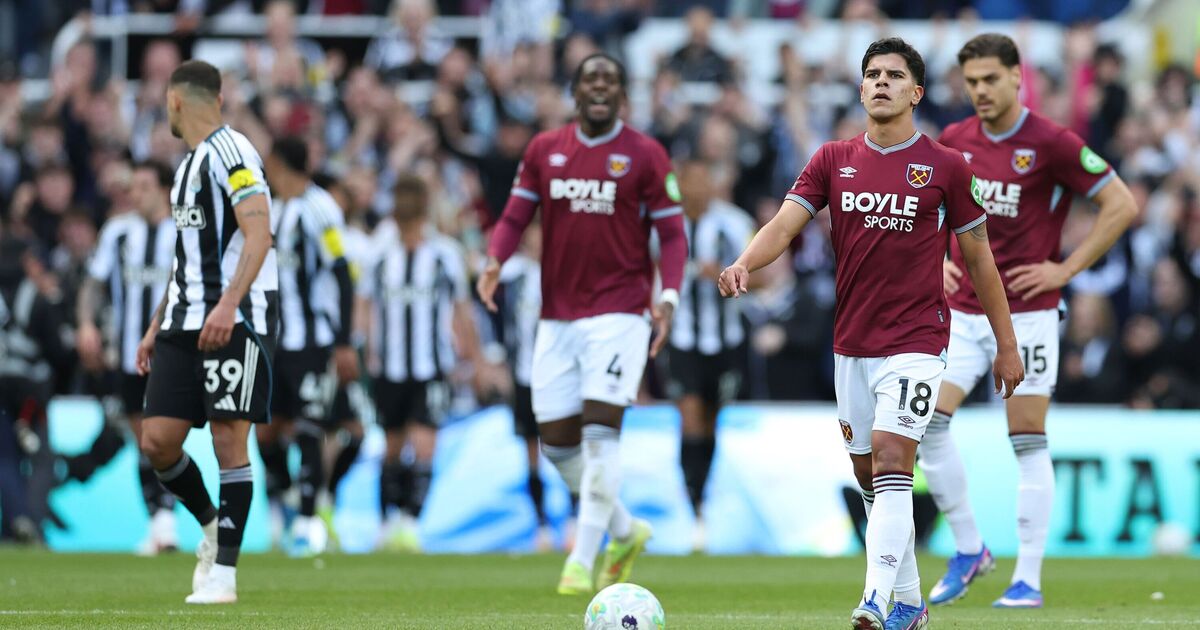
West Ham entered the fixture against Newcastle needing a positive performance to calm fears surrounding their league position. Instead, the Hammers were second best for long periods against an aggressive Newcastle side that looked sharper, fitter, and tactically more organised.
Newcastle dominated possession early and forced West Ham deep into their own half. The Magpies’ pressing caused repeated problems during the opening stages, particularly in midfield where West Ham struggled to play through pressure.
The key moments unfolded quickly:
Newcastle opened the scoring after exploiting space behind West Ham’s full-backs.
West Ham briefly responded with an equaliser that gave travelling fans hope.
Defensive lapses and poor transitional defending then allowed Newcastle to regain full control.
A late third goal effectively ended the contest and increased frustration among supporters.
Statistically, the performance highlighted several ongoing concerns:
West Ham faced significantly more shots on target.
Newcastle completed more progressive passes into dangerous areas.
The Hammers once again struggled defensively from quick transitions.
The midfield failed to consistently shield the back line.
These are not isolated issues. Throughout the campaign, West Ham have looked vulnerable when opponents increase tempo and press aggressively. Injuries, inconsistent form, and tactical uncertainty have all contributed to the club’s slide toward the lower end of the table.
Why the Board Is Considering Financial Safeguards
Relegation from the Premier League brings enormous financial consequences. Broadcast revenue drops sharply, commercial deals are often renegotiated, and clubs frequently face difficult decisions regarding wages and transfers.
Many Premier League contracts now include relegation clauses designed to reduce salaries if a club drops into the Championship. These clauses are not unusual in modern football, especially for clubs outside the traditional top six.
However, the timing of these discussions has angered sections of the fanbase.
Supporters expected a response after the Newcastle defeat, but many believe public focus should remain on improving performances rather than discussing salary reductions. Others argue the board is simply preparing responsibly for a worst-case scenario.
The financial reality is difficult to ignore. West Ham invested heavily over recent seasons, particularly after their European success and strong league campaigns under former manager David Moyes. Large contracts were handed to senior players with expectations that the club would continue competing in the top half of the Premier League.
Instead, inconsistency has left them in a dangerous position.
Tactical Problems Continue to Hurt West Ham
The biggest concern for many analysts is that West Ham’s problems no longer appear temporary.
Earlier in the season, poor form was partly explained by injuries and fixture congestion. But the Newcastle match once again exposed recurring structural weaknesses.
Midfield Vulnerability
West Ham’s midfield balance remains a major issue. When possession is lost, opponents are often able to move through central areas too easily. Against Newcastle, runners repeatedly attacked the space between midfield and defence.
This has become a pattern against high-intensity teams.
The lack of compactness forces defenders into uncomfortable situations, particularly against pace. Newcastle exploited this relentlessly with direct vertical attacks.
Defensive Organisation
The Hammers also struggled with positional discipline.
Their defensive line frequently became stretched, especially after turnovers. Newcastle’s movement dragged defenders out of shape, creating channels for overlapping runners.
Several fans pointed out online that West Ham looked uncertain whether to sit deep or press higher up the pitch. That tactical confusion has appeared in multiple matches this season.
Lack of Creativity
Going forward, West Ham continue to rely heavily on moments rather than sustained attacking structure.
While individual quality exists in the squad, chance creation has often lacked rhythm. Too many attacks break down before reaching dangerous positions, increasing pressure on the defence to remain perfect for long periods.
Against Newcastle, the attacking players had moments of promise, but sustained pressure was rare.
Fans React With Anger and Concern
The reaction from West Ham supporters has been intense.
Across social media platforms and fan forums, many supporters questioned why discussions about wage reductions emerged so quickly after such an important defeat.
Some fans argued the board’s stance sends the wrong message at a crucial stage of the season.
Others, however, believe the players should accept accountability given the team’s league position and inconsistent performances.
Typical reactions included:
Concerns about dressing-room morale.
Questions regarding recruitment strategy.
Criticism of defensive organisation.
Frustration over repeated tactical mistakes.
Fear that negativity around the club could worsen performances further.
Among Nigerian fans following the Premier League, the situation has also generated significant debate.
West Ham have built a sizeable following in Nigeria over the years thanks to the Premier League’s popularity and the club’s history of entertaining football. Nigerian supporters watching the Newcastle defeat expressed frustration at the team’s lack of aggression and organisation.
Many compared West Ham’s current struggles with other Premier League clubs who survived relegation battles by remaining tactically disciplined and emotionally united during difficult periods.
For some Nigerian fans, the board’s reported wage-cut stance reflects broader concerns about instability inside football clubs when results decline.
Historical Context Makes Situation More Painful
Part of the frustration comes from how dramatically expectations have shifted.
Only a short time ago, West Ham were celebrating European success and competing strongly against established Premier League sides. Their UEFA Europa Conference League triumph represented one of the club’s biggest achievements in decades.
Supporters believed that victory would mark the beginning of long-term progress.
Instead, the club now faces uncertainty.
Recruitment has produced mixed results, squad depth has been questioned, and the overall identity of the team appears less clear than during their strongest periods under Moyes.
Historically, West Ham supporters value organisation, intensity, and commitment as much as results themselves. Fans can accept difficult seasons if performances show fight and direction.
What worries many supporters currently is the feeling that confidence inside the squad is fading.
The Pressure on the Manager and Senior Players
The manager now faces enormous pressure heading into the final stages of the campaign.
Every tactical decision will come under scrutiny, particularly regarding:
Defensive shape
Midfield selection
Pressing intensity
In-game adjustments
Player motivation
Senior players are also expected to respond.
Experienced figures within the dressing room must now help stabilise performances and prevent panic from spreading further. Relegation battles often depend as much on mentality as tactical quality.
Clubs that survive difficult situations usually show resilience, discipline, and unity during the final weeks of the season.
West Ham currently look fragile in all three areas.
What Happens Next?
The immediate challenge is psychological.
Another poor result could deepen fears among supporters and increase pressure around the dressing room. But football seasons can still change quickly, particularly in relegation battles where momentum shifts rapidly.
West Ham’s squad still contains enough quality to avoid relegation if performances improve.
Key priorities moving forward include:
Restoring defensive organisation.
Reducing individual errors.
Improving midfield compactness.
Managing pressure from outside noise.
Rebuilding confidence among supporters.
The board’s reported financial preparations may simply reflect responsible planning rather than immediate panic. Yet in football, perception matters enormously.
Right now, many fans see the wage-cut discussions as evidence that belief around the club is weakening.
That perception can become dangerous if results do not improve quickly.
For West Ham, the coming weeks may define not only their Premier League future but also the long-term direction of the club after years spent trying to establish themselves among England’s most competitive sides.
The Newcastle defeat was painful enough on its own. The conversation that followed may prove even more significant.






Post Comment