FA EXPLAINS WHY ANDRÉ ESCAPED RED CARD VS TOTTENHAM — BUT VAR STORM GROWS AS BISSOUUMA INCIDENT DIVIDES FOOTBALL
Another VAR Storm Engulfs the Premier League
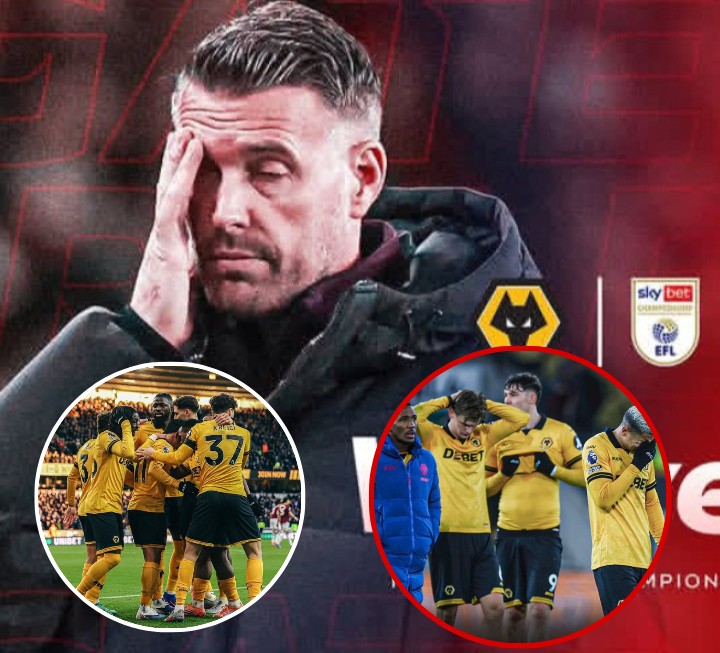
Controversy has once again taken centre stage in the Premier League—and this time, it involves a flashpoint moment between Tottenham Hotspur and Wolverhampton Wanderers.
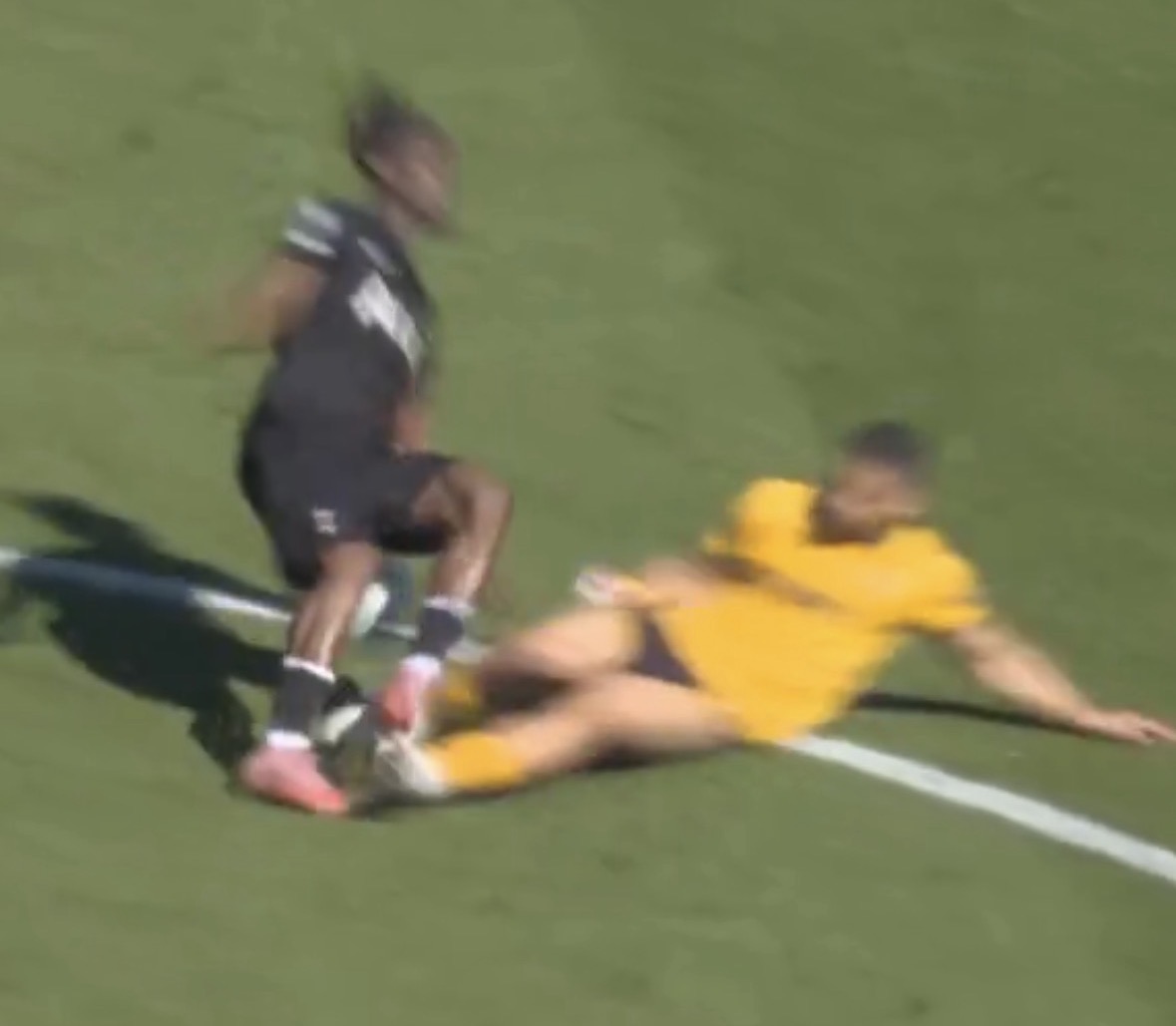
A reckless challenge by Wolves midfielder André on Spurs’ Yves Bissouma has sparked outrage after the referee chose to issue only a yellow card—despite widespread calls for a red.
Now, the Football Association and officiating bodies have provided an explanation for the decision.
But instead of calming tensions, it has ignited even more anger—especially among Tottenham fans already frustrated by a season filled with controversial calls.
The Incident: What Happened on the Pitch?
The moment occurred just before half-time in a tense relegation battle clash at Molineux.
André launched into a forceful challenge on Bissouma:
- Both feet were involved
- The tackle came in aggressively
- Contact was made at speed
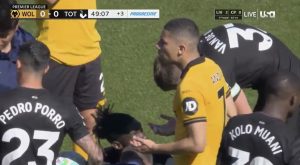
- Bissouma was left shaken
From the stands and on television, it looked dangerous—arguably the definition of what many fans consider a “red card tackle.”
Even live reports noted that the challenge “perhaps deserved a red card”, highlighting how serious it appeared in real time .
Yet, the referee reached for a yellow card.
VAR checked the incident—and did not upgrade it.
The Official Explanation: Why It Was NOT a Red Card
According to interpretations aligned with IFAB’s Laws of the Game, the decision was based on three key factors:
1.
Contact with the Ball
Officials judged that André made contact with the ball during the challenge.
This is crucial because:
- Winning the ball doesn’t automatically excuse a foul
- But it does influence whether a tackle is considered “serious foul play”
2.
Lack of “Excessive Force”
For a red card to be given, a challenge must:
- Endanger an opponent’s safety
- Use excessive force
Officials reportedly determined that:
- The force was reckless, not excessive
- Therefore, it met the threshold for a yellow card—not red
3.
Context of the Challenge
One of the biggest factors:
- Bissouma was already moving into the challenge
- There was a slight coming-together rather than a full, clean impact
This reduced the perceived severity of the tackle.
Breaking Down the Law: Reckless vs Serious Foul Play
This is where most fans get confused.
Under IFAB rules:
- Careless tackle → No card
- Reckless tackle → Yellow card
- Excessive force / dangerous tackle → Red card
Officials placed André’s challenge in the middle category: reckless.
Interestingly, even some referee-level analysis supports this interpretation, arguing:
The tackle was late and unsafe but lacked the intensity required for a red card.
That’s the technical reasoning.
But football isn’t played in slow motion—and that’s where the controversy begins.
Why Fans Are Furious
Despite the explanation, the reaction has been explosive.
1.
“Two-Footed = Red” Mentality
For many fans:
- Any two-footed challenge is automatically a red card
Seeing André avoid dismissal has been seen as inconsistent.
2.
Visual Impact vs Technical Interpretation
In real-time:
- The tackle looked dangerous
- Bissouma was at risk
- The crowd reacted instantly
But VAR slows everything down—often changing how incidents are judged.
That disconnect fuels frustration.
3.
Consistency Concerns
Fans point to similar tackles this season that:
- Were given as red cards
- Or upgraded by VAR
This raises a familiar question:
Why is the same type of challenge judged differently?
Tottenham Fans: “We’re Being Targeted”
Among Spurs supporters, the anger goes deeper than this single incident.
The narrative growing within the fanbase is clear:
- Decisions keep going against them
- Rival teams benefit at key moments
- The relegation battle is being shaped by officiating
Online reactions reflect this frustration:
“Every week we get done by referees.”
“That’s a red card all day.”
Some fans have even gone as far as suggesting bias—though there is no evidence to support that claim.
Still, perception matters in football.
And right now, Spurs fans feel hard done by.
Match Context: Why This Decision Matters
This wasn’t just a random mid-table game.
It was a relegation battle.
According to match reports:
- Tottenham won 1–0 thanks to a late goal
- But they remain in the bottom three
- The gap to safety is still extremely tight
Now imagine this:
- If André had been sent off
- Wolves would have played with 10 men
- Tottenham could have dominated earlier
That single decision could have changed the entire flow of the match.
Tactical Analysis: What the Challenge Tells Us
1. High-Intensity Midfield Battles
Bissouma operates in tight spaces where:
- Split-second decisions matter
- Physical duels are constant
André’s tackle reflects the risk-reward nature of midfield defending.
2. Timing Is Everything
The difference between:
- A perfect tackle
- A booking
- A red card
…often comes down to milliseconds.
3. VAR’s Influence on Defensive Behaviour
Defenders now:
- Take fewer risks in obvious situations
- But still gamble in fast-paced duels
This creates inconsistent outcomes.
The VAR Problem: “Clear and Obvious” Strikes Again
The key reason VAR didn’t intervene:
👉 It wasn’t considered a “clear and obvious error.”
That phrase has become one of the most controversial in football.
Because:
- A tackle can look like a red
- But still not be “clear enough” to overturn
This creates a system where:
- The referee’s original decision becomes crucial
- VAR often supports, rather than corrects
UK vs Nigerian Fan Reaction
🇬🇧 UK Reaction
- Split opinions among pundits
- Heated debates on TV
- Calls for more consistency
🇳🇬 Nigerian Reaction
For Nigerian Spurs fans, the reaction has been more emotional:
- Strong frustration with refereeing
- Deep concern about relegation
- Social media filled with anger and memes
Football in Nigeria isn’t passive—it’s deeply felt.
And decisions like this hit hard.
Psychological Impact on Tottenham
This is where things get serious.
Repeated controversial decisions can:
- Affect player confidence
- Increase frustration on the pitch
- Create a “victim mentality”
In a relegation battle, that can be dangerous.
Instead of focusing on performance, players may:
- Argue with officials
- Lose concentration
- Make poor decisions
Was It the Right Decision?
Let’s be honest.
There are two truths here:
✔️ From a rulebook perspective:
- Yellow card is defensible
- Not clearly excessive force
- Contact with ball matters
❌ From a football perspective:
- It looked dangerous
- Could easily have been a red
- Many referees would have sent him off
That’s the grey area VAR struggles with.
Bigger Problem: Trust in Officiating Is Falling
This isn’t just about one tackle.
It’s about a growing issue:
- Fans don’t trust VAR
- Players don’t understand decisions
- Managers feel inconsistent treatment
Even historically, clubs—including Wolves themselves—have criticised VAR for damaging the game’s credibility
Now the same controversy is hitting them from the other side.
What Happens Next?
Incidents like this usually lead to:
- Refereeing reviews
- Internal assessments
- Possible “acknowledgement” of errors
But rarely:
- Public apologies
- Rule changes mid-season
So don’t expect this to be the last controversy.
Conclusion: Another Decision That Divides Football
The FA’s explanation is clear:
👉 It was reckless—but not serious foul play.
👉 Therefore, yellow card—not red.
But football is not just about rules.
It’s about:
- Emotion
- Fairness
- Consistency
To many fans—especially Tottenham supporters—this decision fails all three.
And as the relegation battle heats up, moments like this don’t just cause debate…
They can define an entire season.







Post Comment