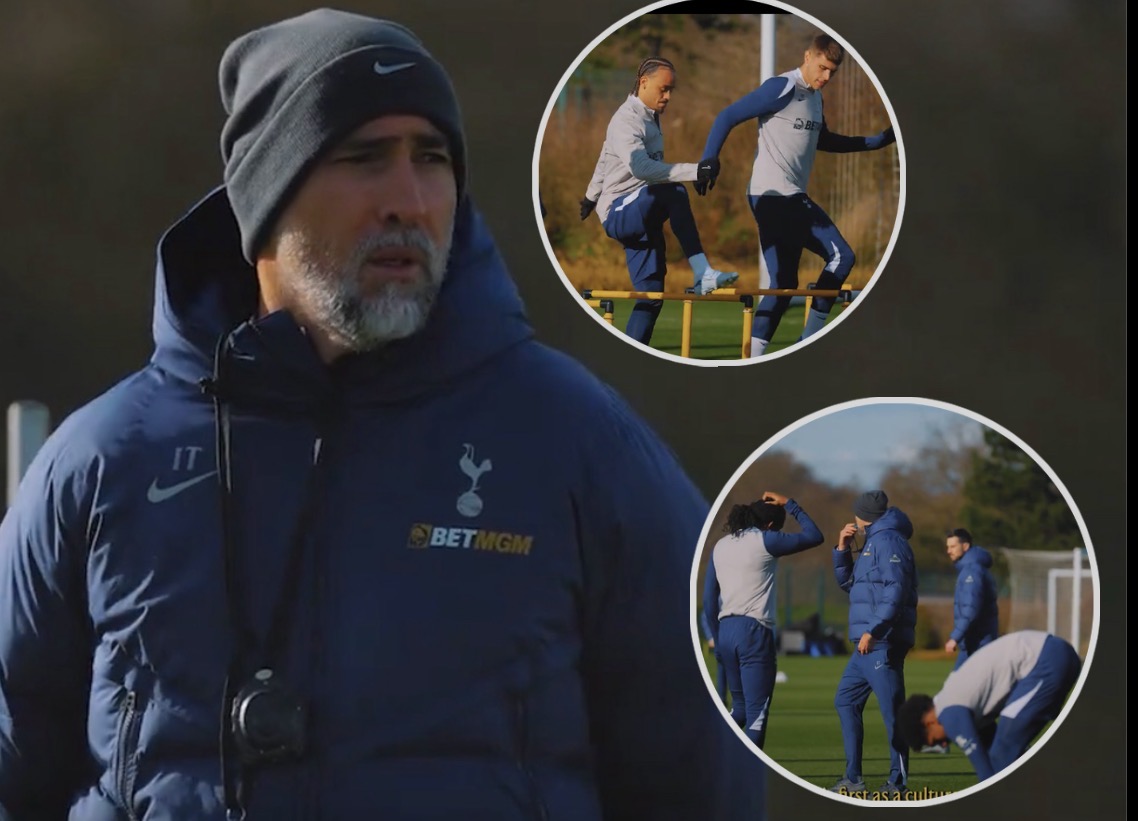
SIX THINGS WE NOTICED FROM IGOR TUDOR FIRST TOTTENHAM TRAINING SESSION INCLUDING SHOCK POSITION CHANGE
Views: 470
When a new manager walks through the doors of a football club, everything changes. The mood. The tempo. The expectations. And when that manager is as intense and uncompromising as Igor Tudor, you can guarantee the first training session won’t be a gentle introduction.
At Tottenham Hotspur, the Croatian wasted absolutely no time in making his presence felt. There were no smiles for the cameras, no long speeches about “process” or “transition.” Instead, what unfolded at Hotspur Way was a clear statement: this is a new era, and nobody’s place is safe.
Here are SIX things we noticed from Tudor’s explosive first Tottenham training session — including one shock positional switch that has already sent fans into meltdown.
1. The Intensity Was Brutal From Minute One
Players arrived expecting a typical first-day reset — light rondos, stretching, tactical walkthroughs.
They got a war instead.
Tudor is known for his high-energy, physically demanding sessions during his spells at Hellas Verona and Marseille, but even senior Spurs players looked stunned by the tempo.
Training reportedly began with aggressive pressing drills that forced defenders to play under suffocating pressure. Every misplaced pass was punished with sprints. Every lapse in concentration was called out instantly.
One insider described it as “pre-season levels of intensity in February.”
This wasn’t about easing into new ideas. This was about shock therapy.
Tudor clearly believes Tottenham’s biggest issue hasn’t been talent — it’s mentality. And he’s determined to rip that problem out at the root.
2. The Back Three System Is Back — And It’s Non-Negotiable
If there was any doubt about Tudor’s tactical blueprint, it vanished within minutes.
The Croatian immediately set up a three-at-the-back system — a structure he has trusted throughout his managerial career. The formation looked fluid but aggressive, with wing-backs pushed extremely high and central defenders instructed to step into midfield when possible.
This is a major departure from Tottenham’s recent shape. Under previous regimes, Spurs often oscillated between a back four and hybrid systems. Tudor appears to want clarity and commitment.
What stood out most was how often the outside centre-backs were encouraged to carry the ball forward. This wasn’t passive defending — this was proactive, front-foot football.
Fans who watched open training clips quickly noticed how compact the team looked defensively while still maintaining vertical attacking options.
It’s bold. It’s risky. And it’s very Tudor.
3. The SHOCK Position Change Nobody Saw Coming
Now for the moment that truly stunned observers.
One of Tottenham’s most established wide attackers — known for pace and directness — was deployed as a wing-back.
Yes, a wing-back.
Instead of operating high up the pitch as a traditional winger, he was tasked with tracking runners, making recovery sprints, and starting build-up play from deeper zones.
At first, it looked like experimentation. But as drills continued, it became clear this wasn’t temporary.
Tudor was vocal in instructing him on defensive positioning, body shape when receiving under pressure, and timing overlapping runs.
The logic? Simple.
In Tudor’s system, wing-backs are not defenders — they are transitional weapons. They stretch the pitch offensively while suffocating opponents defensively.
If this change sticks, it could completely redefine the player’s role — and potentially extend his longevity by adding tactical versatility.
But it also raises questions.
Will he adapt defensively?
Will this blunt his attacking threat?
Or could it unlock an entirely new dimension to Tottenham’s play?
One thing is certain: Tudor isn’t afraid to gamble.
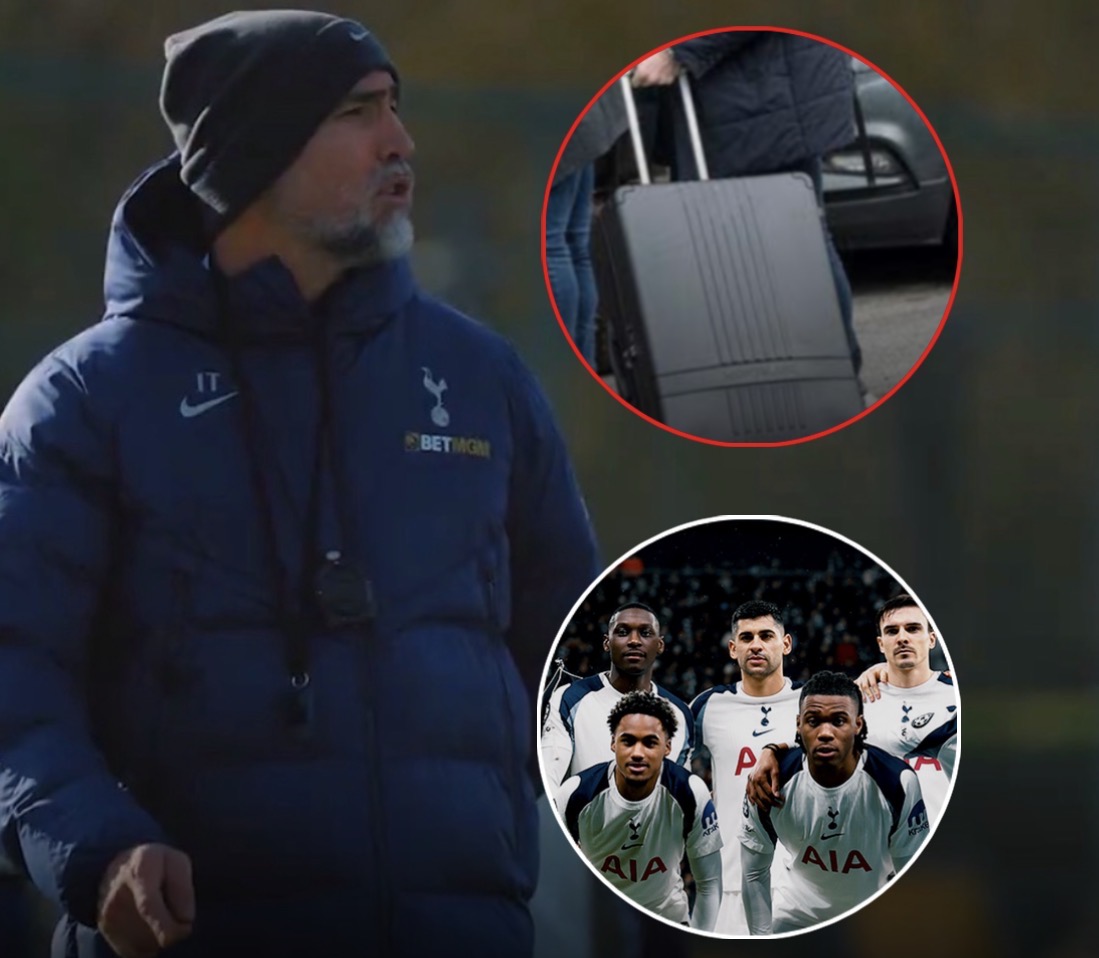
4. Two Senior Players Barely Featured
Another eye-catching development was the limited involvement of two experienced squad members.
While most of the team rotated through tactical drills, these two were often separated for individual work with fitness coaches.
Was it injury management? Tactical exclusion? Or an early sign they may not fit Tudor’s plans?
Given the Croatian’s reputation for decisiveness, it wouldn’t be surprising if he has already identified players he believes don’t match his intensity requirements.
During his time at Marseille, he made bold decisions to phase out certain high-profile names who didn’t align with his pressing philosophy.
At Tottenham, he appears ready to do the same.
Message sent: reputation means nothing now.
5. Communication Was Direct — And Loud
Unlike some managers who prefer quiet observation early on, Tudor was constantly vocal.
He stopped drills repeatedly to reposition players. He demanded quicker ball circulation. He insisted on vertical passes rather than safe sideways options.
At one point, he gathered the squad mid-session and gestured passionately about defensive spacing — using cones to demonstrate distances between lines.
Players weren’t confused about expectations. They were crystal clear.
There’s a noticeable contrast in body language compared to previous weeks. The session felt urgent, almost confrontational — but in a competitive way.
Tudor doesn’t want comfort.
He wants edge.
6. The Fitness Bar Has Been Raised Dramatically
Perhaps the most revealing element of the session wasn’t tactical at all — it was physical.
Short-burst pressing drills were repeated relentlessly. Transition exercises demanded instant recovery runs. Small-sided games were played at blistering tempo.
By the end, several players were visibly exhausted.
That’s not accidental.
Tudor’s teams are built on physical dominance. At Verona, his side outran and outmuscled technically superior opponents. At Marseille, they became one of the most aggressive pressing units in France.
He’s clearly trying to recreate that identity in North London.
And if this first session is anything to go by, Tottenham will either become one of the fittest squads in the league — or they’ll struggle to survive the regime.
What This Means for Tottenham’s Season
This wasn’t a symbolic first day.
It was a warning.
Tudor is not here to maintain stability. He’s here to rebuild identity.
The shift to a committed back three suggests structural clarity. The positional gamble indicates tactical bravery. The physical demands reveal a desire to dominate transitions.
Most importantly, the atmosphere felt different.
There was urgency.
There was accountability.
There was pressure.
For a club that has often been accused of lacking edge in decisive moments, this could be exactly what’s needed.
But here’s the twist — Tudor’s methods are intense. Historically, his high-octane approach produces rapid improvements… but also friction if results don’t follow quickly.
If Tottenham respond positively, they could become one of the most unpredictable and dangerous sides in the league.
If they don’t, the intensity could backfire.
Early Fan Reactions: Divided But Intrigued
Clips from the session circulated rapidly online, and reactions were immediate.
Some fans loved the visible intensity. Others questioned the positional experiment. Many are simply curious to see how quickly the tactical changes translate into match performances.
One thing is undeniable: there’s excitement again.
After periods of tactical inconsistency and defensive fragility, supporters seem eager for a clear, uncompromising football identity.
And Tudor has certainly provided that.
Final Verdict: Statement Made
It’s only one training session.
But sometimes, that’s all you need to sense a shift.
From the brutal intensity to the shock positional tweak, from the committed back three to the reduced roles for certain veterans — Tudor’s Tottenham era has begun with clarity and confrontation.
No comfort zones.
No reputations protected.
No half-measures.
If this first day is any indication, Tottenham are about to undergo one of the boldest tactical transformations in recent memory.
The question now isn’t whether Igor Tudor will change Tottenham.
It’s whether Tottenham are ready for Igor Tudor.




Post Comment