Scottish Referees Ruled Out of 2026 World Cup Officiating as Reason Emerges — FIFA Releases Official Statement and Fans Left Stunned

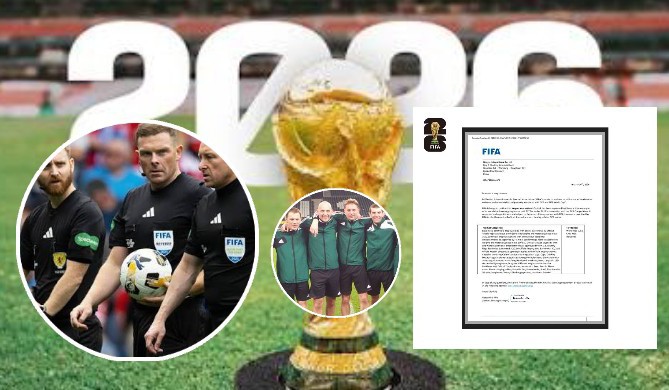
Scottish football has been left without representation among the match officials selected for the 2026 FIFA World Cup after FIFA officially confirmed its refereeing team for the tournament in the United States, Canada and Mexico. While Scotland’s national team continues to strive for success on the international stage, the country’s refereeing department has suffered a significant setback, with no Scottish referee, assistant referee or VAR official included in FIFA’s final appointments.
The announcement has sparked debate across Scottish football, with supporters questioning why a nation with such a rich footballing history has once again been overlooked for one of the sport’s biggest events.
FIFA confirms World Cup officiating team
FIFA announced that 52 referees, 88 assistant referees and 30 video match officials from 50 member associations will take charge of matches at the expanded 48-team World Cup. According to FIFA, the selection process was based on a “quality first” principle, with officials monitored over a three-year period across domestic leagues, continental competitions and FIFA tournaments.
FIFA Referees Committee chairman Pierluigi Collina stated that the selected officials were chosen because they consistently performed at the highest level and successfully completed FIFA’s extensive preparation programme.
Notably, England received strong representation with experienced officials including Michael Oliver and Anthony Taylor among those selected. However, there was no place for any Scottish official on the final list.
Why were Scottish referees not selected?
The key reason appears to be Scotland’s lack of referees regularly handling the biggest UEFA fixtures.
FIFA places significant emphasis on performances in elite international competitions such as:
UEFA Champions League knockout matches
UEFA European Championship fixtures
FIFA tournaments
Major international qualifiers
While Scottish officials have worked domestic Premiership matches and some UEFA fixtures, none have consistently operated at the very highest European level in recent years.
Several referees, including Nick Walsh, have made progress within UEFA’s officiating structure, but they have not yet established the same international profile as officials from England, France, Germany, Poland, Spain or Italy.
Football analysts also point to the increasingly competitive nature of FIFA selections. With only a limited number of UEFA spots available, referees must demonstrate excellence over several years while regularly controlling high-pressure European fixtures.
A timeline of Scotland’s refereeing decline on the international stage
For many supporters, the omission reflects a wider issue that has developed over the past decade.
Key moments
Early 2000s: Scottish officials remained respected figures within European football.
2002 World Cup: Scotland still maintained a presence through senior officiating appointments.
2010s: Fewer Scottish referees became regular appointments for major UEFA competitions.
2020s: UEFA Elite Category appointments became increasingly difficult to secure.
2026 World Cup: No Scottish referee, assistant referee or VAR official selected.
The contrast with previous generations is striking. Scottish officials once enjoyed strong reputations across Europe, regularly appearing in major continental competitions and international tournaments.
What this means tactically for Scottish football
Although the story may appear to concern only referees, it highlights broader structural questions within Scottish football.
Elite referees generally emerge from environments that expose them to high-level football on a consistent basis. In many countries, officials benefit from:
Frequent Champions League appointments
Strong domestic development programmes
Advanced VAR training
Greater international exposure
Scotland’s domestic game remains passionate and competitive, but its referees face intense scrutiny every week. The introduction of VAR has increased pressure further, with controversial decisions becoming major talking points across Scottish football.
Many observers believe Scotland must invest more heavily in referee development if it wishes to produce officials capable of competing for future World Cup appointments.
The Scottish FA has already implemented several development programmes, but the latest FIFA announcement suggests there is still work to be done.
Fan reaction across Scotland
Reaction from supporters has been mixed.
Some fans expressed disappointment, arguing that Scotland should have at least one representative at football’s biggest tournament.
Others were less surprised.
Across social media, many supporters pointed to recurring controversies in the Scottish Premiership and questioned whether current officiating standards justify World Cup selection.
Comments ranged from frustration over perceived inconsistency in domestic matches to concerns that Scottish referees are not receiving enough opportunities to progress within UEFA competitions.
The debate quickly became one of the most discussed refereeing topics among Scottish football supporters following FIFA’s announcement.
Nigerian supporters weigh in
The news has also attracted attention among Nigerian football fans, particularly those who closely follow Scottish football because of the growing number of African players who have featured in the league over the years.
Many Nigerian supporters view Scotland as an important pathway for African talent seeking opportunities in European football.
From that perspective, some fans believe stronger refereeing standards would benefit the league’s international reputation and help attract more talent from Africa.
Others noted that modern football increasingly demands elite referees who can manage high-intensity matches involving advanced tactical systems, VAR interventions and intense media scrutiny.
As a result, many observers see the omission as a challenge rather than an embarrassment—one that Scottish football must address over the coming years.
Broader implications for the future
The absence of Scottish officials from the 2026 World Cup raises important questions for the future.
Among them:
Can Scotland develop referees capable of reaching UEFA’s highest category?
Will increased investment in officiating improve international prospects?
Can younger referees build the experience required for future FIFA tournaments?
Will domestic reforms help improve perceptions of Scottish officiating?
There is still reason for optimism.
Several emerging officials continue to climb UEFA’s development pathway, and the next major opportunities will come at future European Championships and FIFA tournaments.
Given the long-term nature of FIFA’s selection process, preparations for the next World Cup cycle have effectively already begun.
Looking ahead
While Scotland’s absence from the 2026 World Cup officiating team has disappointed many supporters, FIFA’s decision appears to reflect the organisation’s emphasis on international experience and consistent elite-level performance rather than nationality.
The challenge for Scottish football is now clear. Producing World Cup-calibre referees requires sustained development, regular exposure to major European competitions and long-term investment in officiating standards.
If Scotland can address those areas over the coming years, there is every chance that future FIFA tournaments could once again feature Scottish officials on football’s biggest stage.
For now, however, Scottish referees will be watching from afar as the world’s finest officials take charge of the most ambitious World Cup in history.