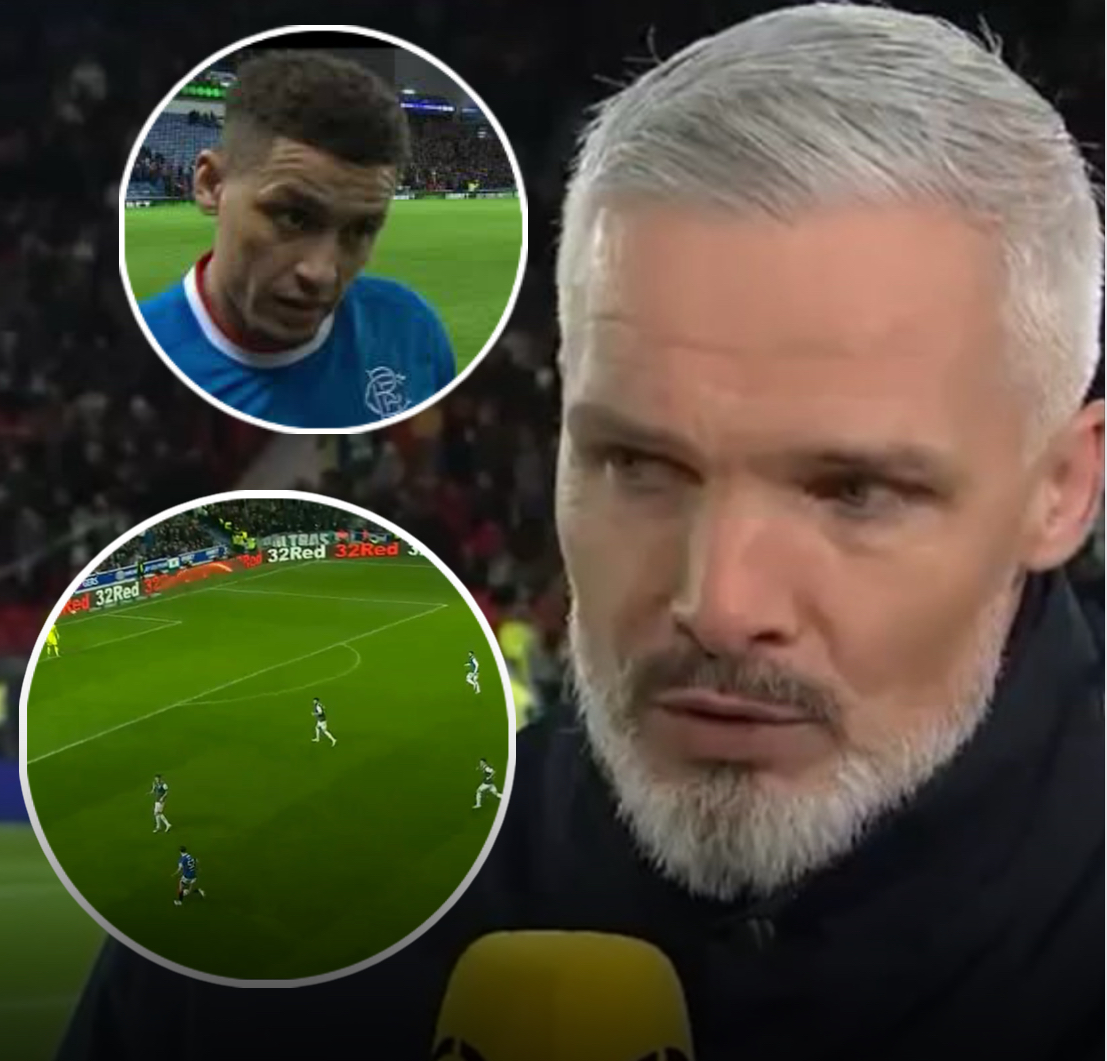
MICHAEL GRAY MIGHT HAVE MADE HIMSELF A PERMANENT ENEMY OF THE ENTIRE RANGER FANBASE WITH JAMES TAVERNIER ANALYSIS
Rangers’ hard-fought 1–0 victory over Hibernian should have been remembered as a professional, gritty night’s work. Three points secured, pressure eased, and a clean sheet banked. Instead, within minutes of the final whistle, the post-match conversation exploded in a completely different direction. Not because of a controversial refereeing call. Not because of a red card. Not even because of a missed sitter.
The real drama came from the studio.
Michael Gray’s post-match analysis of James Tavernier landed like a grenade in the middle of the Rangers support, detonating outrage across social media and phone-ins. What was framed as “honest assessment” by the pundit was interpreted by many Rangers fans as disrespectful, agenda-driven, and deliberately provocative — especially on a night when the captain had just led his side to victory.
By the end of the evening, it felt as though Gray hadn’t merely criticised a performance. In the eyes of many supporters, he had crossed an invisible line — and potentially made himself a permanent enemy of the entire Rangers fanbase.
A WIN THAT SHOULD HAVE CALMED NERVES
Let’s start with the football itself.
Rangers came into the Hibernian clash under pressure. Recent performances had been scrutinised heavily, the title race was unforgiving, and patience among supporters was thinning. This was not a night for style points — it was about control, resilience, and winning ugly if necessary.
That’s exactly what Rangers did.
The 1–0 scoreline may not have dazzled, but it told a story of discipline and game management. Hibs were limited, Rangers stayed compact, and when it mattered most, they held firm. James Tavernier, wearing the armband, embodied that approach: vocal, positionally aware, and defensively switched on.
Was it a flawless performance? No. But it was effective — and in moments like this, effectiveness is everything.
Which is precisely why the backlash to Gray’s analysis was so fierce.
MICHAEL GRAY’S COMMENTS: ANALYSIS OR AGENDA?
In the post-match breakdown, Gray turned the spotlight firmly onto Tavernier. Rather than focusing on the result or the collective defensive effort, the analysis zeroed in on perceived positional issues, moments where Tavernier allegedly left space behind him, and broader questions about his suitability as captain in high-pressure games.
On paper, that sounds like standard punditry.
In reality, context matters — and Rangers fans felt that context was completely ignored.
This was not a match where Tavernier cost his side. This was not a game defined by defensive chaos on his flank. This was a narrow victory built on structure and leadership. To many watching, singling out the captain on a winning night felt unnecessary at best — and deliberately inflammatory at worst.
Almost immediately, the reaction online told its own story.
“WHY ALWAYS TAVERNIER?” — FAN FRUSTRATION BOILS OVER
Within minutes, Rangers supporters flooded social media with the same question: Why is it always Tavernier?
The sense of grievance wasn’t just about one analysis. It was about a pattern — or at least what fans perceive as one. Tavernier, despite years of consistency, goals, assists, and leadership, is often placed under a harsher microscope than others. And when criticism arrives after a win, it hits even harder.
For many supporters, Gray’s comments weren’t balanced analysis. They were a rehash of old talking points, rolled out regardless of result.
Some fans accused the pundit of:
- Ignoring the clean sheet
- Downplaying Tavernier’s leadership
- Applying standards not used for other players
- Seizing a moment to provoke reaction rather than inform debate
Whether those accusations are fair or not, perception is everything — and the perception was damning.
THE CAPTAINCY QUESTION — A SENSITIVE SUBJECT
Nothing inflames a fanbase faster than questioning a captain’s role.
James Tavernier isn’t just any player. He’s a long-serving leader, a symbol of continuity, and one of the most productive right-backs in modern Scottish football history. Challenging his defensive positioning is one thing. Raising implicit doubts about his influence or authority is another entirely.
Gray’s analysis strayed into that dangerous territory.
Even subtle suggestions that Rangers might be vulnerable because of how Tavernier plays are enough to ignite fury — especially when the team has just won. For supporters, it felt like a critique detached from reality, ignoring the wider tactical setup and focusing obsessively on one individual.
PUNDITRY VS PASSION: WHEN ANALYSIS MISSES THE MOOD
There’s a golden rule in football media: timing matters.
Criticise after a defeat, and fans might listen. Do it after a win — particularly a tense, pressure-relieving one — and you risk sounding out of touch with the emotional state of the supporters.
That’s where Gray’s comments truly misfired.
Rangers fans weren’t claiming Tavernier had a perfect game. They weren’t pretending defensive issues don’t exist. But they wanted recognition of the result, the resilience, and the leadership that got the team over the line.
Instead, what they heard felt like nitpicking — analysis stripped of empathy.
FROM STUDIO TO STORM: THE ONLINE REACTION
By late evening, the backlash had reached full intensity.
Calls for broadcasters to “stop inviting” Gray. Accusations of bias. Compilations of Tavernier’s stats being shared as counter-arguments. Even former players and media figures subtly pushing back on the narrative.
Crucially, this wasn’t a fringe reaction. It spread across platforms, uniting fans who often disagree on everything else.
When that happens, it signals something deeper than simple disagreement — it signals a breakdown in trust.
DID MICHAEL GRAY BURN A BRIDGE?
The question now is unavoidable: has Michael Gray damaged his relationship with the Rangers support beyond repair?
Pundits don’t need to be liked. But they do need to be respected. Once fans believe an analyst approaches games with a predetermined conclusion, every future comment is filtered through suspicion.
From this point on, any criticism Gray offers about Rangers — fair or unfair — will be met with hostility. The benefit of the doubt is gone.
And that’s the real consequence of nights like this.
THE BIGGER PICTURE: WHAT THIS SAYS ABOUT MODERN FOOTBALL DEBATE
This incident isn’t just about one pundit or one player. It’s about the growing disconnect between studio analysis and fan experience.
Supporters invest emotionally. They ride the tension of matches, celebrate narrow wins, and cling to momentum. When punditry ignores that emotional context, it can feel cold, dismissive, even antagonistic.
Michael Gray may believe he delivered honest analysis. Rangers fans believe he ignored the reality of the night.
Both can be true — but only one side controls the narrative online.
FINAL THOUGHTS: A NIGHT THAT SHOULDN’T HAVE BEEN ABOUT THIS
Rangers beat Hibernian. That should have been the story.
Instead, the focus shifted to a studio debate that overshadowed the football and inflamed an already intense fanbase. James Tavernier walked off as a winning captain. Michael Gray walked into a storm of criticism that may follow him for a long time.
In Scottish football, words matter almost as much as results. And on this night, a few minutes of analysis may have done more damage than ninety minutes of football ever could.
One thing is certain: the next time Michael Gray analyses a Rangers match, every word will be watched, dissected, and judged — not just on accuracy, but on intent.
And that is the mark of a bridge set dangerously close to burning.



Post Comment