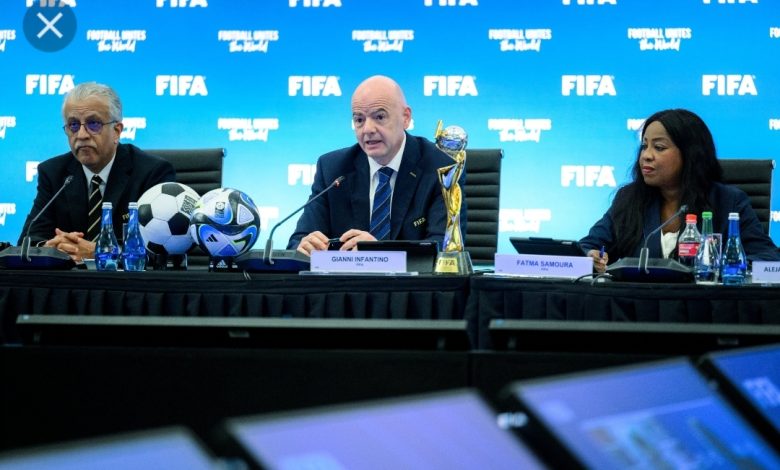
POSSIBLE CANDIDATES WHO COULD REPLACE THE FIFA PRESIDENT IF LEADERSHIP PRESSURES CONTINUE TO GROW
The leadership of world football is one of the most influential positions in global sport. The president of FIFA oversees the organization responsible for governing football across every continent, managing major international tournaments, distributing development funds, and setting policies that affect millions of players and billions of fans worldwide.
Whenever allegations, controversies, or governance concerns emerge around football’s top leadership, discussions naturally begin about who could potentially take over should a change become necessary. While no official succession process is currently underway, football observers often speculate about which experienced administrators could be considered capable of leading FIFA into a new era.
The role requires much more than a passion for football. A FIFA president must possess political skill, diplomatic experience, administrative expertise, and the ability to unite vastly different football cultures under a common vision. It is therefore unsurprising that potential candidates are usually drawn from football confederations, national associations, or major sporting organizations.
Why Leadership Succession Matters
FIFA is responsible for organizing the world’s biggest sporting event, the FIFA World Cup. Beyond that, the organization manages development programs, women’s football initiatives, youth competitions, refereeing standards, and governance reforms.
Because of the scale of FIFA’s influence, any discussion about leadership change attracts enormous attention. Investors, sponsors, broadcasters, football associations, clubs, players, and fans all have a stake in the stability of the organization.
Whenever allegations or controversies become headline news, stakeholders often begin asking whether fresh leadership could help restore confidence or introduce new reforms. This does not necessarily mean a leadership change will happen, but it explains why succession discussions frequently emerge.
The Qualities Required in a FIFA President
Before examining possible candidates, it is important to understand the qualities necessary for the role.
A successful FIFA president must be capable of:
* Managing relationships across six continental confederations.
* Balancing the interests of large and small football nations.
* Negotiating major commercial agreements.
* Protecting the integrity of competitions.
* Leading governance reforms when required.
* Promoting football development globally.
* Navigating political and legal challenges.
These responsibilities mean that former players alone are rarely considered enough for the position. Administrative experience is usually regarded as essential.
Potential Candidate 1: Aleksander Čeferin
One of the most frequently discussed names in global football administration is Aleksander Čeferin.
As president of UEFA, Čeferin has gained extensive experience managing one of football’s most powerful confederations. Under his leadership, UEFA has overseen major competitions including the Champions League and the European Championship.
Supporters argue that his experience dealing with elite clubs, national associations, broadcasters, and sponsors could make him a strong candidate for the FIFA presidency.
Critics, however, would likely question whether a UEFA leader could effectively represent the interests of smaller football nations outside Europe.
Potential Candidate 2: Patrice Motsepe
Another name often mentioned is Patrice Motsepe.
As the president of Confederation of African Football, Motsepe has worked to improve governance and financial stability within African football.
His business background and experience managing large organizations have earned him respect across many football circles. Supporters view him as someone capable of bringing a broader global perspective to FIFA leadership.
Given football’s continued growth throughout Africa, some observers believe a future FIFA president from the continent would symbolize the sport’s increasingly global character.
Potential Candidate 3: Victor Montagliani
Victor Montagliani is another administrator frequently mentioned in discussions about football leadership.
As head of CONCACAF, he has overseen football development across a diverse region that includes major football markets and smaller developing nations.
His supporters argue that he understands both commercial growth and grassroots development, a balance that could prove valuable at FIFA.
Potential Candidate 4: Sheikh Salman bin Ibrahim Al Khalifa
Salman bin Ibrahim Al Khalifa remains one of the most experienced figures in international football administration.
As president of the Asian Football Confederation, he has built strong relationships across Asia, currently the world’s largest football market by population.
His extensive administrative background and previous involvement in FIFA governance make him a name that frequently appears whenever future leadership discussions arise.
Potential Candidate 5: A Reform-Minded Outsider
History has shown that major sporting organizations occasionally turn toward reform candidates during periods of controversy.
Such candidates may emerge from national football associations, governance bodies, or other international sports organizations. Their appeal often comes from promises of transparency, accountability, and modernization.
If significant dissatisfaction were ever to develop within FIFA’s member associations, an outsider campaigning on reform could potentially gain substantial support.
The Challenges Facing Any Future Leader
Regardless of who eventually leads FIFA in the future, several major challenges will remain.
Expanding Global Competitions
International football continues to grow rapidly. Future leaders must balance expansion with maintaining competitive quality.
Financial Transparency
Calls for stronger governance and accountability are likely to remain central issues.
Women’s Football Growth
The development of women’s football represents one of the sport’s most significant opportunities.
Technology and Innovation
Video technology, artificial intelligence, fan engagement, and digital broadcasting continue to transform football administration.
Balancing Global Interests
Perhaps the most difficult challenge is satisfying the expectations of more than 200 member associations, each with different priorities and needs.
What Happens If Leadership Changes Occur?
If a FIFA president were ever to leave office before the end of a term, FIFA statutes provide mechanisms for interim leadership and subsequent elections.
Any new president would ultimately need support from FIFA’s member associations. This means that popularity among fans alone would not determine the outcome. Success would depend on building alliances across football’s global governing structure.
Conclusion
Speculation about future FIFA leadership is inevitable whenever discussions arise about allegations, governance concerns, or organizational challenges. Although no official succession process currently exists, several respected football administrators are often mentioned as potential future candidates.
Names such as Aleksander Čeferin, Patrice Motsepe, Victor Montagliani, and Salman bin Ibrahim Al Khalifa frequently appear in conversations about who might one day lead world football. Each brings different strengths, experiences, and visions for the future of the game.
Ultimately, any future FIFA president would inherit one of the most demanding roles in global sport. Success would require not only strong leadership but also the ability to unite football’s diverse international community while maintaining trust, transparency, and the continued growth of the world’s most popular game.