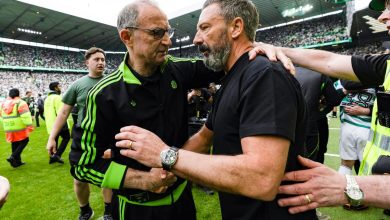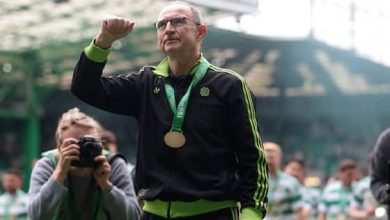
Martin O’Neill has emerged as a strong candidate for a return to the Premier League as uncertainty continues to surround his long-term future at Celtic.
The 74-year-old Northern Irishman initially stepped back into the Celtic dugout as interim manager in October, before committing to a further spell from January onwards. Under his guidance, the Scottish giants secured their 56th league title, rekindling the club’s proud traditions of domestic dominance and passionate support.
His return brought stability, tactical clarity, and a renewed sense of purpose to a squad that responded with impressive consistency throughout the campaign.
However, questions remain about whether O’Neill will remain in the Celtic Park technical area when the new season begins. The club is currently engaged in discussions with the veteran coach and his former player, Republic of Ireland legend Robbie Keane. Keane enjoyed a memorable loan spell at Celtic in 2010, scoring crucial goals and winning over fans with his clinical finishing and charismatic presence on the pitch.
There has been speculation that Keane could potentially step into a senior managerial role, with O’Neill transitioning into a director of football position. Such an arrangement would allow the experienced O’Neill to impart his vast knowledge of the game at boardroom level while giving Keane an opportunity to grow into top-level management with strong guidance close at hand. This kind of succession planning has become increasingly common in modern football, where clubs seek to blend youthful energy with seasoned wisdom.
O’Neill’s playing career concluded at Fulham, albeit in limited fashion. After a distinguished spell as a player, including winning the First Division title and two European Cups alongside the legendary Brian Clough at Nottingham Forest, he made just two reserve appearances for the London club before a persistent knee injury forced his retirement. That early connection to Fulham adds an intriguing layer to any potential links with the Cottagers, should they pursue him following the departure of their head coach.
Fulham recently confirmed that Marco Silva would be leaving after five successful years in charge. During his tenure, Silva transformed the club into a solid Premier League outfit known for organised defending, quick transitions, and an ability to punch above their weight against bigger-spending rivals. His exit creates an opportunity for fresh ideas at Craven Cottage, where the ownership has consistently shown ambition to establish the club as a competitive mid-table presence with occasional European aspirations.
O’Neill’s managerial journey is one of remarkable achievement across multiple levels of the game. He began in non-league football with Grantham Town in 1987, quickly demonstrating his ability to motivate players and implement effective systems. His next step came at Wycombe Wanderers, where he guided the club into the Football League for the first time in their history – a significant milestone that showcased his capacity to build success from limited resources.
At Leicester City, O’Neill truly announced himself on the bigger stage. He led the Foxes back to the top flight and delivered two League Cup triumphs, blending experienced campaigners with exciting young talents. His teams were noted for their work ethic, tactical discipline, and ability to perform under pressure in cup competitions. These successes paved the way for his move to Celtic in 2000, where he enjoyed his most glittering period as a manager.
During his first spell at Celtic, O’Neill secured three Scottish league titles and three Scottish Cups. He also guided the club to the 2003 UEFA Cup final, coming agonisingly close to European silverware in a memorable run that captured the imagination of fans across Scotland and beyond. His ability to foster a winning mentality in Glasgow’s intense football environment earned him legendary status among the Celtic faithful.
O’Neill later brought his expertise to the Premier League with Aston Villa, where he revitalised the club and steered them towards consistent top-six finishes. His tenure at Sunderland followed, providing valuable experience of managing in high-pressure situations at both ends of the table.
Throughout his career, O’Neill has been praised for his man-management skills, dry wit, and deep understanding of football psychology. Players often speak of his ability to inspire loyalty and extract maximum effort even in challenging circumstances.
After initially indicating that he would not continue beyond the summer, O’Neill’s position has softened in recent weeks. The emotional connection he has formed with the Celtic squad and supporters appears to have reignited his passion for the game.
Following the title triumph, he spoke warmly about the environment at Celtic Park, describing the unity between players, staff, and fans as something truly special.
“The players and coaching staff have given me a reason to live! That’s not to say my family haven’t! But this is the most special place on earth,” O’Neill reflected. “When there is unison in this stadium it is a sight to behold and obviously the players have been magnificent, optimised by the captain but we could not have won it without the supporters. I’m a bit part in proceedings.
The coaching staff have been magnificent, but you have to have a response to that. I just think the players see me every day and they think ‘he’s a terribly old man and what is he doing here!’”
These comments reveal a manager still deeply engaged with the day-to-day demands of the game despite his advancing years. O’Neill’s enthusiasm remains undimmed, and his tactical acumen continues to impress observers. In an era where football management often favours younger coaches versed in data analytics and modern pressing systems, O’Neill represents a more traditional yet highly effective approach rooted in motivation, organisation, and experience.
Should he decide to leave Celtic, a move to the Premier League would represent a fitting next chapter. The Fulham vacancy offers an attractive proposition: a well-run club with a clear identity, passionate fanbase, and resources to compete without the extreme financial pressures faced by some of the league’s bigger names. O’Neill’s history of stabilising clubs and exceeding expectations would align well with Fulham’s ambitions.
Beyond Fulham, other Premier League opportunities could arise as the managerial merry-go-round continues. Several clubs may seek a safe pair of hands capable of immediate impact rather than long-term rebuilding projects. O’Neill’s track record suggests he could deliver results quickly while developing players and fostering a positive dressing-room atmosphere.
His broader contributions to football extend beyond results on the pitch. As a former Northern Ireland international, O’Neill has always carried himself with dignity and intelligence. His media appearances are insightful, often blending humour with sharp analysis. Younger managers frequently cite him as an influence, appreciating his ability to adapt while staying true to core principles of hard work and team cohesion.
The coming weeks will be crucial in determining O’Neill’s path. Celtic will want clarity as they prepare for European competitions and the challenge of retaining their domestic crown. If he does depart, the club will look to ensure a smooth transition, potentially leveraging Keane’s deep connection to the supporters and his proven goal-scoring pedigree from his playing days.
For O’Neill personally, the decision involves balancing family considerations with his enduring love for management.
Football has been his life for decades, and the competitive fire still burns brightly. Whether he remains at Celtic to build on recent success or embarks on a new Premier League adventure, his legacy as one of British football’s most respected figures remains secure.
Throughout his career, O’Neill has demonstrated resilience in the face of setbacks, including injuries during his playing days and the inevitable challenges of management. His three major trophies at Leicester, dominant reign at Celtic, and steadying influence at Aston Villa paint a picture of a manager who thrives when given time and trust. In today’s fast-paced football landscape, such qualities are increasingly valuable.
As speculation intensifies, fans of both Celtic and potential Premier League suitors will watch developments closely. O’Neill’s experience navigating intense rivalries, European nights, and the demands of Premier League survival make him a compelling option. His story is far from finished, and another compelling chapter may soon be written at a new club or with continued glory in Glasgow.
The football world eagerly awaits his next move, knowing that wherever he lands, success and entertainment are likely to follow.