FIFA Issues Urgent Statement as Severe Weather Threatens Norway vs England World Cup Quarter-Final in Miami

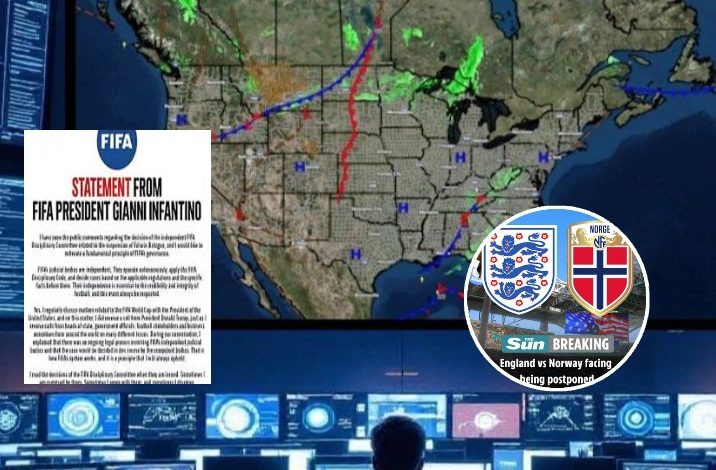
Just hours before one of the most anticipated matches of the 2026 FIFA World Cup, tensions are running high not only on the pitch but also in the skies above Hard Rock Stadium in Miami. Norway and England are set to clash in the quarter-finals, but meteorologists are warning of potentially game-altering conditions, prompting FIFA to release a major statement addressing safety protocols, scheduling contingencies, and player welfare. With temperatures forecast to feel like 43-44°C (around 109-111°F) due to extreme humidity and thunderstorms looming, the match hangs in the balance.
This isn’t just another knockout tie; it’s a collision of two footballing powerhouses with massive global implications. England, the Three Lions, have been on a rollercoaster journey, narrowly progressing through earlier rounds with gritty performances. Harry Kane has been instrumental, netting crucial goals, including in their thriller against Mexico. Norway, powered by the unstoppable Erling Haaland, stunned Brazil in a dramatic upset, showcasing their emergence as a serious contender on the world stage. Haaland alone has seven goals in the tournament, keeping him firmly in the Golden Boot conversation alongside stars like Messi and Mbappé.
The Weather Nightmare Unfolding in Miami
Miami in July is no stranger to heat, but forecasters are sounding alarms over a combination of blistering temperatures, Saharan dust influence, and high humidity that could make conditions feel dangerously hot. Local temperatures are expected to hover around 33°C at kickoff (5 PM local time, 10 PM UK time), but the “feels like” index could push it into the mid-40s. This poses significant risks of heat-related illnesses for players, staff, and fans alike.
Thunderstorms add another layer of danger. FIFA regulations mandate suspension of play if lightning is detected within 13 kilometers of the stadium. With forecasts predicting electrical activity around kickoff, officials are preparing for potential delays or even postponement. Fans traveling from across the globe, many already dealing with jet lag and high ticket prices, face the prospect of watching from hotel rooms or rescheduled slots that could disrupt travel plans.
Meteorologists from the BBC and local services have issued repeated warnings. “This is not typical match-day weather,” one expert noted. “The humidity will make exertion feel like running in a sauna, and lightning could force long interruptions.” Stadium authorities are ramping up hydration stations, medical support, and cooling areas, but the human body can only take so much under these extremes.
FIFA’s Major Statement: Safety First
In response to the mounting concerns, FIFA released a detailed statement earlier today, emphasizing player safety as the top priority. The governing body confirmed that they are in constant communication with match officials, teams, and local organizers. Key points from the statement include:
Contingency Plans: Kickoff could be delayed if conditions deteriorate. Postponement to the following day or an alternative time slot is under consideration, though every effort will be made to play the match as scheduled to maintain tournament integrity.
Heat Protocols: Enhanced monitoring for heat stress, mandatory hydration breaks, and potential use of cooling intervals as per updated FIFA guidelines for extreme weather.
Fan Welfare: Advice for spectators to stay hydrated, seek shade, and monitor updates via official apps. Ticket holders will receive notifications on any changes.
Medical Readiness: Additional on-site medical teams specializing in heat exhaustion and lightning-related emergencies.
FIFA President Gianni Infantino reportedly stressed, “The well-being of everyone involved in this beautiful game comes before entertainment. We will not compromise on safety.” This comes amid broader scrutiny of FIFA’s handling of climate-related issues in hosting decisions, especially with the 2026 tournament spanning multiple North American venues known for variable weather.
The statement has drawn mixed reactions. Supporters praise the proactive approach, while critics argue that more could have been done in venue selection or scheduling to avoid peak summer heat in Miami.
Historical Context and Team Preparations
This quarter-final evokes memories of past England-Norway encounters, including famous commentary lines like “Your boys took one hell of a beating” from a 1981 friendly. But this is high-stakes World Cup knockout football.
England’s squad, managed with a focus on tactical discipline, features a blend of youth and experience. Beyond Kane, players like Jude Bellingham and Phil Foden bring creativity, while the defense has shown resilience. However, concerns linger over squad depth and fatigue from a demanding group stage and round of 16.
Norway’s rise has been meteoric, largely thanks to Haaland’s clinical finishing and a solid supporting cast including Martin Ødegaard. Their victory over Brazil highlighted defensive organization and counter-attacking prowess. Coach Ståle Solbakken has emphasized adaptability, but extreme weather could neutralize their high-pressing style.
Both teams have been training indoors or during cooler parts of the day, with medical staff monitoring players closely. Nutritionists are pushing electrolyte-rich diets, and recovery protocols include ice baths and monitoring core body temperatures.
Broader Implications for the Tournament
A postponement or major delay would ripple through the World Cup schedule. The semi-finals loom, and any disruption could affect broadcast rights holders, sponsors, and the millions watching worldwide. Television networks have contingency plans, but live drama is what sells.
This scenario also spotlights climate change’s impact on sports. Extreme weather events are becoming more frequent, forcing governing bodies to rethink calendars. The 2026 World Cup, co-hosted by the US, Canada, and Mexico, was designed for summer play, but venues like Miami highlight vulnerabilities.
Fan reactions on social media are pouring in. Many express frustration over potential changes, while others prioritize safety. “Better late than never, or canceled,” one England supporter tweeted. Norwegian fans, riding the high of their Brazil win, remain optimistic but wary.
Player Perspectives and Tactical Outlook
Interviews with players reveal a mix of focus and caution. Haaland, known for his straightforward demeanor, said the team is “ready for whatever the weather throws at us.” Kane echoed safety concerns: “We’ve trained for tough conditions, but player health is paramount.”
Tactically, the match promises fireworks. Norway may look to exploit set-pieces and Haaland’s aerial ability, while England could dominate possession and use width. Weather could favor a more cautious, physical approach, reducing high-intensity runs.
Experts predict a tight contest, possibly going to extra time or penalties if delays sap energy. The winner advances to a semi-final against a strong side, potentially France or others still in contention.
What Happens Next?
As the clock ticks down, all eyes are on the weather radar. Officials will hold final inspections closer to kickoff. Fans are advised to check official FIFA and team channels for updates.
This Norway vs England clash symbolizes more than football—it’s a test of resilience against nature’s forces. Whether the match proceeds on time or faces interruption, it will be remembered as one defined by drama both on and off the pitch.
In the grand narrative of the 2026 World Cup, this quarter-final could mark a turning point. For England, a path to glory; for Norway, a chance to etch their name in history. But first, they must navigate the storm—literal and metaphorical.
The football world holds its breath. Will the beautiful game prevail, or will Mother Nature force a rewrite of the script? Only time—and the forecast—will tell.