England’s dramatic FIFA World Cup quarter-final victory over Norway has become one of the tournament’s biggest talking points after FIFA explained why Jude Bellingham’s crucial equaliser was allowed to stand despite claims that the ball may have struck an overhead spider-cam cable during the build-up.
The controversial moment occurred shortly before half-time when Norway goalkeeper Ørjan Nyland launched a long goal kick from inside his own penalty area. Television replays appeared to show the ball passing extremely close to the spider-cam cable suspended above the pitch, with many viewers believing it may have made contact before dropping into England’s attacking area. Elliot Anderson reacted quickest to the loose ball before England worked the move to Jude Bellingham, who fired home the equaliser just eight seconds after Nyland’s kick. England eventually went on to win the match 2-1 after extra time, with Bellingham scoring the winner to send Thomas Tuchel’s side into the World Cup semi-finals.
The incident immediately sparked debate among supporters, pundits and former referees, many of whom questioned whether play should have been stopped before England regained possession.
Why the Incident Caused Such Controversy
According to the Laws of the Game, if the ball touches an outside agent such as suspended camera equipment while it is in play, the referee should stop the match and restart with a dropped ball. Because the alleged contact came immediately before England regained possession and scored, many Norwegian players and supporters argued that the goal should never have counted.
As slow-motion footage spread rapidly across social media, numerous angles appeared to suggest that the ball’s trajectory changed slightly during its flight. Those images fuelled speculation that the overhead camera cable had influenced the play.
Norway players immediately protested to referee Clément Turpin after the equaliser, believing the ball had struck the cable. Their frustration continued after the final whistle as England celebrated qualification for the semi-finals.
FIFA’s Explanation
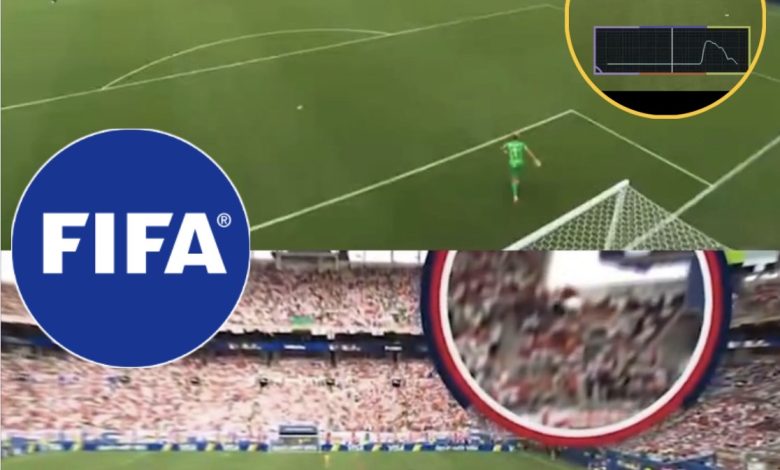
Following the controversy, FIFA explained that officials relied on data from the sensor inside the official match ball, often referred to as Connected Ball Technology.
According to FIFA, the sensor recorded no impact data or fluctuations that would indicate the ball had struck the spider-cam cable during its flight. Because the technology detected no contact, officials concluded there was no evidence that the ball touched the cable, allowing the goal to stand.
The explanation effectively ruled out one of the biggest controversies of the tournament, although it did little to convince many Norwegian supporters.
How Connected Ball Technology Works
The decision also drew attention to FIFA’s Connected Ball Technology, which has become one of the governing body’s most advanced officiating tools.
The official Adidas World Cup ball contains an inertial measurement unit (IMU) sensor operating at approximately 500Hz. The sensor continuously records acceleration and three-dimensional movement, transmitting real-time information to match officials and the VAR team.
FIFA says the technology is capable of identifying precise moments of contact between the ball and players, helping officials make more accurate decisions during matches.
In this case, FIFA stated that the sensor showed no evidence of any collision with the overhead cable.
Norway Remain Unconvinced
Despite FIFA’s explanation, Norway remained frustrated.
Players, coaching staff and many supporters believed the available television footage suggested the ball’s flight changed unnaturally before dropping into England’s attacking area.
Manager Ståle Solbakken was among those who questioned why the incident was not reviewed more thoroughly, while goalkeeper Ørjan Nyland also expressed his belief that the ball had touched the cable.
The defeat ended Norway’s impressive World Cup campaign, making the controversial incident even more difficult for players and supporters to accept.
Former Referee Questions VAR
The debate intensified after former Premier League referee Mark Clattenburg weighed in on the incident.
Clattenburg argued that if the ball had genuinely struck the spider-cam cable during the attacking phase leading directly to a goal, VAR would have been permitted to intervene because it formed part of the build-up to a scoring opportunity.
However, FIFA’s sensor data ultimately formed the basis of the governing body’s decision that there had been no contact requiring intervention.
His comments nevertheless reignited discussions over exactly how VAR should deal with unusual incidents involving stadium infrastructure.
England Benefit From the Decision
For England, the controversy did little to overshadow a remarkable comeback.
Norway had taken the lead before Bellingham restored parity shortly before half-time. With the scores level after 90 minutes, the match entered extra time.
Bellingham once again proved decisive, scoring the winning goal to secure a 2-1 victory and send England into the semi-finals of the FIFA World Cup.
The Real Madrid midfielder’s brace further strengthened his reputation as one of England’s most influential players on the biggest stage.
Social Media Divided
The incident quickly became one of the most discussed moments of the tournament.
Many England supporters accepted FIFA’s explanation, arguing that the sensor technology provides more reliable evidence than television images viewed from long distances.
Others pointed out that camera angles can often create optical illusions, particularly when judging whether a fast-moving ball has touched a thin overhead cable.
Norway supporters, however, remained sceptical.
Many argued that the visual footage appeared convincing enough to warrant a longer review, regardless of what the sensor data suggested.
The disagreement highlighted the growing tension between traditional video evidence and modern tracking technology in football.
Technology Versus Human Perception
The controversy also demonstrated how football increasingly relies on sophisticated technology.
Modern World Cup matches now feature:
- Goal-line technology.
- Semi-automated offside technology.
- Connected Ball Technology.
- Multiple high-speed tracking cameras.
- VAR review systems.
These innovations are designed to improve decision-making and reduce human error.
However, incidents like England’s equaliser against Norway show that even advanced technology cannot completely eliminate controversy.
When television pictures appear to contradict sensor readings, fans naturally question which source should carry greater authority.
In this case, FIFA placed its confidence in the connected ball rather than the broadcast footage.
The Laws of the Game
According to the IFAB Laws of the Game, contact between the ball and an outside agent such as suspended camera equipment should result in play being stopped and restarted with a dropped ball.
The key issue, however, was establishing whether contact actually occurred.
FIFA’s review concluded there was no evidence that the ball had touched the cable.
Without confirmation of contact, there was no reason under the Laws of the Game to cancel the goal or restart play.
That interpretation ultimately settled the matter from the governing body’s perspective.
Thomas Tuchel’s Focus
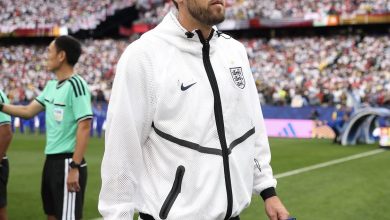
Although the controversy dominated post-match discussion, England manager Thomas Tuchel focused primarily on his team’s performance.
The Three Lions were forced to battle back after falling behind against a resilient Norwegian side and eventually found the decisive breakthrough during extra time.
Tuchel acknowledged that England had not produced their best football but praised the character shown by his players in overcoming a difficult challenge to reach the semi-finals.
What Happens Next?
With FIFA having publicly explained its reasoning, there appears to be little prospect of any change to the result.
The governing body considers the connected ball data sufficient evidence that the ball never struck the spider-cam cable, meaning Jude Bellingham’s equaliser remains valid.
England therefore retain their place in the World Cup semi-finals, while Norway’s impressive tournament comes to an end.
Although debate among supporters is likely to continue for some time, the official decision appears final.
A Defining Moment of the Tournament
Major tournaments are often remembered for moments of brilliance, heartbreak and controversy, and England’s victory over Norway delivered all three.
Jude Bellingham’s goals secured England’s passage into the last four, but it was the unusual build-up to his first strike that immediately entered World Cup folklore.
Whether supporters believe the television replays or FIFA’s sensor technology, the incident has sparked an important discussion about how modern football balances technology, officiating and the Laws of the Game.
For FIFA, the answer was clear: the connected ball registered no contact with the spider-cam cable, meaning there was no basis to disallow the goal. For Norway, however, the debate is unlikely to disappear anytime soon.
As England prepare for their semi-final, the controversy surrounding the equaliser will remain one of the defining stories of the 2026 FIFA World Cup, illustrating how even the smallest moments—and the smallest pieces of technology—can shape football’s biggest occasions.