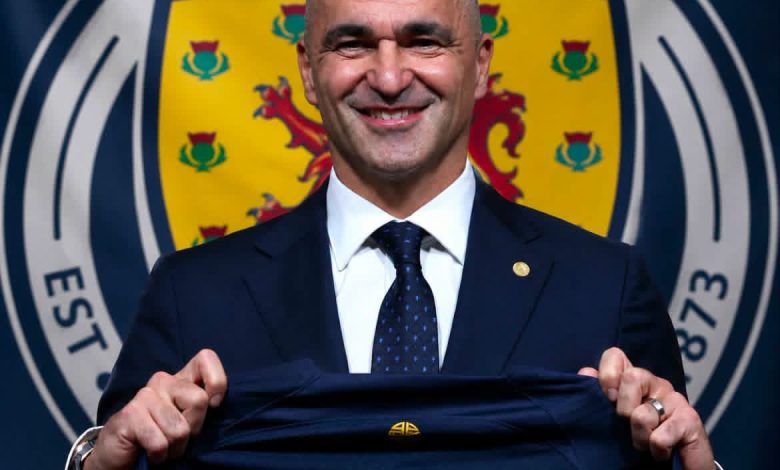
Scottish football could be on the verge of entering a new era after reports emerged suggesting Roberto Martínez has reached a pre-contract agreement to become the next head coach of the Scotland national team following his departure from Portugal.
Although neither the Scottish Football Association nor Martínez has officially confirmed the appointment, the prospect of one of Europe’s most experienced international managers taking charge has already generated widespread discussion among supporters and football analysts.
Should the agreement be finalized, Martínez would inherit one of the most talented Scottish squads in recent memory, with expectations growing that the nation can establish itself as a consistent force in major international tournaments.
A New Chapter After Portugal
Martínez’s reported exit from Portugal would bring an end to a notable spell in charge of one of world football’s elite national teams.
During his tenure, Portugal remained among Europe’s strongest sides, boasting a squad filled with established stars and emerging young talent. His tactical philosophy emphasized possession-based football, intelligent movement, and structured attacking play while encouraging creative freedom in the final third.
Although expectations were consistently high due to Portugal’s wealth of talent, Martínez maintained impressive results throughout qualification campaigns and major tournaments, reinforcing his reputation as one of international football’s most respected coaches.
If confirmed, his move to Scotland would represent a fresh challenge rather than a step backwards, offering the opportunity to build another competitive national team capable of exceeding expectations on the biggest stages.
Why Scotland Targeted Martínez
The reported pursuit of Martínez reflects Scotland’s ambition to continue building on recent progress.
Over the past decade, Scottish football has enjoyed a significant revival, qualifying for major tournaments and producing an exciting generation of players competing regularly in the Premier League, Serie A and other leading European competitions.
The Scottish Football Association has reportedly identified Martínez as a coach capable of elevating the national team to another level.
His experience in tournament football, combined with his ability to develop tactical systems suited to international football’s limited preparation time, makes him an attractive candidate.
Unlike club management, where coaches train players daily, international football requires managers to build cohesive systems within short international windows. Martínez has repeatedly demonstrated his ability to organize teams quickly while maintaining tactical flexibility.
An Impressive Coaching Résumé
Martínez arrives with one of the strongest coaching résumés available on the international market.
His managerial journey has included successful spells at club level before transitioning into international football, where he earned widespread praise for guiding talented squads through major tournaments.
His reputation has been built on several key strengths:
* Tactical flexibility.
* Strong player management.
* Calm leadership under pressure.
* Commitment to attacking football.
* Ability to integrate young players into senior squads.
Those qualities would likely align well with Scotland’s current squad profile, which blends experienced leaders with promising young talent.
What Style Could Scotland Expect?
One of Martínez’s trademarks has always been proactive football.
Rather than adopting an overly defensive approach against stronger opponents, his teams typically seek controlled possession while remaining organized without the ball.
His preferred tactical systems have often included three-man defensive structures alongside fluid attacking movements.
However, Martínez has consistently adapted his formations depending on available personnel.
Scotland already possesses defenders comfortable playing in back-three systems, energetic wing-backs, technically gifted midfielders and forwards capable of pressing aggressively.
Those characteristics could make the transition relatively smooth.
Supporters may also expect greater emphasis on building attacks from deep rather than relying exclusively on direct football.
Key Players Who Could Thrive
Several Scotland internationals could benefit significantly under Martínez’s coaching philosophy.
Creative midfielders would likely receive greater responsibility in controlling matches through possession.
Attacking full-backs and wing-backs could become central to Scotland’s offensive approach, while technically gifted forwards may enjoy increased freedom in advanced positions.
Young players could also receive expanded opportunities.
Throughout his managerial career, Martínez has demonstrated confidence in emerging talent, often trusting younger players during important fixtures if they demonstrate sufficient quality.
That willingness to promote youth could prove valuable as Scotland continues developing its next generation.
Challenges Ahead
Despite the excitement surrounding the reported appointment, Martínez would inherit several significant challenges.
International football has become increasingly competitive, with qualification campaigns featuring fewer margin for error.
Scotland must continue competing against established European powers while maintaining consistency against teams ranked below them.
Injuries, limited preparation time and fixture congestion also complicate international management.
Martínez would need to quickly establish his tactical identity while maintaining squad harmony during periods of intense competition.
Supporters would undoubtedly expect qualification for major tournaments while hoping for deeper knockout-stage runs.
Fan Reaction
The reported agreement has already generated considerable debate.
Many supporters view Martínez as one of the strongest managerial candidates available, praising his international experience and attacking philosophy.
Others have questioned whether adapting to Scottish football culture could present challenges, particularly given the unique expectations surrounding the national team.
Nevertheless, there appears to be widespread recognition that appointing a coach with Martínez’s pedigree would represent a significant statement of ambition.
Looking Ahead
Should Roberto Martínez officially become Scotland’s new head coach, the appointment would represent one of the most significant managerial decisions in recent Scottish football history.
His tactical knowledge, tournament experience and calm leadership could provide Scotland with the platform needed to continue its upward trajectory on the international stage.
Success, however, will ultimately be measured not by reputation but by results.
Qualification for major tournaments, competitive performances against Europe’s elite and continued player development would quickly become the benchmarks by which his tenure is judged.
For now, supporters await official confirmation. If the reported agreement becomes reality, Scotland could soon embark on an exciting new chapter under one of international football’s most experienced managers, with hopes of building a team capable of competing confidently on the biggest stage and inspiring a new generation of Scottish football fans.