Derek McInnes Sends Clear Message to Two Rangers Stars Following 2-1 Defeat to Jagiellonia Białystok

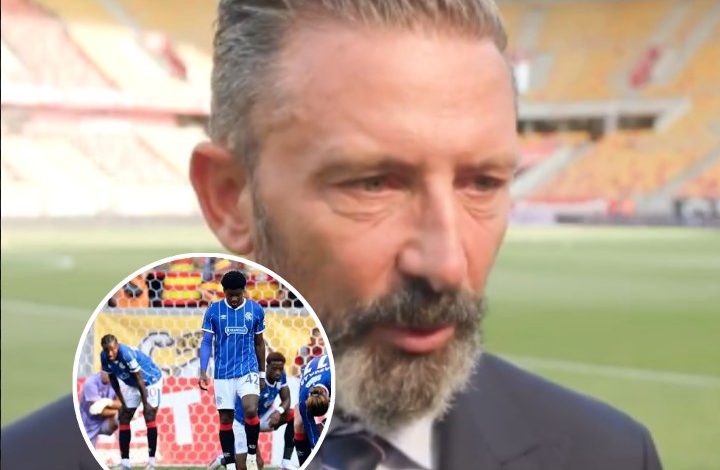
Derek McInnes did not hold back. In the aftermath of Rangers’ 2-1 defeat to Jagiellonia Białystok in the first leg of their Europa League third qualifying round tie, the new Ibrox manager delivered a pointed post-match assessment that left supporters stunned and social media buzzing. Speaking with a mixture of frustration and clarity, McInnes insisted his side had “beaten themselves,” pointed the finger squarely at defensive failings, and made it clear he will not tolerate a repeat of the soft goals and concentration lapses that have long plagued the club. While he stopped short of naming names in the most public forums, the nature of the criticism, the identity of the players most directly involved in the two goals conceded, and subsequent commentary from pundits made the targets unmistakable. Two Rangers stars, in particular, found themselves under the spotlight.

The evening in Białystok began with genuine promise. McInnes, still searching for his first victory since taking charge, made five changes from the side that drew 1-1 with Dundee United in the Premiership opener. New signing Daisuke Yokota started on the right, Dan Neil wore the captain’s armband in the absence of Lawrence Shankland from the starting XI, and the back line featured Ross McCrorie, Emmanuel Fernandez and Dujon Sterling, with Tuur Rommens at left-back. Just four minutes in, Rangers were ahead. Rommens combined well down the left and delivered a low cross that Youssef Chermiti could not convert. The ball instead struck Guilherme Montoia and rolled into the net for an own goal. For a brief moment, the travelling support and those watching at home dared to believe the McInnes era might begin with a statement away win in Europe.
That belief lasted less than ten minutes. In the 13th minute, Kajetan Szmyt swung a ball in from wide. What should have been a routine defensive moment turned into disaster when Fernandez diverted the delivery into his own net. The equaliser was soft, preventable and entirely of Rangers’ own making. Eight minutes later the deficit was complete. A counter-attack after Rangers lost possession near the edge of the Jagiellonia box led to a cross from Nik Prelec. Fernandez slipped at a critical moment, Jesus Imaz’s shot was parried by Ivor Pandur, and Szmyt reacted first to smash home the rebound. Two goals, both rooted in defensive disorganisation and individual errors, had turned a dream start into a half-time deficit.
McInnes responded at the interval by introducing Cammy Devlin, Nicolas Raskin and Findlay Curtis. The second half was better. Rangers dominated possession, created openings and came agonisingly close to an equaliser when Curtis struck the post deep into stoppage time. Yet the damage had already been done. The first leg finished 2-1, leaving Rangers needing a strong performance at a sold-out Ibrox next week to progress.
When McInnes faced the media, the tone was unmistakable. “I just felt we beat ourselves,” he said. “I thought we started the game really well with an element of control. The team we picked was to make sure that their rotations in midfield weren’t a problem for us – and they weren’t. We got off to a good start, a good bit of combination play, being patient with what we were trying to do and putting a bit of stress on their defenders. And obviously he scores an own goal and it’s a perfect start. And then we stopped doing what was working for us. We made two mistakes for the two goals.”
He continued with a message that will have resonated throughout the dressing room and beyond: “I’m not going to watch us all season lose the ball on the edge of their box and have it end up with a chance for them. There are a lot of bad habits carrying on from last season. That’s down to talking, organisation and closing the back door before the fire becomes bigger. It’s about a loss of concentration. Too often, we were slow on the uptake and didn’t do our defensive work well enough. We need to be far more concentrated, far more focused, far more aggressive, far more talkative and organised to stop these types of things happening. We’ve seen a lot tonight of what I thought Rangers were last season. I thought they gave up too many chances and gave teams too much encouragement.”
The language was deliberate. McInnes was not merely describing a poor result; he was diagnosing a cultural problem. “We have beat ourselves tonight and I’ve said that to the players,” he added. “We can’t give encouragement to any team, never mind Jagiellonia with their quality, by not doing the right things. There’s no pleasure in that for us tonight. We lost two goals that were clearly mistakes.”
Although the manager framed his comments around the collective, the specifics of the goals made the individual scrutiny inevitable. Emmanuel Fernandez was centrally involved in both. His own goal levelled the scores, and his slip contributed directly to the second. The Nigeria international had already faced questions after the Dundee United draw, and former Rangers midfielder Andy Halliday was scathing in his assessment on BBC Radio Scotland. Halliday suggested McInnes does not currently “trust” Fernandez in the biggest games and questioned whether the defender has the basic defensive education required at this level, despite possessing the physical attributes of a top centre-half. The combination of McInnes’s public criticism of “mistakes” and “bad habits” with Halliday’s more personal analysis left fans in little doubt that Fernandez was one of the two players in the firing line.
The second figure under scrutiny was less formally named but equally visible in the analysis of the goals. Ross McCrorie, playing at right-back in place of the injured Ben Godfrey, was criticised for failing to prevent the cross that led to the equaliser and for being out of position at key moments. Dujon Sterling, shifted into central defence, also came under fire for a lack of urgency and organisation. Player ratings across Scottish media reflected the collective defensive failure, with Fernandez often receiving the lowest marks (around 3 or 4 out of 10 in several reports) and other back-line players not far behind. McInnes’s insistence that the goals were “clearly mistakes” and that the side had been “slow on the uptake” was widely interpreted as a direct challenge to those most responsible for the lapses.
The reaction among the Rangers support was immediate and intense. Many were stunned not by the fact that McInnes had been critical – supporters have long demanded higher standards – but by the bluntness so early in his tenure. Social media filled with debates about whether the new manager was right to call out the defensive unit so publicly, whether Fernandez can recover his confidence, and whether the squad simply lacks the reliability required for European nights. Some praised McInnes for refusing to paper over cracks that had been papered over too often in previous seasons. Others worried that such open criticism risked damaging already fragile morale at a time when the team is still adapting to a new manager, new signings and the physical and mental demands of a congested early schedule.
Context matters. McInnes inherited a squad that finished third in the Premiership last season and exited European competition earlier than hoped. Defensive fragility was a recurring theme under previous regimes. The new manager has spoken repeatedly about the need for organisation, communication and aggression. His selection for the Jagiellonia match – including several summer arrivals and a reshuffled defence – was designed to address specific threats from the Polish side’s midfield rotations and quick transitions. When those threats materialised through Rangers’ own errors rather than pure brilliance from the opposition, McInnes’s frustration was understandable. Jagiellonia are a well-organised, energetic side with pace on the flanks and a recent history of strong Conference League campaigns. They did not need the gifts they received.
The second half offered some encouragement. The introduction of Raskin, Devlin and Curtis improved the balance and intensity. Rangers controlled large periods of the game and created enough opportunities to suggest that, on another night or with greater clinical edge, the result could have been different. McInnes himself acknowledged the positives while refusing to dwell on them. “We’re not here to get pats on the back for a second-half performance,” he said. The message was clear: improvement is expected, and improvement must be sustained.
Looking ahead, the return leg at Ibrox presents both opportunity and pressure. A one-goal deficit is recoverable, especially in front of a passionate home crowd. McInnes will almost certainly adjust his selection, and the players who felt the force of his post-match comments will have a chance to respond. Fernandez, McCrorie, Sterling and others will know that trust is earned through consistent, error-free performances. The manager has already signalled that he will not accept the soft concessions that have become too familiar.
For the wider squad, the night in Białystok served as an early reality check. European football at this level punishes hesitation and rewards concentration. McInnes’s willingness to confront those failings head-on may yet prove one of the defining characteristics of his time at Rangers. Whether the players respond with the necessary improvement remains to be seen, but the tone has been set. There will be no hiding place, no quiet acceptance of “bad habits,” and no tolerance for beating themselves when the opposition are ready to take full advantage.
Fans left stunned by the candour of the criticism now wait to see whether that same honesty produces the hardening of standards required for a successful campaign. The second leg will provide the first major test of whether McInnes’s message has landed. For two Rangers stars in particular, the scrutiny will be intense. The manager has broken his silence. The response on the pitch will determine whether the criticism becomes a turning point or simply the first of many difficult conversations.