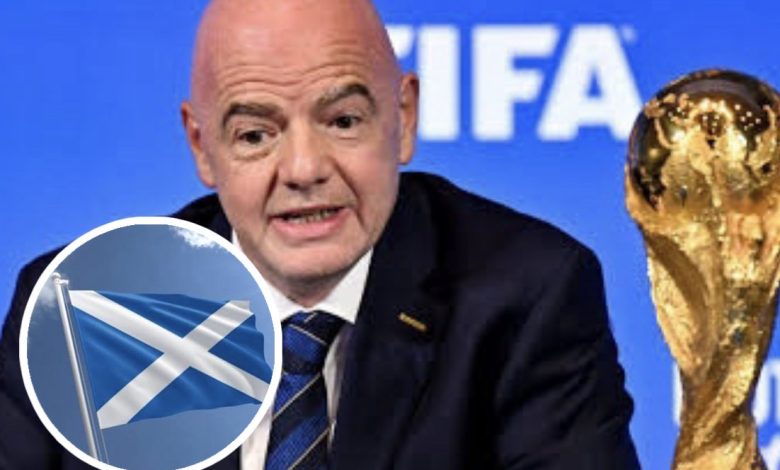
FIFA COULD BRING THE WORLD CUP TO SCOTLAND — BUT ONLY IF ONE HUGE CONDITION IS MET
The FIFA World Cup is the biggest sporting event on the planet, and for decades Scottish football supporters have dreamed of seeing the tournament played on home soil. While Scotland has produced legendary players, iconic stadiums and one of football’s most passionate fan cultures, the country has never hosted a FIFA World Cup.
But could that finally change?
The answer is yes—but only if one enormous condition is met.
Following the expansion of the tournament to 48 teams and FIFA’s growing willingness to award hosting rights to multiple nations, the possibility of Scotland becoming part of a future World Cup has never seemed more realistic. However, there remains one major obstacle that could decide whether Scottish fans ever witness World Cup football without leaving the country.
Scotland’s World Cup Dream Isn’t Impossible
For many years, hosting the World Cup was simply unrealistic for Scotland on its own.
The country boasts historic venues such as Hampden Park and an incredible football culture, but modern FIFA requirements have become increasingly demanding. Larger stadium capacities, improved transport infrastructure, accommodation for hundreds of thousands of travelling supporters and extensive commercial facilities make solo bids extremely difficult for smaller nations.
Instead, FIFA has increasingly favoured joint bids.
The 2026 World Cup is being hosted across the United States, Canada and Mexico, while other future tournaments are expected to continue embracing multi-country hosting models.
That shift has suddenly opened the door for Scotland.
The Huge Condition
There is one condition above all others:
Scotland would almost certainly have to host the World Cup as part of a joint United Kingdom and Republic of Ireland bid rather than as an independent host nation.
In simple terms, Scotland alone is unlikely to satisfy FIFA’s modern hosting requirements.
But alongside England, Wales, Northern Ireland and the Republic of Ireland, the picture changes dramatically.
Together, those nations possess dozens of world-class stadiums, excellent transport networks, vast hotel capacity and an already established record of delivering major sporting events.
Without that partnership, Scotland’s chances remain extremely slim.
Why FIFA Could Welcome Such a Bid
FIFA has shown repeatedly that spreading tournaments across several countries helps reduce financial pressure while allowing more fans to experience football’s biggest competition.
A UK and Ireland bid would offer numerous advantages.
Firstly, the infrastructure already exists.
Unlike many previous hosts, very few entirely new stadiums would need to be constructed.
Secondly, football is deeply embedded within every participating nation.
Packed stadiums would be virtually guaranteed regardless of which teams were playing.
Finally, television audiences would likely soar thanks to favourable European kick-off times and the worldwide popularity of British football.
For FIFA, that represents an attractive package.
Hampden Park Would Almost Certainly Be Included
If Scotland became part of a successful joint bid, Hampden Park would almost certainly host World Cup matches.
The stadium has already staged:
* UEFA Champions League finals
* European Championship matches
* Major international qualifiers
* Domestic cup finals
* Numerous concerts and international sporting events
Although Hampden would require upgrades to satisfy FIFA’s latest tournament standards, it already possesses enormous international experience.
Scottish supporters would finally witness World Cup football inside one of Britain’s most historic stadiums.
Could Celtic Park or Ibrox Also Be Used?
This is where things become particularly interesting.
Many fans immediately ask whether Celtic Park or Ibrox could also host World Cup fixtures.
The answer is potentially yes—but several factors would influence FIFA’s final decision.
Both stadiums comfortably exceed 50,000 capacity and regularly host European football.
However, FIFA often requests temporary commercial adjustments, hospitality changes and sponsorship neutrality at club stadiums during major tournaments.
If those requirements were satisfied, both venues could become strong candidates depending on the overall tournament plan.
That would give Glasgow an extraordinary opportunity to become one of the competition’s biggest football cities.
England’s Stadiums Would Still Lead the Bid
Even within a joint proposal, England would naturally provide the majority of host venues.
Wembley Stadium would almost certainly stage the final, while Old Trafford, Tottenham Hotspur Stadium, the Emirates, Villa Park, St James’ Park and several other elite grounds would strengthen the bid enormously.
That means Scotland would not need to shoulder the enormous burden of hosting dozens of matches.
Instead, it would become one important piece of a much larger football celebration.
Scotland’s Football Culture Is Already World Cup Worthy
If there is one area where Scotland competes with anyone, it is passion.
Tartan Army supporters have earned worldwide admiration for decades.
Whether Scotland qualify or not, their fans travel in huge numbers, creating unforgettable atmospheres built on humour, respect and unwavering loyalty.
Many international observers consider Scottish supporters among the best ambassadors in world football.
A World Cup featuring Scotland as a host nation would undoubtedly produce some of the tournament’s most memorable fan experiences.
Infrastructure Still Matters
Despite Scotland’s football heritage, FIFA ultimately evaluates practical realities rather than emotion.
The governing body examines:
* Airport capacity
* Public transport
* Hotel availability
* Stadium facilities
* Security planning
* Commercial operations
* Media infrastructure
* Training venues
While Scotland performs well in many of these areas, combining resources with neighbouring nations creates a much stronger overall proposal.
That remains the biggest reason why any realistic Scottish hosting ambition depends upon a joint bid.
Political Cooperation Would Be Essential
Hosting the World Cup requires far more than football associations agreeing to work together.
Governments, local councils, police services, transport authorities and tourism organisations must all cooperate for several years before the tournament begins.
Funding commitments, security arrangements and infrastructure planning require enormous coordination.
Without complete political support across every participating nation, even the strongest football bid can quickly collapse.
The Economic Benefits Could Be Huge
Hosting even a handful of World Cup matches could generate enormous benefits for Scotland.
Hotels would fill with international supporters.
Restaurants, pubs and local businesses would enjoy significant increases in visitors.
Tourism exposure could continue for years after the tournament ends, introducing millions of viewers to Scotland’s cities, landscapes and football culture.
For many experts, those long-term economic gains make participation highly attractive.
Is It Likely?
At the moment, no future World Cup has been officially awarded to a UK and Ireland partnership.
However, football administrators continue discussing opportunities to bring another major international tournament to the region following the successful staging of UEFA Euro 2028 across the UK and Republic of Ireland.
That experience could strengthen confidence that a future World Cup bid is achievable.
Still, Scotland cannot realistically pursue the tournament alone.
That remains the decisive factor.
Final Verdict
So, could FIFA bring the World Cup to Scotland?
Yes.
But only if Scotland joins forces with its neighbours as part of a united UK and Republic of Ireland bid capable of satisfying FIFA’s demanding hosting requirements.
For Scottish football fans, that may be the best—and perhaps only—realistic route to finally welcoming the world’s greatest football tournament onto Scottish soil.
The dream is alive, but the path is clear.
If Scotland is ever to host World Cup football, it almost certainly won’t do it alone.