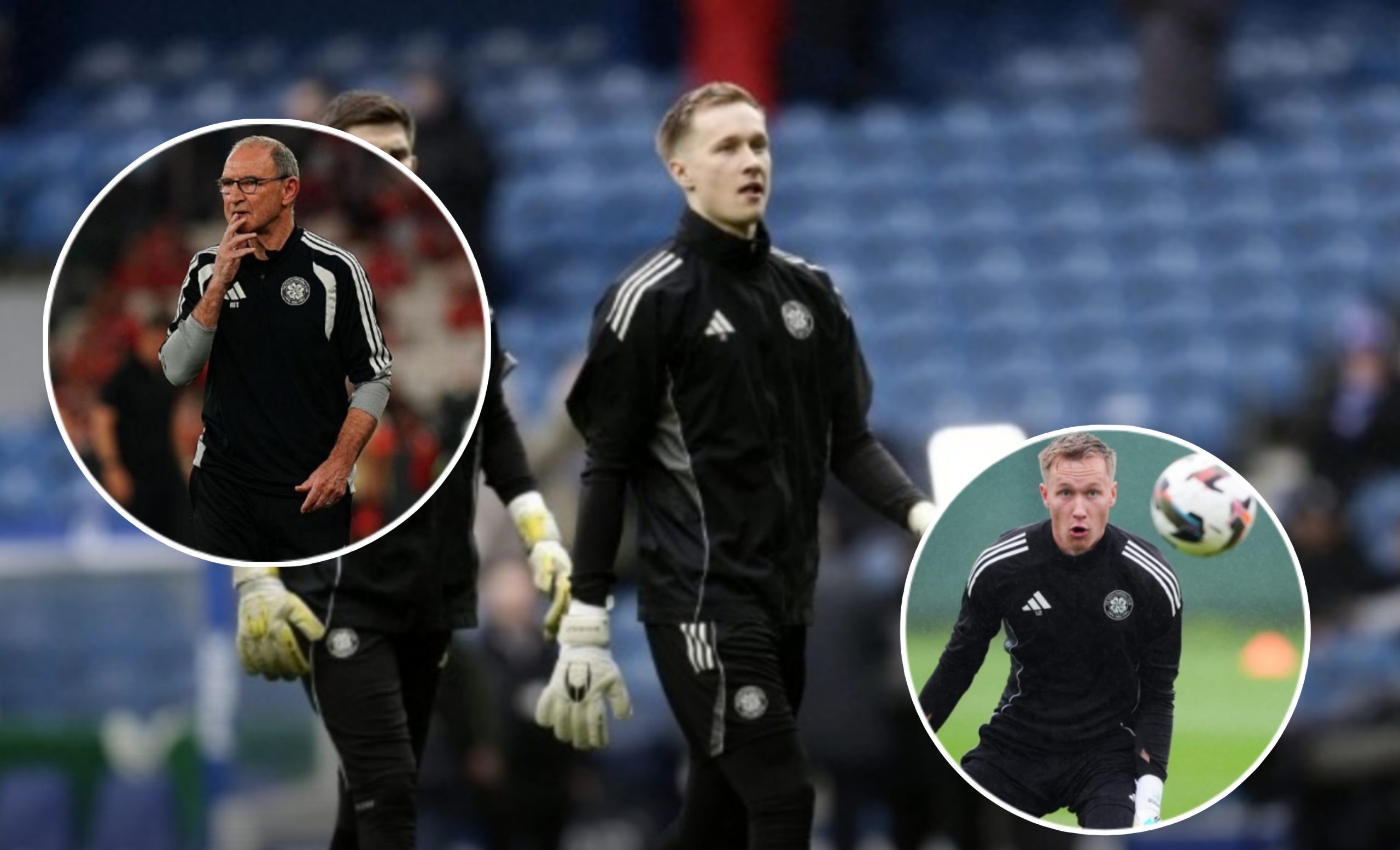
Martin O’Neill breaks silence after meeting angry supporters-his response has everyone talking
You Won’t Believe What Happened When This Celtic Legend Finally Faced the Fury – Fans Are Still Reeling!
The tension around Celtic Park has been thicker than a Glasgow fog for weeks. Results have been patchy. The atmosphere in the stands has grown restless. Whispers of discontent have turned into open frustration. And at the centre of it all stood a man many still regard as one of the club’s modern greats – Martin O’Neill.
For days the rumour mill spun wildly. Would the veteran boss hide? Would he let the board take the heat alone? Or would the man who once delivered glory nights and silverware walk straight into the fire? When word leaked that a private gathering with supporters had taken place in Greenock, the internet exploded. Social media lit up with speculation, outrage, and wild theories. What did he say? Did he defend the board? Did he crack under the pressure? Did he drop a bombshell about his own future?
Celtic fans have never been shy about voicing their opinions. This club lives and breathes passion. When things are going well, the support is the best in the world. When things falter, that same passion can become a roaring challenge. Recent results had left many feeling the team was drifting. Questions about recruitment, direction, and the overall running of the club had piled up. An earlier abandoned AGM had already shown how raw emotions had become. Now another meeting was arranged – this time at a supporters’ club venue – and suddenly the manager himself was in the room.
Insiders described a charged atmosphere outside the venue. Voices were raised. Some supporters arrived determined to make their feelings known in the strongest terms. Inside, roughly 120 fans waited for answers. Board members were present. The air crackled with expectation. And then Martin O’Neill walked in.
Those who were there claim the moment the 74-year-old entered, the dynamic shifted. This was not some distant executive reading from a prepared statement. This was a Celtic legend who had lived the highs and lows with the club, a man who understood the weight of the badge. Some fans reportedly softened slightly at the sight of him. Others stayed firmly in challenge mode. The questions came hard and fast – about performances, about ambition, about the future, about accountability. No one was given an easy ride.
For days afterwards, silence. The club issued a careful statement describing the questioning as “hard but fair.” Fans who attended shared fragments online, some positive about the honesty, others still unconvinced. The wider support base was left hungry for more. What did Martin O’Neill himself make of it? Would he address the elephant in the room? Would he finally break his silence and reveal what really happened behind those closed doors?
The wait felt endless. Pressure mounted. Every interview request, every press conference appearance was scrutinised for the slightest hint. Speculation ran riot. Some claimed he had been shaken. Others insisted he had stood firm and even won over some of the harshest critics. A few darker theories suggested the meeting had gone so badly that his position was now untenable. The online discourse grew louder by the hour. Memes flew. Hot takes piled up. Everyone, it seemed, had an opinion – except the man at the centre of the storm.
Then it happened.
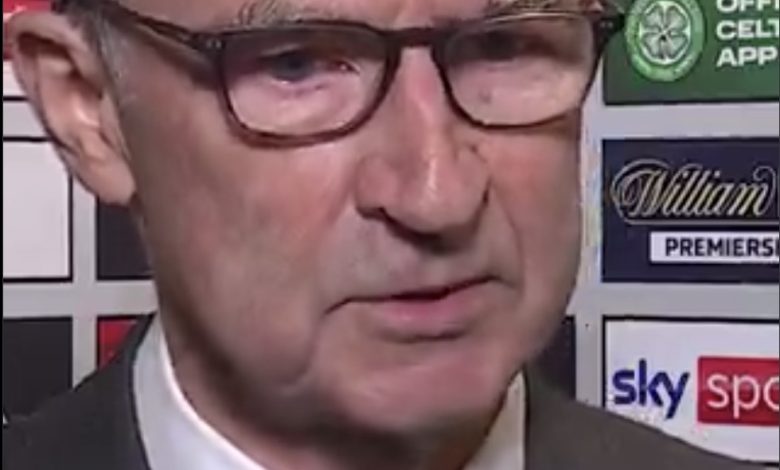
When Martin O’Neill finally spoke, the football world leaned in. The response that followed has left supporters, pundits, and rival fans talking non-stop. Some are calling it masterful. Others say it was defiant. A portion of the support feels heard for the first time in months. Another portion believes the real issues remain unresolved. What cannot be denied is the impact. The words have been clipped, shared, debated, praised, and criticised across every platform. Celtic Twitter (or X) has barely paused for breath. Phone-in shows have dedicated entire segments to dissecting every sentence. Even neutral observers have admitted the veteran manager’s handling of the moment showed why he remains such a compelling figure in the game.
In his comments, O’Neill made clear he had not been forced into the room. He revealed he only learned of the meeting at the last minute yet immediately wanted to attend. He wanted to experience the supporters’ feelings firsthand and see what could be done. The questions, he said, were exactly what anyone would have expected – straightforward, fair, and searching. Nothing surprised him. The board, in his view, tried to answer as honestly as possible. He stressed that his own future does not hinge on attending meetings. Results, he insisted, are what ultimately decide a manager’s fate. If another such gathering arose and time allowed, he would be prepared to go again.
Yet the part that truly set tongues wagging went further. While acknowledging the strength of feeling and the legitimacy of many concerns, O’Neill expressed deep disappointment at the scenes outside the venue. He spoke of individuals in balaclavas confronting those arriving for the meeting. For a man who has spent decades associated with Celtic, the sight of supporters concealing their faces struck him as particularly sad. He questioned whether that approach matched the club’s values and suggested that those with grievances should have the courage to show their faces. The contrast between the orderly, robust questioning inside and the masked protest outside clearly left a mark on him.
That combination – willingness to face the fans, calm acceptance of hard questions, insistence that results remain the bottom line, and a pointed critique of the masked element – proved explosive. Supporters who value transparency and directness have applauded him for showing up when many managers would have stayed away. Others feel the criticism of the protest distracts from deeper structural issues at the club.
Some believe his presence lent credibility to the board at a difficult time. Still others see a manager determined to keep the focus on the pitch while the off-field noise continues.
The timing could hardly have been more dramatic. With European fixtures looming and the domestic campaign still finely balanced, every word carries extra weight. O’Neill’s history with the club adds another layer. Fans remember the glory years of his first spell. Many still hold genuine affection for him. That affection has bought him patience, but patience has limits. By walking into the Greenock meeting and then speaking so openly afterwards, he has forced the conversation into the open rather than letting it fester in the shadows.
What happens next remains uncertain. Results will, as he said, decide a great deal. The board faces ongoing scrutiny. The support will continue to demand ambition and transparency. Yet for one charged evening in Greenock and in the days that followed, Martin O’Neill refused to hide. He met the anger head-on, listened, responded, and then told the wider world exactly where he stood.
That response has everyone talking. Some are inspired. Some are frustrated. Almost no one is indifferent. In the passionate, unforgiving world of Celtic support, indifference is the rarest reaction of all. Whether this moment becomes a turning point toward renewed unity or simply another chapter in a turbulent season will be written on the pitch in the weeks ahead. One thing is already clear: when Martin O’Neill finally broke his silence, he made sure the entire football community was listening.