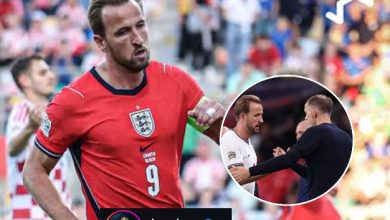
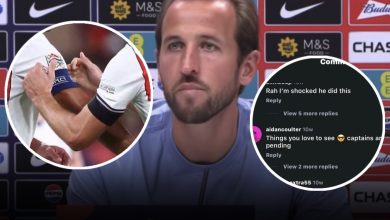
Harry Kane’s Response Sends the Ballon d’Or Debate Into Overdrive as Mbappé’s Supporters Demand Answers

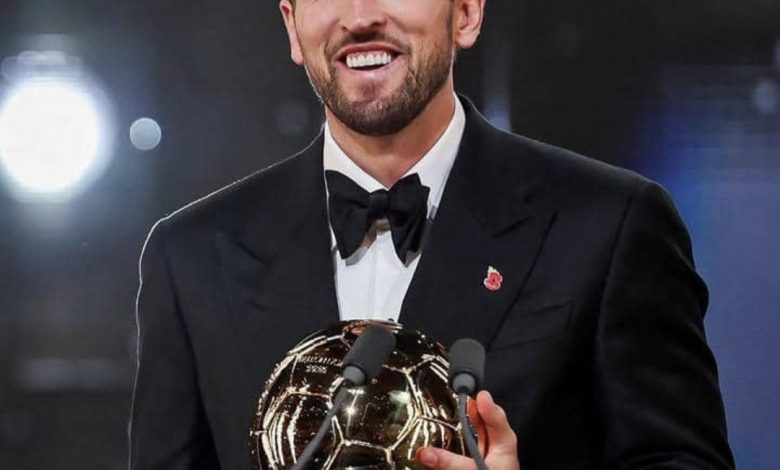
The debate surrounding football’s most prestigious individual award has once again become a source of intense discussion among supporters, pundits, and former players. With Harry Kane and Kylian Mbappé representing two of the biggest names in modern football, the argument over individual recognition has the potential to divide fans across Europe.
But what happens when the discussion moves beyond statistics, goals, trophies, and individual performances?
What happens when one of football’s most respected strikers is drawn into a debate over whether another superstar deserved greater recognition?
That is the dramatic scenario explored in this fictional story, following claims from sections of the French media that Kylian Mbappé was unfairly overlooked in the Ballon d’Or conversation.
The alleged controversy has quickly become a talking point among supporters, with questions emerging about how individual awards should be judged and whether football’s biggest stars always receive the recognition their performances deserve.
At the centre of the fictional confrontation is Harry Kane, the England captain whose own career has been shaped by extraordinary goalscoring achievements, relentless expectations, and the pursuit of major honours.
And while the debate initially appears to concern Mbappé’s individual achievements, it soon develops into a much bigger argument about what it truly means to be the best footballer in the world.
The Ballon d’Or Debate That Refuses to Disappear
Few individual awards generate as much discussion as the Ballon d’Or.
Every year, football supporters examine performances, compare statistics, and debate which player deserves to stand above the rest. Goals scored, trophies won, individual brilliance, consistency, and performances in decisive matches all become part of the conversation.
However, reaching a unanimous verdict is almost impossible.
Supporters of attacking players often emphasise goals and assists, while others argue that performances in major competitions should carry greater weight. Some believe that winning important trophies should be decisive, whereas others insist that individual quality must remain the most important consideration.
This disagreement becomes even more intense when the players involved are global superstars such as Mbappé and Kane.
Mbappé has established himself as one of the most dangerous attacking players of his generation. His explosive acceleration, clinical finishing, ability to create chances, and performances on the international stage have made him a constant subject of discussion whenever football’s biggest individual honours are mentioned.
Kane, meanwhile, has built his reputation on a different combination of qualities.
The England captain is renowned for his intelligent movement, exceptional finishing, ability to link play, and remarkable vision for a centre-forward. Rather than simply operating as a traditional striker, he frequently drops deeper to create opportunities for teammates while remaining a major goalscoring threat.
Both players possess qualities that make comparisons fascinating.
Yet their contrasting styles also demonstrate why determining the world’s best player is rarely straightforward.
In this fictional scenario, the controversy begins when French media commentators question whether Mbappé has received the level of recognition they believe his performances deserve.
Their argument centres on the belief that his individual influence should carry greater weight in discussions about football’s most prestigious award.
But the debate takes an unexpected direction when Kane is drawn into the conversation.
Why Mbappé’s Supporters Believe He Deserves More Recognition
For Mbappé’s supporters, the argument is about more than personal loyalty.
They believe that his combination of speed, technical ability, creativity, and goalscoring instinct places him among the most influential footballers in the world.
His performances for France have also strengthened his reputation as a player capable of delivering on the biggest international stages.
At the 2018 FIFA World Cup, Mbappé played an important role in France’s triumph, scoring in the final against Croatia. Four years later, he produced another remarkable World Cup campaign in Qatar, finishing as the tournament’s top scorer with eight goals and scoring a hat-trick in the final against Argentina.
Those achievements remain significant parts of his footballing legacy.
For supporters who value performances in major international competitions, such moments provide a compelling argument for his place among the world’s elite.
However, the Ballon d’Or is not determined by one performance, one competition, or one season-defining moment alone. Voters consider a broader body of work, and different voting periods can produce different arguments about which achievements deserve the greatest recognition.
This is where the fictional dispute becomes particularly interesting.
Mbappé’s supporters argue that extraordinary individual performances should never be overshadowed by other considerations. Critics of that position, however, may argue that football is a collective sport in which team success and consistency also matter.
The disagreement becomes increasingly difficult to resolve because both sides can point to legitimate footballing considerations.
And then comes the moment when Kane enters the fictional debate.
Harry Kane Finds Himself at the Centre of the Storm
Kane is no stranger to scrutiny.
Throughout his career, the England captain has faced questions about his ability to win major trophies, his standing among Europe’s best strikers, and whether individual achievements can fully compensate for the absence of certain team honours.
His move to Bayern Munich in 2023 represented a major new chapter in his career, offering him the opportunity to compete for silverware in Germany while continuing to demonstrate his exceptional goalscoring ability.
His first season at the club also illustrated how complicated football’s relationship with individual and collective success can be.
Kane scored 36 goals in the Bundesliga during the 2023–24 campaign, winning the league’s top-scorer award. Yet Bayern finished the season without winning a major trophy, while Bayer Leverkusen claimed the Bundesliga title.
That contrast provided a clear example of how a player’s outstanding individual production does not always translate into team success.
For Kane, the challenge has often been to demonstrate that his contributions extend beyond the number of goals he scores.
His passing, positioning, movement, and understanding of attacking spaces make him an influential player even when he is not the person finishing a move.
These qualities also make him an interesting figure in debates about individual awards.
In the fictional story, Kane is confronted with the argument that Mbappé has been unfairly treated by the football media and award discussions.
Rather than allowing the conversation to become a simple contest between two famous strikers, he is portrayed as challenging the principle behind the criticism.
The central question becomes whether an award can genuinely be described as stolen simply because a particular player did not win it.
It is a question that immediately changes the tone of the debate.
The Argument Over What Makes a Footballer the Best
Imagine a football discussion in which every participant is required to explain precisely why their preferred player deserves the Ballon d’Or.
One supporter points to goals.
Another highlights assists.
A third argues that performances in decisive matches should be given greater importance, while someone else insists that trophies provide the clearest evidence of a player’s influence.
Before long, the discussion becomes a contest between different interpretations of footballing excellence.
This is the underlying issue explored in the fictional Kane-Mbappé controversy.
Kane’s imagined position challenges the suggestion that a player has automatically been robbed whenever the final result does not match the expectations of his supporters.
In this fictional exchange, the England captain argues that football awards should be evaluated through performances, evidence, and the criteria applied to every candidate rather than through nationality or the popularity of a particular superstar.
The point is not that Mbappé lacks the quality to win the Ballon d’Or. His achievements clearly place him among the most prominent players of his generation.
Instead, the argument concerns the difference between believing that a player deserves an award and claiming that the award was unfairly decided.
Those are two very different positions.
A footballer can produce an extraordinary season without necessarily being the winner of every individual award. Equally, a player who wins an award may face legitimate questions from supporters who believe another candidate had a stronger campaign.
Neither situation automatically proves that the decision was dishonest.
That distinction is particularly important in the modern football environment, where social media can transform a disagreement about sporting merit into a much larger controversy.
But in this fictional account, Kane’s response does not end the discussion. It intensifies it.
French Media Claims Ignite a Bigger Conversation
The suggestion that Mbappé was robbed of the Ballon d’Or carries emotional weight because of the expectations surrounding French football.
France has produced generations of exceptional players, and its supporters naturally take pride in seeing their stars recognised among the world’s best.
When a French superstar misses out on an individual award, the reaction can become particularly intense if supporters believe his performances were superior to those of the eventual winner.
However, the same pattern can be observed in footballing nations around the world.
Supporters of English, Spanish, Portuguese, Argentine, Brazilian, and other national teams frequently defend their favourite players in debates over major awards.
The discussion is rarely limited to statistics. It also involves memories of decisive goals, international triumphs, club rivalries, and the emotional connection fans develop with their heroes.
In the fictional scenario, the French media criticism places Kane in an uncomfortable position.
As England captain, he represents one of France’s historic football rivals. Any perceived disagreement involving Kane and Mbappé could therefore attract additional attention, particularly from supporters already invested in the debate.
Yet it would be misleading to assume that nationality alone determines how footballers view one another.
Elite players regularly face similar professional challenges, and many understand how difficult it can be to maintain exceptional standards across an entire season.
The fictional confrontation therefore presents a more interesting question than whether an English striker would defend himself against French criticism.
It asks whether two players who operate at the highest level can be judged fairly without turning every individual award into a national rivalry.
That question remains relevant regardless of which footballer ultimately receives the most votes.
Social Media Turns the Disagreement Into a Footballing Battle
In the modern era, a debate between two football superstars rarely remains confined to television studios or newspaper columns.
Supporters take their arguments to social media, where statistics, video clips, historical comparisons, and personal opinions are shared within minutes.
A single comment can generate thousands of responses, particularly when it involves two players with enormous international followings.
In the fictional storyline, Kane’s alleged response becomes the centre of an online argument.
Mbappé’s supporters insist that his achievements deserve greater recognition, while Kane’s defenders argue that individual awards should not be treated as evidence of a conspiracy whenever the result disappoints a particular fanbase.
Other supporters attempt to separate the players from the controversy entirely.
They point out that Kane and Mbappé have different responsibilities on the pitch, operate in different attacking systems, and bring different qualities to their respective teams.
Comparing them exclusively through goals or trophies can therefore overlook important differences in their roles.
For example, a striker who regularly drops into midfield to create chances may influence a match differently from a forward whose greatest strength is attacking space behind a defence.
Both approaches can be effective, but their value is not always captured by a single statistic.
This is why a serious comparison requires context.
Nevertheless, social media debates often reward the most dramatic statements rather than the most balanced analysis.
The result is a familiar cycle: one side makes a bold claim, another responds with statistics, and supporters continue arguing long after the original discussion has ended.
In this fictional story, the controversy reaches its defining moment when Kane is portrayed as directly challenging the accusation that Mbappé was robbed.
The Moment That Changes the Entire Debate
As the fictional controversy grows, attention turns towards what Kane supposedly said about Mbappé and the Ballon d’Or.
Supporters wait for a statement that might settle the argument, while commentators speculate about whether the England captain will defend his own standing or openly challenge the French media narrative.
The tension is understandable within the story.
Kane is an established goalscorer whose career has frequently been assessed through the relationship between personal achievements and collective success. Mbappé, meanwhile, has built a reputation through explosive attacking performances and memorable moments on the international stage.
Both players have compelling claims to recognition among the elite.
But the fictional turning point arrives when Kane’s response is framed around a principle rather than a personal attack.
In this imagined exchange, Kane rejects the idea that Mbappé was automatically robbed simply because some supporters believe he should have won.
The fictional England captain argues that the Ballon d’Or debate should focus on the performances of all the leading candidates, the achievements they produced during the relevant period, and the criteria used to determine the winner.
He also acknowledges, within the story, that Mbappé possesses extraordinary talent and has already delivered performances that deserve lasting recognition.
The distinction is crucial.
Defending the integrity of an award does not require dismissing the quality of a player who misses out. Equally, praising a player’s ability does not mean every decision involving that player must be considered unfair.
That is the central message behind the imagined confrontation.
Rather than presenting Mbappé as an undeserving candidate or Kane as an unquestionable authority on the award, the story challenges readers to examine the evidence before reaching a conclusion.
The fictional response does not prove that the French media were wrong, nor does it establish that Mbappé was treated fairly or unfairly in any particular Ballon d’Or vote.
Instead, it exposes the difficulty of separating sporting analysis from emotional investment.
And that is precisely why the debate continues to attract attention.
What This Means for Kane and Mbappé
Ultimately, the fictional controversy illustrates how quickly discussions about individual recognition can become personal.
Kane and Mbappé are different types of attacking players, but both have demonstrated the qualities required to compete at the highest level of modern football.
Kane’s strengths include his finishing, passing range, positional intelligence, and ability to contribute to the build-up. Mbappé’s explosive pace, dribbling, movement, and ability to produce decisive attacking moments make him a formidable opponent.
Neither player’s reputation needs to depend entirely on a single individual award.
Football history is shaped by much more than trophies and voting results. It is also shaped by the performances that supporters remember, the records players establish, and the influence they have on their teams.
For Mbappé, the achievements that have already defined his career remain significant regardless of the outcome of any particular award.
For Kane, his own legacy will continue to be assessed through his goalscoring records, performances for club and country, and pursuit of major honours.
The two players can be appreciated without turning their careers into a competition in which one must be diminished for the other to receive praise.
That is an important lesson for supporters who become caught up in debates over individual awards.
Final Verdict: Was Mbappé Really Robbed?
The question at the heart of this fictional story remains one of football’s most divisive debates: can a player genuinely be said to have been robbed of the Ballon d’Or?
The answer depends on the evidence behind the claim.
Supporters are entitled to believe that Mbappé deserved greater recognition for his performances. His achievements, particularly at the World Cup, provide plenty of material for anyone making the case for his standing among football’s elite.
However, describing an award result as unfair requires more than disappointment. It requires a careful examination of the candidates, their performances, the relevant voting criteria, and the evidence supporting the accusation.
The fictional Kane response brings that distinction into focus.
The biggest revelation in this imagined story is not that Kane dismisses Mbappé’s quality, but that he challenges the assumption that disagreement with an award result automatically proves that the winner was undeserving.
That argument leaves supporters with a difficult question: should the Ballon d’Or reward the most individually brilliant player, the most successful player, or the footballer whose overall performances best satisfy the award’s criteria?
There is no simple answer that will satisfy everyone.
And until supporters agree on what matters most, debates involving superstars such as Kane and Mbappé will continue to generate passionate arguments across the football world.
For now, the alleged confrontation between Kane and the French media must remain what it is: a fictional football story inspired by genuine sporting debates, not a verified report of a real exchange.
The underlying discussion, however, is very real.
If you had to choose based on a player’s performances rather than reputation, which should carry more weight in the Ballon d’Or race: individual brilliance, consistency throughout the season, or major trophies won?