SIX THINGS WE NOTICED FROM SCOTT PARKER’S FIRST WEST HAM TRAINING SESSION
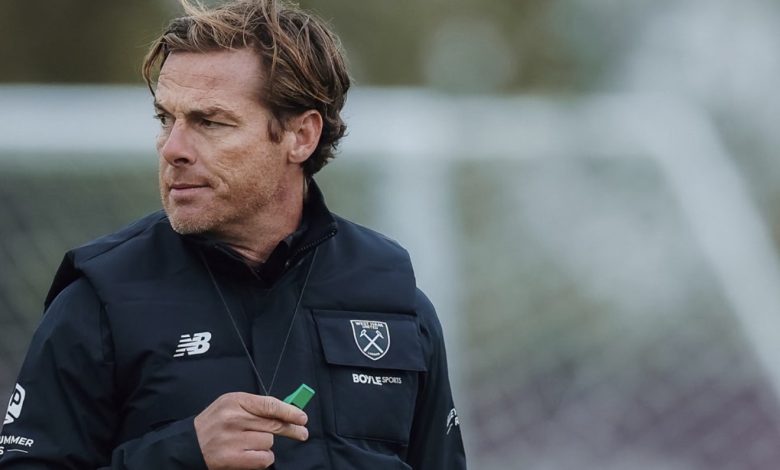
Scott Parker has barely had time to settle into the West Ham job, but his first training session has already provided some interesting clues about the direction he wants to take the team.
The former Hammers captain was officially appointed on Wednesday morning, replacing Nuno Espírito Santo on a two-and-a-half-year contract, and was immediately thrown into the Cardiff City fixture. Parker had been in the job for less than 12 hours before taking charge as West Ham fought back from 3-0 down to earn a 3-3 draw.
That meant Thursday’s session at Rush Green was particularly important.
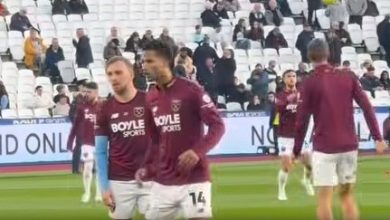
It was Parker’s first proper opportunity to work with the squad on the training ground rather than simply preparing for a match under extreme time pressure. West Ham themselves confirmed that the players returned to Rush Green on Thursday afternoon to begin preparations for Saturday’s trip to Blackburn Rovers. (std-pre-prod.whufc.com)
And while one training session is nowhere near enough to establish Parker’s definitive tactical blueprint, there were already several things worth watching closely.
1. ONE PLAYER WAS LEFT OUT OF THE FIRST-TEAM PICTURE
Perhaps the most interesting early development has been the situation surrounding Pablo Felipe.
The Brazilian forward was left out of Parker’s 20-man matchday squad for the Cardiff game despite starting West Ham’s previous Championship fixture against West Brom.
That does not automatically mean Parker has decided that the player has no future under him. The circumstances surrounding the Cardiff selection were complicated by the EFL’s homegrown-player requirements, which limited Parker’s options on the bench.
However, the omission is still significant.
Parker appears to have quickly identified the need for a more balanced attacking structure, and the fact that he selected Taty Castellanos as his starting striker, with Joel Piroe available from the bench, suggested that he was comfortable operating with a single central striker.
Piroe eventually came on at half-time and played an important role in the comeback.
For Pablo, therefore, the next few weeks could be crucial. His position in the attacking hierarchy is now something worth monitoring rather than something that can simply be assumed.
2. JARROD BOWEN COULD HAVE A NEW ROLE
This is arguably the biggest tactical talking point.
Jarrod Bowen has traditionally been one of West Ham’s most dangerous attacking players from the right side, where his pace, movement and ability to attack the space behind defenders make him a constant threat.
But Parker could be looking at a different way to use him.
There is growing intrigue around the possibility of Bowen operating more centrally, particularly in a No.10 role rather than remaining permanently stationed on the wing.
That would represent a significant change in responsibility.
Instead of receiving the ball mainly in wide areas, Bowen could be encouraged to drift between the opposition midfield and defence, arrive late in the box and combine more frequently with the striker.
It could also allow West Ham to get their most dangerous attacking player closer to goal.
The important point is that this should be viewed as an early tactical indication rather than a confirmed permanent positional switch. Parker has only just begun working with the squad.
But if Bowen continues to appear centrally, it could become one of the defining changes of the new era.
3. PARKER WANTS MORE MOVEMENT BETWEEN THE LINES
One of the clearest differences between Parker and Nuno could ultimately come through the way West Ham use their attacking midfielders.
Parker has generally favoured a 4-2-3-1 structure during his managerial career, meaning there is naturally space for a genuine No.10 behind the striker. (The72 – Football League News)
That makes Bowen’s potential movement into central areas particularly interesting.
The idea would be to create more connections between midfield and attack rather than leaving the striker isolated.
West Ham have plenty of technically capable players, including Arne Engels, who scored during the Cardiff comeback, and Parker could be looking for greater fluidity between the lines.
This is where his philosophy could begin to separate itself from what supporters saw under Nuno.
Rather than simply asking wide players to maintain their positions, Parker may want them rotating, interchanging and attacking spaces according to the movement of the ball.
4. THE INTENSITY APPEARS DIFFERENT
Another noticeable element of Parker’s arrival is the emphasis on energy.
This is not simply about players running more. It is about the intensity with which they react when possession is lost, how quickly they recover their shape and how aggressively they attempt to win the ball back.
Parker has inherited a side that was badly exposed during the first half against Cardiff.
West Ham conceded three times before the interval, but the reaction after half-time was dramatically different.
Three substitutions helped change the momentum, Divine Mukasa scored an impressive goal, Engels reduced the deficit and Maximilian Kilman eventually equalised.
Parker subsequently said there was plenty to learn from the game, particularly from the second-half response. (whufc.com)
That comeback could therefore influence what happens on the training ground.
The players have already demonstrated that they can raise their intensity. Parker’s challenge is to make that level of performance the standard rather than the exception.
5. PARKER IS NOT STARTING FROM SCRATCH
One thing that could easily be overlooked is how little time Parker actually had before his first match.
He was appointed on Wednesday morning and took charge against Cardiff that evening.
There was no realistic opportunity to completely redesign the team.
That is why his first proper training session was more about establishing principles than introducing an entirely new system.
Parker is unlikely to immediately abandon everything Nuno had implemented.
In fact, reports before the Cardiff game noted that Parker’s preference for a 4-2-3-1 meant there was already some structural continuity with the previous regime. (The72 – Football League News)
The difference may therefore come from what happens within the formation.
Where players receive the ball.
How quickly they move it.
How aggressively they press.
How the No.10 operates.
And how much freedom Bowen and the other attacking players receive.
Those details could ultimately make Parker’s West Ham look very different even if the basic formation remains familiar.
6. PARKER’S FIRST SESSION WAS ABOUT COMPETITION FOR PLACES
Perhaps the biggest message from the new manager’s arrival is that nobody should assume their place is guaranteed.
Parker has inherited a squad that contains considerable Championship quality, including players with Premier League experience.
His immediate job is not simply to make the team more attractive to watch. It is to get West Ham competing for promotion.
His record makes that objective particularly significant.
Parker has previously taken Fulham, Bournemouth and Burnley from the Championship to the Premier League, completing three promotions from the division. West Ham highlighted that record when confirming his appointment. (std-pre-prod.whufc.com)
That means his selection decisions are likely to be driven by functionality rather than reputation.
If a player fits his tactical idea, he will play.
If another player offers something different from what the system needs, they may find themselves on the bench or outside the squad.
The Pablo situation is an early example, although it would be premature to draw a definitive conclusion after one match.
THE VERDICT: PARKER HAS ALREADY STARTED TO PUT HIS STAMP ON WEST HAM
It would be far too early to claim that Scott Parker has completely transformed West Ham after one training session.
But that does not mean there is nothing to learn from the first signs.
The potential repositioning of Bowen is particularly fascinating. A player capable of operating from the right could potentially become even more influential if Parker gives him greater freedom in central areas.
The situation surrounding Pablo also shows that competition for attacking places could become fierce.
Meanwhile, Parker’s preference for a 4-2-3-1 suggests that West Ham may not necessarily undergo a dramatic formation change. Instead, the major transformation could come from how that structure is interpreted.
That is perhaps the biggest difference supporters should watch.
Nuno’s West Ham often looked like a team struggling to establish consistency and attacking rhythm. Parker now has the opportunity to create clearer relationships between midfield, the No.10 and the striker while demanding greater intensity without the ball.
The Cardiff comeback gave him something to build on.
The first training session gave him the opportunity to begin building it.
And Saturday’s trip to Blackburn will provide the first real test of whether those ideas are beginning to translate from the training ground into competitive football.
For now, the verdict is not that Parker has already solved West Ham’s problems.
The verdict is that he has started changing the way the players are being asked to solve them.