LAWRENCE SHANKLAND FINALLY BREAKS SILENCE:RANGERS CLEAROUT TALKS AFTER IBROX BOOS & JAGIELLONIA SHAME


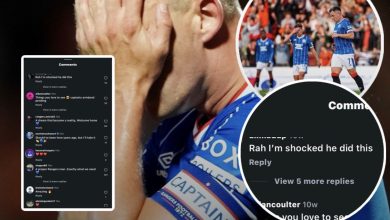
Lawrence Shankland has long embodied the complex intersection of ambition, loyalty, and the unforgiving demands of Scottish football. As a boyhood Rangers supporter who finally realised a lifelong dream by joining the club from Hearts in the summer of 2026, the striker and newly appointed captain now finds himself at the centre of growing discontent at Ibrox. The recent Europa League qualifying exit to Polish side Jagiellonia Białystok, punctuated by deafening boos at the final whistle, has intensified scrutiny on the squad, manager Derek McInnes, and the need for significant change. While specific post-match comments from Shankland immediately after the Jagiellonia second leg remain limited in the immediate aftermath, his earlier reflections on fan frustration, team performances, and the realities of life at Rangers provide crucial context for the current crisis. Combined with McInnes’s stark admissions, the episode has fuelled talk of a potential clearout as the club confronts an early-season nightmare.
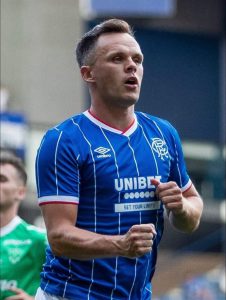
Shankland’s arrival at Rangers was years in the making. Released by the club as a youngster, he forged a prolific career elsewhere, most notably at Hearts, where he scored 88 goals in 171 appearances across four seasons and captained the side to a near-miss on the Premiership title in 2025-26. Hearts finished second, missing out on the final day, with Shankland contributing key goals, including against Rangers themselves. A break clause in the three-year deal he signed the previous summer allowed him to depart on free-transfer terms. Rangers, under the then-management of Danny Rohl (who later claimed significant involvement in the pursuit), moved quickly. Shankland signed an initial two-year contract with an option for a third, becoming the first recruit of the summer window. He officially joined in mid-June after Scotland’s World Cup campaign.
In his first comments after the move, Shankland spoke with visible emotion about fulfilling a dream. “I am delighted to be here and to have this opportunity. Rangers is my boyhood club and it has always been a dream to play here,” he told club media. He stressed a desire for success and legacy: “There are a lot of Rangers players that come and go over the years and if you are not successful you are forgotten about pretty quickly. I want to be one that comes here, we want to win, the club wants to be in a position where we are back winning titles regularly.” He referenced the trophy photos and history at the training ground, stating he wanted to leave his stamp on the club. The move reunited him with Derek McInnes, who had managed him at Hearts and later took the Ibrox job. McInnes made Shankland captain, citing his leadership qualities and previous experience wearing the armband.
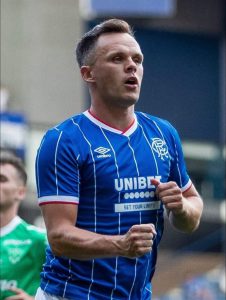
The transfer was not without controversy. Hearts fans felt betrayed after their captain walked out on a relatively new deal via the clause, and some club figures defended the decision as pragmatic. Shankland himself later addressed the clause carefully, noting it was a private matter between him and Hearts but confirming that once he indicated his desire to join Rangers, the process was straightforward. He and fellow Hearts departure Cammy Devlin later spoke about the move as a “no-brainer,” acknowledging potential hostility on returns to Tynecastle while prioritising personal and family opportunities at a bigger club.
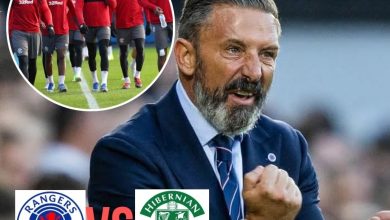
Expectations were high. Shankland, a proven goalscorer in the Scottish Premiership with international experience, was seen as the missing link—a local hero who understood the club’s demands. Pre-season showed promise, and he scored in friendlies. Yet the competitive campaign under McInnes has been fraught. Rangers entered the 2026-27 season with a rebuilt squad but struggled for consistency and results. Early league fixtures yielded draws and defeats, including a late 2-1 home loss to Hibernian that drew boos and criticism over perceived lack of desire. Shankland, speaking after that match, pushed back against some accusations levelled at teammates while accepting the broader frustration. “I understand the frustration. I’ve been around the club long enough in Scottish football as well,” he said. He rejected claims that players failed to track back adequately and pointed to the number of chances created as evidence of positive intent, even if results lagged. “We’re not asking for patience,” he added, emphasising the need for wins while noting the build-up of supporter angst over years of inconsistency.
That frustration reached a boiling point in the Europa League third qualifying round against Jagiellonia Białystok. In the first leg in Poland, Rangers lost 2-1, with defensive errors—including own goals—proving costly. Shankland featured as a substitute and had limited impact. The return leg at Ibrox on 13 August 2026 offered a chance at redemption. Trailing on aggregate, Rangers started brightly. A VAR-awarded penalty for handball against former Celtic defender Yuki Kobayashi allowed Shankland to step up in the 19th minute. He converted confidently for his first competitive goal in a Rangers shirt, levelling the tie on aggregate and briefly lifting the mood.
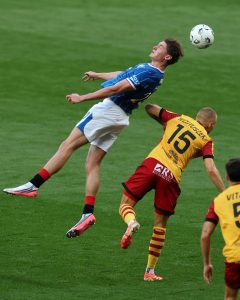
The lead on the night, however, was not built upon effectively. Rangers created further opportunities—Thelo Aasgaard fired wide, Ryan Naderi went close—but failed to capitalise. McInnes made a half-time change, introducing Ross McCrorie for Aasgaard in an attempt to adjust the shape after a somewhat open first half that left wing-backs exposed. The second half saw Jagiellonia grow into the contest. In the 65th minute, Nik Prelec headed home an equaliser on the night, restoring the Polish side’s aggregate advantage. Despite late pressure and the introduction of Bojan Miovski for his first minutes of the season, Rangers could not force the goal needed to take the tie to extra time. The final whistle was met with a prolonged chorus of boos from the Ibrox crowd. It marked Rangers’ earliest exit from the Europa League since 2017 and left McInnes still searching for a first win in four competitive games in charge.
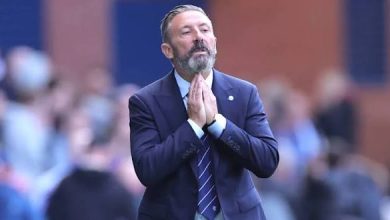
McInnes did not shy away from the criticism. “It was justified, to be honest,” he said of the boos. He owned the result and performance, describing it as a painful illustration that the current team was not ready for the demands of the Champions League or even sustained Europa League involvement. “The club is built for Europa League and Champions League but I’m not sure the team is quite ready for it, and that pains me to say it. We need more quality and confidence into the team.” He explained tactical choices, including the use of players in wing-back roles that asked a lot defensively, and acknowledged the need to open the game while noting it became too open at times. The drop into the Conference League play-offs against Czech opposition offered a secondary path into European group stages, but the damage to morale and standing was clear.
In this atmosphere, talk of a Rangers clearout has intensified. Supporters, already impatient after years of fluctuating fortunes, see a squad that looks disjointed despite summer recruitment. Questions surround the balance of the attack—Shankland competing or rotating with players such as Youssef Chermiti, Ryan Naderi, and Miovski—midfield solidity, and defensive resilience. McInnes’s own assessment that more quality is required fuels speculation about further incomings and possible outgoings before the window closes or in the January window. Shankland, as captain and a high-profile new arrival, sits at the heart of efforts to steady the ship. His goal against Jagiellonia showed clinical edge under pressure, yet the collective failure to convert dominance into progression has left him, like the rest of the squad, under the spotlight.
Shankland’s earlier comments after the Hibs defeat offer insight into how he approaches such periods. He stressed understanding of fan expectations as someone who has sat in the stands and followed the club. He defended the team’s intent while accepting that results are the ultimate measure at Ibrox. This measured stance—acknowledging justified anger without descending into defensiveness—positions him as a potential bridge between dressing room and support. At the same time, the “shame” of exiting European competition at this stage against a side many expected Rangers to overcome has amplified calls for accountability across the board.
The broader context at Rangers is one of transition. Ownership changes, managerial turnover (from previous regimes through Rohl to McInnes), and squad rebuilding have created a sense of perpetual reset. Shankland’s free transfer was viewed by many as an astute, low-risk addition of proven Scottish talent and leadership. Barry Ferguson and others had long advocated for his signing. Yet early results have highlighted that individual quality alone does not solve structural or confidence issues. McInnes’s admission that the team is not yet at the required level is both a diagnosis and a challenge. A clearout, whether of underperforming players, tactical rethinks, or both, appears increasingly likely if form does not improve quickly in domestic and Conference League action.
Looking ahead, Rangers must respond in the Premiership to close the gap on early leaders and navigate the Conference League play-off successfully. Shankland will be expected to lead the line and the dressing room. His journey from Hearts captaincy and title near-miss to Ibrox dream and early turbulence encapsulates the high stakes of the move. Success would cement his legacy; continued struggle risks the very fate he warned against—players who come and go without lasting impact.
Fan pressure is a constant at clubs of Rangers’ stature. Boos after the Jagiellonia draw were not isolated; they echoed earlier discontent. McInnes’s willingness to accept them as justified may buy limited time, but results must follow. For Shankland, the task is clear: score goals, organise the attack, embody the fight supporters demand, and help turn a difficult start into a platform for the success he sought when signing. The clearout conversation will continue in the background until the team shows it can compete consistently at the levels expected. In the unforgiving environment of Ibrox, silence is rarely an option for long—whether from the stands, the manager, or the captain himself. The coming weeks will determine whether the current pain leads to renewal or deeper crisis.
The Jagiellonia exit stands as a low point early in the McInnes-Shankland era. What began with optimism around a dream signing and familiar managerial partnership has rapidly become a test of resilience. Shankland’s first competitive goal offered a fleeting high; the aggregate defeat and subsequent jeers delivered a harsh reality check. As discussions about squad reshaping intensify, the captain’s leadership will be scrutinised as closely as his finishing. Rangers have history of recovering from setbacks, but the margin for error this season already looks slim. For a player who waited years for this opportunity, the pressure to deliver—and to help drive the necessary changes—has never been greater. The boos have spoken. The response from those in the blue shirts, starting with Shankland and McInnes, will define the narrative from here.