Rangers player removes club references from social media after critical errors in Jagiellonia defeat

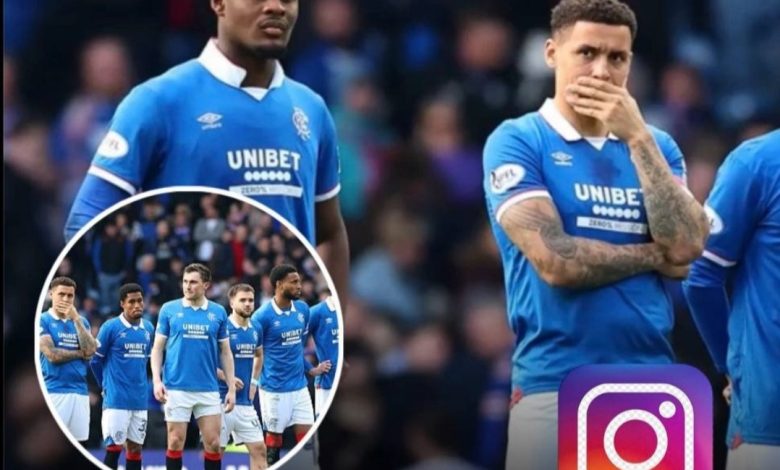
RANGERS FC STAR DELETED EVERY REFERENCE TO THE CLUB ON HIS SOCIAL MEDIA AFTER COSTING THEM THE GAME AND TROLLED BY RANGERS FANS
Rangers’ disappointing 2-1 defeat to Jagiellonia Białystok in the first leg of their UEFA Europa League third qualifying round tie has sparked intense scrutiny, with one player at the centre of heavy criticism from supporters after costly defensive errors contributed to the loss. In the aftermath, reports emerged that the player removed every reference to the club from his social media accounts following a wave of online trolling by sections of the Rangers support.
The match at the Chorten Arena on Thursday evening began promisingly for Derek McInnes’ side. Just four minutes in, Tuur Rommens delivered a low cross that was missed by Youssef Chermiti, only for home defender Guilherme Montoia to turn the ball into his own net, giving Rangers a valuable away lead. For a brief period it looked as though the Scottish side had seized control of the first leg.
That advantage lasted less than ten minutes. Around the 13th minute, a cross from Kajetan Szmyt was turned into the Rangers net via Emmanuel Fernandez, restoring parity for the Polish side. The equaliser was preventable and left the visitors visibly rattled. Eight minutes later the situation worsened. A rapid counter-attack exposed further defensive frailty. Fernandez slipped in the box as a cross came in, allowing Jesus Imaz a shot that Ivor Pandur parried. Szmyt reacted quickest to the loose ball and fired home to put Jagiellonia 2-1 ahead before half-time.
Those two goals, both stemming from defensive lapses, proved decisive. Rangers improved after the interval. McInnes introduced Cammy Devlin, Nicolas Raskin and Findlay Curtis at the break, and the visitors dominated possession and territory for long periods. Late chances fell to Lawrence Shankland and Curtis, whose stoppage-time volley crashed against the post, but the equaliser never came. The 2-1 scoreline leaves Rangers with a difficult task in the second leg at Ibrox next week.
In the immediate aftermath, attention focused on the defensive errors that handed Jagiellonia the initiative. Player ratings in the Scottish media were particularly harsh on Fernandez, who received a low mark for his involvement in both goals. Fans on social media were even more scathing. Messages directed at the defender ranged from frustration at the individual mistakes to broader criticism of the team’s organisation and McInnes’ early selection decisions. Some posts crossed into personal territory, a familiar and unfortunate pattern when results go against the club.
It was against this backdrop that reports circulated that the player at the centre of the criticism had deleted every reference to Rangers from his social media profiles. Posts, photographs and mentions linked to the club were removed, an action widely interpreted as a response to the volume and nature of the online abuse. While the player has not issued a public statement on the matter, the removal of club-related content was noted by supporters and media accounts tracking the fallout.
Social media reactions of this kind are not new in modern football. Players who make high-profile errors frequently face intense online scrutiny, particularly at clubs with large, passionate supporter bases such as Rangers. The speed and volume of commentary can be overwhelming, and some athletes choose to step back from public platforms, at least temporarily, to protect their mental wellbeing. Deleting club references is a more pointed step and often signals the depth of the pressure felt in the hours after a damaging result.
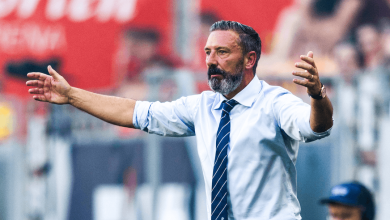
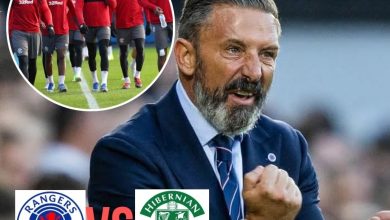
McInnes, speaking after the match, accepted that his side had contributed to their own downfall. He acknowledged the early lead and the control they had established, only for individual mistakes to undo that work. The manager’s comments focused on the collective rather than isolating any single player, a standard approach designed to maintain dressing-room unity while still addressing the performance issues. He will now turn his attention to preparing for the return leg, where Rangers must overturn the deficit if they are to progress to the play-off round.
The result leaves the Europa League campaign already under pressure. McInnes is still in the early stages of his tenure and is overseeing a squad in transition after a busy summer of arrivals and departures. Defensive solidity has been a recurring concern, and the errors in Poland will only intensify the focus on that area of the team. The second leg at Ibrox offers an opportunity for redemption, but the first-leg deficit means Rangers will need a strong, disciplined performance to turn the tie around.
For the player involved in the social media fallout, the coming days will be challenging. Facing personal criticism while preparing for another high-stakes European match tests both professional and personal resilience. Clubs increasingly provide support for players dealing with online abuse, recognising that the mental demands of the modern game extend far beyond the pitch. Whether the social media accounts remain stripped of club content or are later restored remains to be seen.
Supporters, meanwhile, remain divided between those calling for accountability after costly mistakes and those urging patience as the new manager continues to shape his side. The passion of the Rangers support is well known, but the line between legitimate criticism and excessive personal attacks is one that continues to generate debate across Scottish football.
As the squad returns to Glasgow and begins preparations for the second leg, the focus will shift back to the pitch. The 2-1 deficit is recoverable, but only if the defensive lapses that defined the first half in Poland are eliminated. McInnes will demand greater concentration and organisation, while the players must respond collectively to the setback.
The episode also serves as a wider reminder of the intense environment in which modern footballers operate. A single poor performance, or even a single costly moment, can trigger a cascade of online reaction that follows a player long after the final whistle. In this case, the combination of a damaging European result and subsequent social media activity has created an uncomfortable post-match narrative for Rangers.
Whether the player’s decision to remove club references proves temporary or longer-lasting, the underlying issues exposed in Białystok will need addressing on the training ground. The second leg at Ibrox will provide the first opportunity to respond. For Rangers, the task is clear: correct the defensive errors, harness the home support, and find a way back into the tie. For the individual at the centre of the criticism, the challenge is both sporting and personal as the fallout from a difficult night in Poland continues.
The full story of how the social media activity developed, and any official club response, may emerge in the coming days. What is already clear is that the 2-1 defeat has left Rangers with work to do on and off the pitch if they are to keep their European ambitions alive this season.