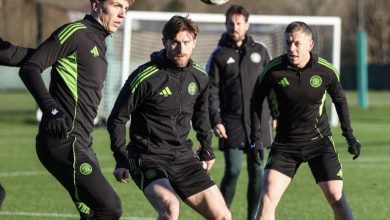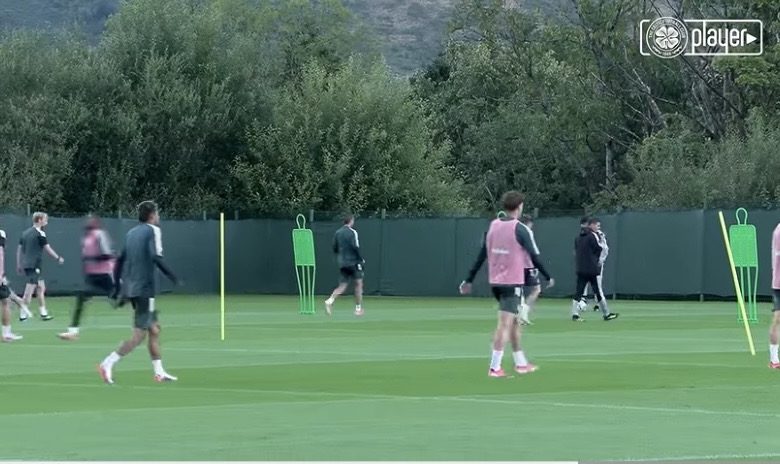
Celtic Park’s training complex was the scene of an unexpected and heated confrontation on Monday morning, just hours before the Hoops open their Scottish Premiership campaign against Dundee FC.
What began as a routine session under the watchful eye of manager Martin O’Neill escalated into a physical clash between two of the club’s high-profile players, requiring intervention from coaches and senior squad members to restore order.

The incident has cast a shadow over preparations for the season’s first competitive fixture and left the veteran manager visibly frustrated.
Sources close to the club confirmed that the confrontation occurred during a high-intensity possession drill designed to sharpen attacking patterns and defensive transitions. Tempers frayed after a series of robust challenges and disputed decisions in the small-sided game.
Voices were raised, and the situation quickly deteriorated into a pushing match that forced staff to step between the pair. Training was briefly halted while cooler heads prevailed, and the session resumed only after both players were spoken to individually.
Martin O’Neill, returning to the dugout with characteristic intensity, made no attempt to disguise his displeasure in the aftermath. Speaking briefly to club media, the Northern Irishman stressed the importance of unity and discipline at the start of a demanding campaign. “This is not the standard we set,” he said. “We have a big game coming up and every player needs to be focused on the collective.
Personal issues have no place on the training pitch. It will be dealt with internally.” O’Neill declined to name the individuals involved at that stage, preferring to keep the matter within the dressing room, but the mood around the training ground was described by those present as tense for the remainder of the day.
Scales and Hatete, both established members of the first-team squad and expected to feature prominently against Dundee, were the central figures in the flashpoint.
Witnesses indicated that Scales had taken exception to a late challenge from Hatete during a transition exercise. Words were exchanged, proximity increased, and within moments the pair were chest-to-chest before coaches intervened. The confrontation was short-lived yet forceful enough that teammates moved quickly to separate them, preventing any further escalation.
Scales, known for his competitive edge and vocal leadership on the pitch, was said to have been particularly animated. Hatete, equally uncompromising in his approach to training, matched the intensity.
The exchange reportedly centred on accusations of unnecessary force and a perceived lack of respect for the competitive spirit of the session.
Neither player sustained injury, and both completed the remaining drills after a short cooling-off period, yet the atmosphere remained strained. Staff members kept the pair apart for the final portion of the workout, assigning them to separate groups to avoid further friction.
The timing of the incident could hardly have been less ideal. Celtic travel to Dens Park for their opening league fixture with expectations high following a solid pre-season. O’Neill has emphasised collective responsibility and mental sharpness as non-negotiables for the campaign ahead.
The sight of two senior professionals requiring physical separation on the training field undermines that message and risks distracting the wider group. Insiders suggest the manager held a private meeting with both Scales and Hatete later in the afternoon, reinforcing standards and reminding them of the greater objectives that lie ahead.
For Scales, the episode marks an unwelcome footnote in what has otherwise been a positive pre-season. The player has impressed in friendlies with his work rate and ability to drive the team forward from midfield positions. Supporters have long admired his commitment, yet that same intensity can occasionally spill over when emotions run high.
Hatete, for his part, has been working diligently to establish himself as a consistent starter. His physical presence and willingness to engage in duels have made him a valuable asset in O’Neill’s preferred system, but the clash has raised questions about whether the competitive fire that serves him well in matches can be properly channelled in the controlled environment of daily training.
Club sources stressed that the matter is viewed as an isolated incident rather than evidence of deeper dressing-room unrest. Celtic’s squad has largely remained cohesive through the summer, with new arrivals integrating smoothly and established players accepting the manager’s demands. Nevertheless, any public perception of disharmony so close to the start of the season is unwelcome.
O’Neill’s track record suggests he will not allow the episode to linger. Previous spells in management have shown him capable of drawing a firm line when internal standards are breached, while still protecting the group’s overall focus.
Looking ahead to the Dundee fixture, selection decisions will be scrutinised more closely than usual. Both Scales and Hatete remain in contention for starting places, yet the manager retains the option to rotate or rest either player if he feels the residual tension could affect performance.
Dundee, under their own new leadership, will present a difficult away test. They are expected to sit deep, frustrate Celtic’s attacking patterns and look to exploit transitions.
For the visitors, maintaining composure and concentration will be essential. Any lingering personal friction between Scales and Hatete could prove costly if it surfaces under the pressure of competitive match conditions.
Beyond the immediate selection concerns lies a broader question of culture. O’Neill has spoken repeatedly about the need for a squad that polices itself. Senior players are expected to set the tone, resolving minor disputes without requiring official intervention.
The fact that coaches had to step in between Scales and Hatete indicates that threshold was crossed. Whether the pair can quickly reset their professional relationship will be watched carefully by teammates and staff alike. Football dressing rooms are rarely free of friction; competitive athletes clash by nature. The measure of a strong environment is how swiftly such moments are left behind.
In the hours following the session, both players were understood to have spoken with senior figures in the squad. The conversations were private, yet the message was consistent with the manager’s public comments: the team comes first. Celtic’s season ambitions remain ambitious. A strong start against Dundee would set an early tone, while any slip could invite unnecessary pressure. O’Neill’s dissatisfaction is therefore not merely about one heated moment; it reflects concern that energy which should be directed outward is being expended internally.
Training resumed on Monday with a more measured intensity. Scales and Hatete were again kept in separate groups for certain drills, a precaution rather than a punishment. Staff observed that both completed their work diligently and without further incident. The manager’s message appears to have landed. Still, the episode serves as an early reminder that even the most professional environments can experience sudden spikes of tension when competitive instincts collide.
As the squad prepares to depart for Dundee, the focus will return to tactical preparation and match readiness. O’Neill is expected to name a strong side, trusting that the lessons of Sunday’s confrontation have been absorbed. For Scales and Hatete, the path forward is clear: channel the same competitiveness that sparked the clash into performances that benefit the collective. The manager has made his position plain. Unity is non-negotiable, particularly at the beginning of a long season.
Supporters will watch the opening fixture with heightened interest, not only for the result but for any signs that the training-ground episode has been fully resolved. Celtic’s history is filled with strong characters who clashed in private yet delivered on the pitch. Whether Scales and Hatete follow that pattern remains to be seen. What is certain is that Martin O’Neill will tolerate little further disruption. The season has barely begun, and the standards he demands are already being tested.
The club issued no formal statement beyond confirming that an internal matter had been addressed and that all players remained available for selection. In the modern game, where every training session is observed and every raised voice risks amplification, the swift containment of the incident is notable. Yet the underlying message from the manager is unambiguous. Personal confrontations have no place when the collective goal is clear. Scales and Hatete have been reminded of that reality. The rest of the squad has taken note. Attention now shifts to Dens Park, where the real examination of Celtic’s readiness will take place under the lights of competitive football rather than the controlled conditions of the training pitch.