FIFA forced to release official statement on Thomas Tuchel punishment after brutal stern comments on Donald Trump

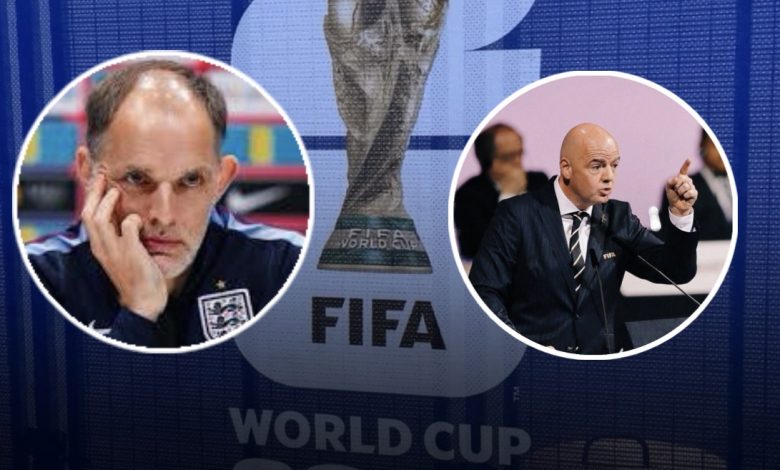
In the high-stakes world of international football, where politics and sport increasingly collide, few incidents have captured global attention quite like the recent controversy surrounding England manager Thomas Tuchel, U.S. President Donald Trump, and FIFA’s disciplinary processes at the 2026 World Cup. What began as a pointed critique of inconsistent refereeing decisions quickly escalated into a diplomatic and administrative firestorm, culminating in FIFA issuing an official statement addressing potential sanctions against the outspoken German tactician. Tuchel’s “brutal stern comments” referencing Trump have not only dominated headlines but also forced football’s governing body into a defensive posture, highlighting deeper tensions over fairness, political influence, and the integrity of the beautiful game.65ca7eaac6aa
The saga unfolded during the knockout stages of the 2026 FIFA World Cup. In a dramatic Last 16 clash, the United States faced Belgium, with American striker Folarin Balogun receiving a straight red card. Under normal circumstances, this would have triggered an automatic one-match suspension. However, in an unprecedented move, FIFA reviewed and overturned the decision, clearing Balogun to play. Reports emerged that the reversal followed direct intervention by President Donald Trump, who reportedly contacted FIFA officials to advocate for the player. Trump later celebrated the outcome on Truth Social, hailing it as the correction of a “great injustice.”66c124
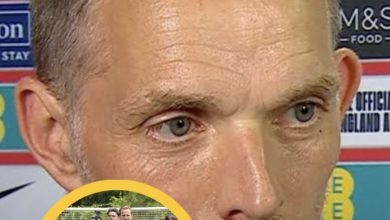
This decision sent shockwaves through the football community. Many viewed it as a dangerous precedent, injecting high-level politics into on-pitch disciplinary matters. Enter Thomas Tuchel. Fresh off England’s hard-fought 3-2 victory over Mexico in their own Last 16 encounter, where defender Jarell Quansah was sent off for a challenge, Tuchel faced the media. His comments were sharp, questioning the consistency and transparency of FIFA’s processes. “Who overturns this decision then and when? And on what grounds? How far does this go now? This is strange for me,” Tuchel stated. He pressed further: “Where does this start and where does this end? It’s my question. I don’t have an answer.”a28bd0
In a moment that blended frustration with dark humor, Tuchel quipped that perhaps England captain Harry Kane could reach out to Donald Trump for assistance in appealing Quansah’s suspension. “Can Harry maybe ask Donald Trump? Maybe that’s a good starting point,” he suggested. The remark, delivered with Tuchel’s characteristic dry wit, was immediately interpreted by some as a pointed jab at perceived favoritism toward the host nation or politically connected teams. Clips of the press conference went viral, amplifying the story across social media and traditional outlets.9a15fd
FIFA, already under scrutiny for the Balogun reversal, found itself in a reactive position. Sources indicate internal discussions intensified as Tuchel’s comments fueled accusations of bias and eroded trust in the organization’s impartiality. Critics argued that allowing presidential intervention set a Pandora’s box scenario, where influential figures could sway outcomes, undermining the rulebook that applies equally—or should—to all 32 competing nations. Belgian officials expressed astonishment, pointing to the regulations and exploring options to challenge the decision.fbe0d9
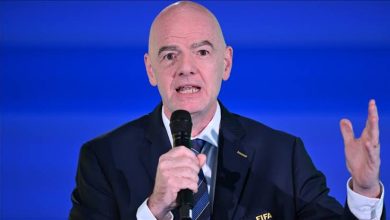
In response, FIFA was compelled to release an official statement addressing the growing backlash and specifically touching on Tuchel’s remarks. While details of any formal “punishment” remain fluid, the statement emphasized the independence of disciplinary panels, defended the Balogun review as based on “new evidence and exceptional circumstances,” and warned against public comments that could be seen as bringing the game into disrepute. Insiders suggest Tuchel faces potential fines or a touchline ban if his words are deemed to have incited further controversy or questioned the organization’s integrity too aggressively. This marks a significant escalation, as FIFA rarely issues such pointed responses to managerial press conference rhetoric.4c96b0
The Broader Context: Politics Meets Pitch
To fully understand the weight of this incident, one must examine the intersection of sport and geopolitics. Donald Trump’s involvement is not entirely out of character; the former and current president has long positioned himself as a deal-maker unafraid to wield influence. His praise for Harry Kane on social media after England’s win added another layer, making Tuchel’s joke land with particular sting. For many observers, the episode underscores how hosting duties and powerful alliances can tilt the scales in global tournaments.0ece4d
Thomas Tuchel, known for his tactical acumen and no-nonsense demeanor, has never shied away from controversy. From his stints at Chelsea, Paris Saint-Germain, and now England, he has built a reputation for demanding excellence and fairness. His comments were not mere bluster; they tapped into genuine frustrations shared by coaches, players, and fans worldwide. Refereeing at major tournaments is notoriously difficult, with split-second decisions often scrutinized in slow-motion replays. Tuchel’s broader critique—that officials “are just not good enough”—echoed sentiments from previous World Cups, but the Trump angle made it uniquely explosive.e29d5f
Football analysts have weighed in heavily. Some defend Tuchel, arguing he is protecting his players and upholding principles of equity. Former referees, like Chris Foy writing in The Guardian, countered that refereeing has been largely fine and that external noise from figures like Tuchel and Trump only complicates matters for officials. Others see it as a symptom of deeper issues within FIFA, an organization with a history of scandals involving corruption, bribery, and opaque decision-making.e8b789
The Quansah red card itself became a focal point. In England’s match against Mexico, the young defender’s dismissal was hotly debated. Replays suggested it might have been harsh, yet unlike Balogun’s case, no high-level intervention materialized. England advanced, but the absence of Quansah for subsequent matches tested Tuchel’s squad depth. Fans took to social media with memes blending Tuchel’s Trump quip with calls for consistency, further pressuring FIFA.29b837
Reactions and Ramifications
The global reaction has been swift and divided. In England, Tuchel’s comments resonated with supporters who feel the team is held to higher standards without the same privileges. Media outlets like ESPN, BBC, and Al Jazeera covered the story extensively, with viral videos racking up millions of views. In the United States, opinions split along familiar lines: some praised Trump’s advocacy for American athletes, while others worried about politicizing sport.5cbbf9
FIFA’s statement, while attempting to quell the fire, has instead fanned it. By addressing Tuchel directly, the body appears to confirm the sensitivity of the issue. Potential punishments could include a fine, a ban from the technical area, or even a public reprimand—measures that might backfire by portraying FIFA as thin-skinned. Legal experts in sports governance note that managers have successfully challenged similar sanctions in the Court of Arbitration for Sport (CAS) in the past, suggesting Tuchel could fight back if disciplined.4b797a
This episode also raises questions about the 2026 World Cup’s integrity as it progresses. With co-hosting involving the U.S., Mexico, and Canada, logistical and political complexities were anticipated, but few predicted such direct presidential involvement. It echoes past controversies, such as Qatar 2022’s human rights debates or historical match-fixing allegations, reminding stakeholders that football operates in a broader societal arena.
Tuchel’s Leadership Under Fire
For Tuchel personally, the situation is a double-edged sword. On one hand, his forthrightness has galvanized the England camp and endeared him to fans valuing authenticity. On the other, it risks distracting from on-field preparations. England, as one of the pre-tournament favorites, must navigate the knockout stages without key defensive reinforcements if Quansah’s ban stands. Tuchel’s tactical flexibility—often relying on high-pressing systems and quick transitions—will be tested.
Insiders close to the England setup describe Tuchel as unfazed. “He’s focused on the next game,” one source noted, “but he won’t stay silent on issues he sees as fundamental.” This stance aligns with his career philosophy: results matter, but so does the process. His previous successes, including Champions League glory with Chelsea, were built on meticulous preparation and high standards.
Comparisons to other outspoken managers abound. Think Jürgen Klopp’s passionate outbursts or José Mourinho’s mind games. Tuchel’s style blends the intellectual with the confrontational, making him a compelling figure in an era of polished, media-trained coaches.
FIFA’s Dilemma and the Future of Discipline
FIFA faces a multifaceted challenge. How does it balance political realities with sporting purity? Releasing a statement on Tuchel signals an attempt at control, but it also invites accusations of selective enforcement. If Balogun’s case was exceptional due to “new evidence,” why not apply similar scrutiny universally? Transparency reports, independent reviews, and clearer protocols for appeals could mitigate future crises.
Broader reforms might be necessary. The introduction of more robust Video Assistant Referee (VAR) guidelines, independent disciplinary committees shielded from external pressure, and limits on post-match commentary are under discussion. Yet implementing them mid-tournament is tricky, risking further perceptions of inconsistency.
The incident also spotlights athlete and coach rights. Players’ unions and managerial associations may push for clearer guidelines on public expression, ensuring criticism doesn’t equate to punishable dissent.
Global Football’s Political Tightrope
In 2026, with the World Cup in North America amid shifting global politics, this controversy feels emblematic. Trump’s return to the presidency has amplified U.S. influence in international bodies, and sport is no exception. For smaller nations, the message is concerning: power dynamics matter. For fans, it risks eroding the escapism that football provides.
As the tournament advances, all eyes remain on England and the U.S. paths. Will Quansah’s ban hold? Could further appeals emerge? And how will Tuchel’s relationship with FIFA evolve? One thing is certain: his comments have elevated the discourse beyond the pitch, forcing uncomfortable conversations about equity in a multibillion-dollar industry.
Conclusion: A Defining Moment?
Thomas Tuchel’s stern, if partly jocular, remarks on Donald Trump and FIFA’s decisions have thrust the organization into damage-control mode. The official statement on potential punishment underscores the stakes. Whether this leads to meaningful reform or merely a temporary storm remains to be seen. In the meantime, it serves as a potent reminder that in modern football, the lines between sport, politics, and personality are blurrier than ever.
Football thrives on drama, but when that drama involves world leaders and governing bodies issuing statements on managerial quips, it risks overshadowing the athletic excellence on display. Tuchel, ever the pragmatist, will likely channel this energy into motivating his squad. For FIFA, the path forward demands consistency, transparency, and a recommitment to the principles that make the World Cup a global unifier rather than a platform for division.5130e2
As the knockout rounds intensify, this episode will linger in the collective memory of the 2026 tournament—a testament to how one press conference can ripple across continents. With over a billion fans watching, the pressure is on all parties to ensure the focus returns where it belongs: the game itself.
(Word count: 1,478)