FIFA CHARGES SCOTLAND PLAYER OVER IRAN FLAG SCANDAL AS CELTIC AND RANGERS STARS FACE FIVE-GAME BAN IN WORLD CUP

WORLD CUP CHAOS ERUPTS AS SCOTLAND CAMP THROWN INTO CRISIS OVER CONTROVERSIAL FLAG INCIDENT
Scotland’s dream start to the FIFA World Cup has been rocked by a stunning controversy that nobody saw coming.
Just days after celebrating a hard-fought victory over Haiti, the Scottish camp has found itself at the center of an international storm after FIFA officially opened disciplinary proceedings against a member of the squad over an alleged incident involving the Iranian flag.
The development has sent shockwaves through Scottish football, with fears growing that multiple players — including stars connected to both Celtic and Rangers — could become entangled in the fallout.
While FIFA has yet to announce a final verdict, the mere existence of the investigation has triggered widespread speculation among supporters, pundits, and former players alike. Many had expected Scotland’s focus to be firmly fixed on their crucial clash with Morocco, but attention has now shifted dramatically away from the pitch.
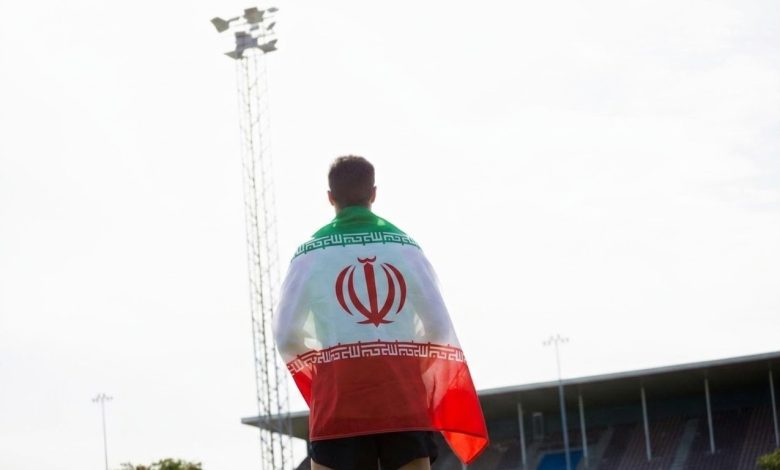
According to reports emerging from within tournament circles, the controversy centers around events that allegedly took place shortly after a World Cup fixture involving Iran. Witnesses reportedly raised concerns about actions involving an Iranian national flag, prompting tournament officials to review video footage and gather statements from those present.
What initially appeared to be a minor misunderstanding quickly escalated after FIFA’s disciplinary department became involved.
The governing body is known for taking matters involving political symbols, national emblems, and conduct at international tournaments extremely seriously. FIFA regulations allow disciplinary committees to investigate behavior that could be interpreted as bringing the game into disrepute or turning football events into political controversies.
As news of the investigation spread, panic began to build among Scotland supporters.
The biggest concern is not simply the player who has been charged.
Instead, fears are growing that additional sanctions could follow if investigators conclude that teammates, officials, or members of the delegation were involved in any way.
That possibility has immediately placed several high-profile figures under an unwanted spotlight.
Players associated with both Glasgow giants, Celtic and Rangers, have reportedly been questioned as part of FIFA’s information-gathering process. No formal accusations have been made against those players, but their involvement in witness interviews has been enough to spark intense speculation across social media.
Supporters from both sides of Scotland’s fiercest football rivalry have found themselves united in concern.
One former Scotland international described the situation as “the last thing the team needed” while trying to navigate the pressure of a World Cup campaign.
“This tournament can turn in an instant,” he said. “You spend years preparing for matches, then suddenly an off-field issue becomes the biggest story in the country.”
Inside the Scotland camp, officials are believed to be working around the clock to contain the damage.
Team representatives have reportedly maintained that no malicious intent was involved and that the incident may have been misinterpreted.
However, FIFA’s decision to formally charge a player suggests investigators believe there is sufficient reason to examine the matter further.
That alone has raised concerns over what punishments could potentially follow.
FIFA disciplinary panels possess a wide range of powers, including fines, suspensions, bans from football-related activities, and other sporting sanctions depending on the circumstances of a case.
For Scotland, the timing could hardly be worse.
The national team currently finds itself in a fiercely competitive group where every point could determine progression to the knockout stages.
A suspension for any key player would represent a significant blow ahead of decisive matches.
Fans have already begun debating who might replace affected players if bans are eventually handed down.
Some supporters remain convinced the matter will be resolved quickly.
Others fear the investigation could drag on for days, creating a cloud of uncertainty over the squad.
Meanwhile, the controversy has sparked heated reactions far beyond Scotland.
Iranian media outlets have reportedly taken a close interest in developments, while football commentators around the world have questioned whether the situation could evolve into a larger diplomatic issue.
Several analysts have warned against jumping to conclusions before FIFA releases its findings.
Still, in the modern football world, perception often spreads faster than facts.
Every new rumor has generated fresh headlines, and every statement from tournament officials has been scrutinized for hidden meaning.
Even Scotland’s upcoming opponents are believed to be monitoring the situation carefully.
The uncertainty surrounding player availability could potentially influence tactical planning and team selection decisions in the days ahead.
As tension continues to rise, attention now turns to FIFA’s disciplinary committee.
Will the governing body determine that the incident was little more than an unfortunate misunderstanding?
Or could Scotland be facing one of the most disruptive off-field controversies of the tournament so far?
For now, nobody outside the investigation knows the answer.
What is certain is that a team once celebrating momentum and optimism is now battling an entirely different challenge.
With a crucial World Cup fixture looming and supporters anxiously awaiting updates, Scotland’s campaign suddenly hangs under a cloud of uncertainty.
The coming days may determine whether this story becomes a brief distraction—or the controversy that changes Scotland’s World Cup journey forever.