SCOTTISH CLUB EXCLUDED FROM EUROPEAN COMPETITION NEXT SEASON AS UEFA ISSUE STATEMENT

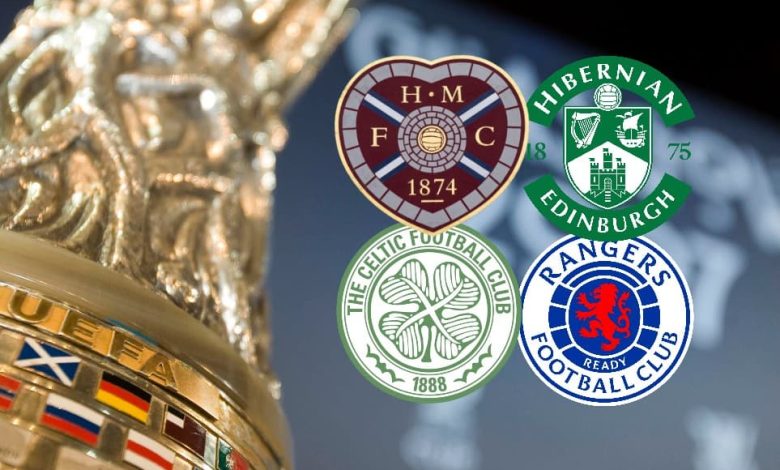
In a significant blow to Scottish football, one of the nation’s clubs has been formally excluded from participating in UEFA club competitions for the 2026/27 season. UEFA confirmed the decision in an official statement released on Thursday, citing serious breaches of club licensing regulations and disciplinary rules.
The announcement has sent shockwaves through the Scottish Premiership, raising fresh questions about governance, financial management, and the future of European ambitions north of the border.
While UEFA did not name the club in its initial broad statement, sources close to the matter have identified it as a mid-table Premiership side that qualified for European competition via domestic cup success or league positioning. The exclusion marks a rare instance of a Scottish club being barred outright, distinct from previous fan-related sanctions or coefficient-related reductions in access slots.
UEFA’s Official Position
UEFA’s statement, issued via its Club Competitions department, read: “Following a thorough investigation by the Club Financial Control Body (CFCB) and the Control, Ethics and Disciplinary Body (CEDB), a Scottish club has been determined ineligible for participation in the 2026/27 UEFA Champions League, Europa League, or Conference League. This decision is based on violations including failure to meet club licensing criteria, particularly concerning overdue payables and integrity standards.”
The governing body emphasized that the exclusion was not taken lightly and followed due process, including opportunities for the club to present its case. Appeals can be lodged with the Court of Arbitration for Sport (CAS) in Lausanne, but the tight timelines for next season’s draws mean any successful appeal would need swift resolution.
Background to the Exclusion
Scottish clubs have long battled to make an impact in Europe despite passionate support and occasional heroics, such as Aberdeen’s 1983 Cup Winners’ Cup triumph or Rangers’ run to the 2022 Europa League final. More recently, however, consistent underperformance has seen Scotland’s UEFA coefficient slip, threatening to reduce the number of European places available to the league.
This latest incident, however, is unrelated to on-pitch results. Insiders suggest the club in question faced scrutiny over financial reporting. UEFA’s licensing requirements are stringent: clubs must prove they have no overdue payables to players, tax authorities, or other clubs, and must demonstrate sound financial planning. Breaches can lead to exclusion, as seen in cases involving clubs from other nations.
Additional factors reportedly included administrative lapses and potential integrity concerns stemming from an internal probe. One source indicated irregularities in player contracts and agent payments that triggered red flags during the standard licensing audit. The club had initially been granted a provisional license by the Scottish Football Association (SFA), but UEFA’s independent review overturned this.
A club spokesperson issued a brief statement: “We are deeply disappointed by UEFA’s decision and are exploring all avenues for appeal. Our priority remains the welfare of our players, staff, and supporters, who have backed us through thick and thin. We will cooperate fully while defending our position vigorously.”
Reactions from Scottish Football
The news has unified rival fans in concern. Celtic and Rangers, Scotland’s European heavyweights, expressed sympathy while noting the broader implications for the league’s reputation. Celtic manager Brendan Rodgers told reporters: “Any time a Scottish club suffers like this, it hurts everyone. We all want to see our game progressing in Europe, not taking steps back.”
Rangers counterpart Philippe Clement echoed the sentiment: “It’s a wake-up call. The financial gaps in European football are massive, and Scottish sides must be impeccable off the pitch to compete.”
SFA Chief Executive Mark Wotte acknowledged the setback: “We are working closely with the club and UEFA to understand the full details. Scottish football is committed to the highest standards of governance. This serves as a reminder that compliance is non-negotiable.”
Lower-league and fan groups worry about the ripple effects. Exclusion means lost revenue from European matches — often worth millions in prize money, broadcasting rights, and hospitality. For a club outside the Old Firm, this could exacerbate financial pressures, potentially leading to player sales or squad reductions.
Supporters’ organizations have called for transparency. The Scottish Football Supporters Association (SFSA) stated: “Fans deserve clarity. If mistakes were made, they must be rectified. But we must ensure this doesn’t become another stick to beat Scottish football with, especially when bigger clubs elsewhere sometimes navigate similar issues differently.”
Broader Context: Scottish Football in Europe
Scotland currently benefits from up to five European spots depending on coefficient standings, but poor collective performances have put the second Champions League place at risk. In the 2025/26 season, Scottish sides struggled in qualifying rounds, with only limited progression into group stages for the bigger clubs.
This exclusion compounds the challenge. The affected club’s European slot will likely be reallocated according to league rules — possibly to the next eligible team in the Premiership standings or cup winners. However, UEFA must ratify any redistribution, and timelines are tight ahead of the 2026/27 qualifying draws in late June.
Analysts predict a potential domino effect. With Scotland’s coefficient already under pressure, losing a participating club reduces opportunities to earn coefficient points, which are calculated based on results over five seasons. A prolonged absence could see the league drop further in the European pecking order, behind nations like Austria, Czech Republic, or Switzerland.
Financially, the Premiership relies on European income to bridge the gap with wealthier leagues. Broadcast deals for the SPFL are modest compared to the Premier League or Bundesliga. European football provides vital oxygen: group stage participation can generate €5-15 million or more per club, funding infrastructure, academy development, and wage bills.
Historical Precedents and Lessons
UEFA exclusions are not unprecedented. Clubs from various countries have faced bans for match-fixing, financial doping, or licensing failures. English clubs endured a blanket ban in the mid-1980s due to hooliganism, though that was collective punishment. More recently, individual clubs have been sidelined for administrative failings.
For Scotland, this feels particularly stark. The nation prides itself on fair play and passionate support, but off-field professionalism has sometimes lagged. Previous issues, such as Rangers’ 2012 administration and licensing controversies, highlighted vulnerabilities in domestic oversight.
Experts recommend stronger SFA-UEFA alignment on licensing, better financial education for clubs, and perhaps a centralized compliance unit. Former SFA president Campbell Ogilvie noted in a recent interview: “European football is a privilege, not a right. Clubs must treat licensing like a championship campaign — rigorous, professional, and forward-thinking.”
What Happens Next?
The club has 10 days to appeal formally. If unsuccessful, focus shifts to domestic recovery. Supporters fear short-term pain but hope for long-term reform. Season ticket sales, sponsorships, and player morale will be tested.
For the wider game, this could accelerate calls for SPFL restructuring, increased investment in youth development, and lobbying for fairer UEFA distribution models. Scotland’s co-hosting of EURO 2028 offers a platform to showcase the nation, but domestic club strength remains foundational.
As summer transfer windows open and pre-season friendlies loom, one club’s European dreams are on hold. The statement from UEFA is clear, but the story is far from over. Scottish football must now demonstrate resilience, learning from this exclusion to emerge stronger.
The coming weeks will reveal whether this is an isolated incident or a symptom of deeper structural issues. For now, fans across the country will watch developments closely, hoping their own clubs avoid similar fates in an increasingly competitive and regulated European landscape.