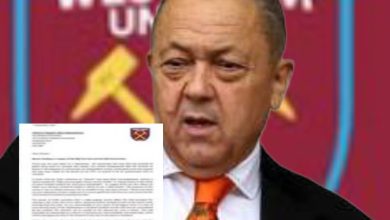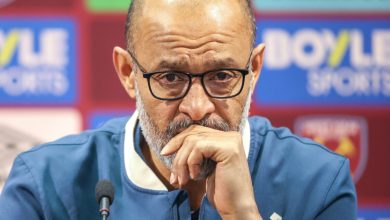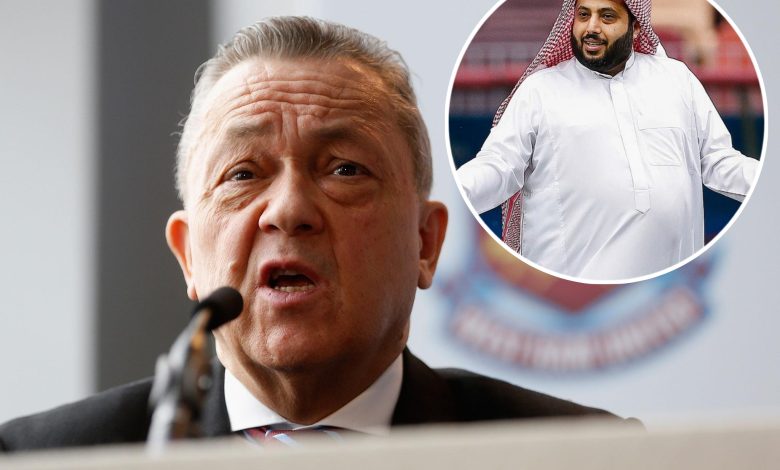
West Ham United’s ownership saga has taken a dramatic new turn, with reports in England and the Middle East suggesting that a Saudi-based billionaire investor is positioning himself to complete a sensational takeover of the East London club, potentially ending David Sullivan’s long-standing reign at the helm.
The development comes at a turbulent moment for the Hammers, who have recently endured a chaotic season marked by relegation battles, financial strain, and growing unrest among supporters over the club’s long-term direction. With pressure mounting on the boardroom, the possibility of a high-profile foreign acquisition has rapidly moved from speculation to serious discussion within football finance circles.
BOARDROOM POWER SHIFT BREWING
West Ham’s ownership structure has been under increasing scrutiny in recent years, particularly as Czech billionaire Daniel Křetínský expanded his influence and now holds a significant minority stake alongside Sullivan. However, despite these shifting dynamics, Sullivan has remained the central figure in the club’s decision-making structure since taking control in 2010.
Recent reports indicate that a Saudi investor consortium, backed by an ultra-wealthy figure with interests across sport and infrastructure, is exploring a full or majority acquisition. While no formal agreement has been confirmed, intermediaries are believed to have initiated preliminary valuation talks, with West Ham now viewed as a “strategic Premier League asset” due to its London Stadium base and global fan reach.
SULLIVAN’S LONG REIGN UNDER THREAT
David Sullivan, who co-led the takeover of West Ham in 2010 and has overseen more than a decade of Premier League football at the club, has faced increasing criticism from sections of the fanbase over recruitment strategy, managerial instability, and perceived stagnation in sporting ambition.
Despite this, Sullivan has previously insisted he has no intention of walking away easily unless a transformative offer emerges—suggesting only “elite-level global investors” would be capable of prising control from his hands.
That stance now appears to be directly tested.
SAUDI INVESTMENT WAVE IN FOOTBALL
The reported interest is part of a broader trend of Saudi capital entering global football, following high-profile investments in European clubs, domestic league expansion projects, and elite player acquisitions in recent years. Premier League ownership remains a prime target due to its commercial reach, broadcasting power, and international branding.
West Ham, with its established top-flight infrastructure and London-based commercial appeal, is seen as a particularly attractive acquisition target for sovereign-backed or ultra-high-net-worth investors seeking long-term sporting influence.
FAN BASE REACTION DIVIDED
News of a potential takeover has already sparked mixed reactions among supporters. Some fans view the possibility of new ownership as a long-awaited opportunity for financial backing capable of elevating the club into consistent European contention. Others remain cautious, wary of repeated ownership transitions and uncertain promises of “ambition resets.”
Across social media, debates have intensified over whether a change at the top would finally unlock the club’s potential or simply usher in another cycle of transition and instability.
WHAT HAPPENS NEXT
At this stage, discussions remain exploratory, with no official bid submitted. However, the growing seriousness of interest suggests that West Ham could be heading toward one of the most significant ownership shifts in its modern history.
Should negotiations progress, any deal would likely involve complex valuation structures, regulatory approval from the Premier League, and agreement with existing stakeholders, including minority shareholders who still hold significant influence.
For now, West Ham’s future sits at a familiar crossroads—between continuity under established leadership and the possibility of a transformative new era powered by Middle Eastern investment.
One thing is clear: the battle for control of the Hammers’ future has only just begun.