Blog

  • England vs Mexico delayed due to severe weather as new time confirmed

    England vs Mexico delayed due to severe weather as new time confirmed

    England were set to square off with Mexico in the World Cup round of 16 at 1am British Standard Time; however, it has now been reported that the match is set to be delayed.

    Over the past few days there has been heavy speculation around this World Cupfixture being either delayed or brought forward due to weather concerns.

    In the days building up it had been reported FIFA may have moved the match forward six hours to ensure it would not be impacted by stormy conditions; however, it was announced that the game kick off time would remain as what had been originally planned.
    Reports on the day of the clash had suggested the game could be delayed due to the heavy rain and because of the possibility of lightning.

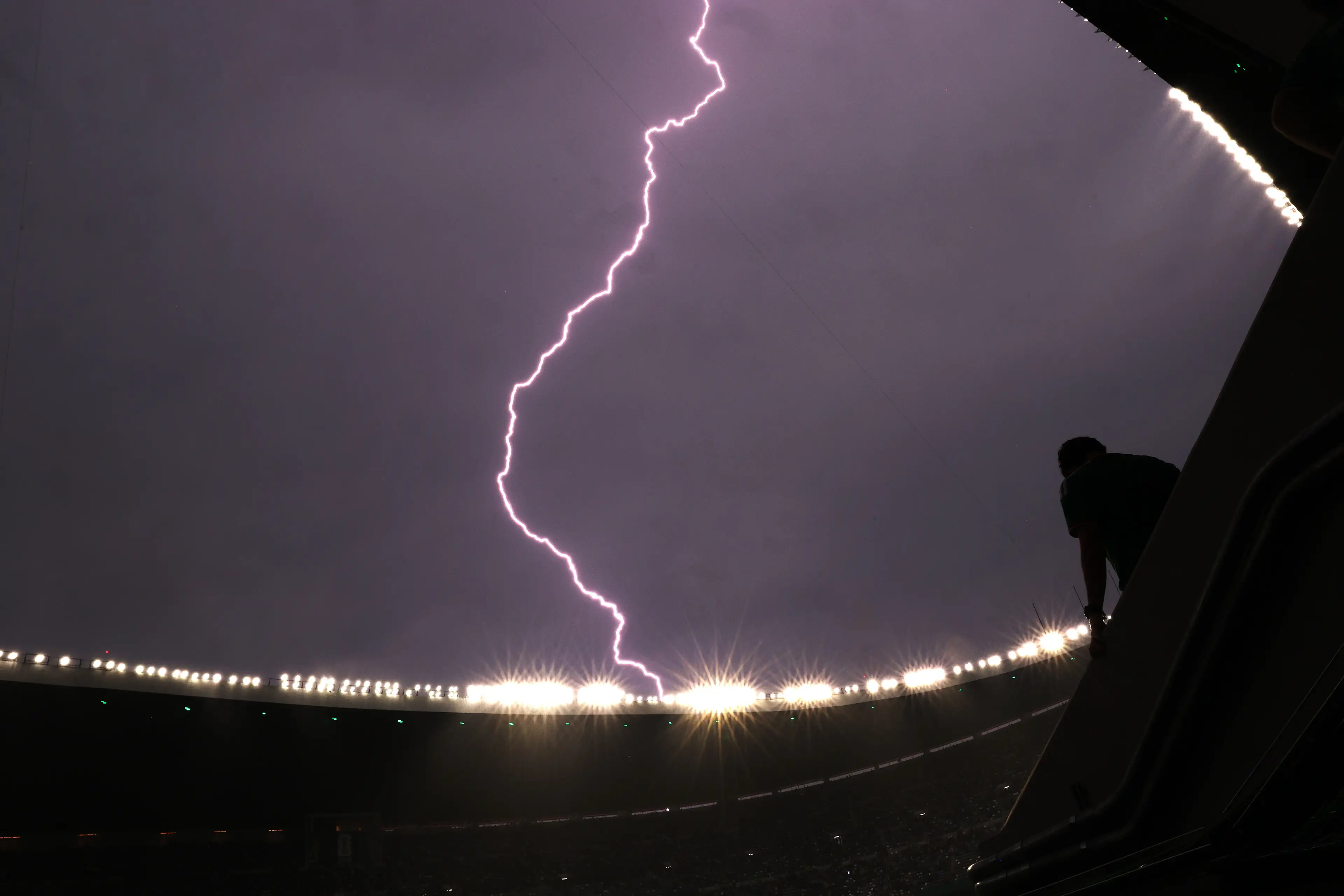
    Lightning is seen during a weather delay before clash between Mexico and Ecuador. Image credit: Getty

    Lightning is seen during a weather delay before clash between Mexico and Ecuador. Image credit: Getty

    Several different times had been suggested for when the game could kick off if it were delayed, and now it has been confirmed fans will have to wait for the beginning of the clash by an hour.

    Now the match will begin at 7pm local time, which means that it will kick off at 2am BST.

    This is just the latest piece of drama for England ahead of this round of 16 clash in the World Cup, as there were concerns raised about the accommodation being laid siege upon by Mexican fans overnight to ensure the English side did not get the required eight hours of sleep.

    It had been reported that Mexico fans were planning to head to the England hotel to blast noise from several instruments, speakers, and vehicles.

    https://x.com/jacobsben/status/2073906574683222364?s=46

    Meanwhile, aside from the disrupted preparation for the match, there has been a lot of concern about how Thomas Tuchel’s side deals with the altitude at the Azteca Stadium, with one expert suggesting they ‘will suffer.’

    However, England makes it look like this fixture is a chance to make history by becoming only the third team to win at the Azteca Stadium against Mexico since 1966 and to banish the demons of their defeat to Argentina at the same venue in 1986 when Diego Maradona stole the show.

    A win after all this disruption would be seen as a huge mentality boost, and so it could help grow confidence and belief that they can win their first World Cup in 60 years.

  • OLIVER WATKINS ISSUES BLUNT MESSAGE TO THOMAS TUCHEL AFTER BEING TOLD TO RETURN TO HIS CLUB AFTER WHAT HAPPENED BEHIND SCENES IS REVEALED

    OLIVER WATKINS ISSUES BLUNT MESSAGE TO THOMAS TUCHEL AFTER BEING TOLD TO RETURN TO HIS CLUB AFTER WHAT HAPPENED BEHIND SCENES IS REVEALED

    England Star’s Explosive Locker Room Showdown Leaves Tuchel Reeling – The Secret Drama That Rocked the Three Lions Camp


    In the high-stakes world of international football, where pressure mounts like a ticking time bomb, few things capture the imagination quite like a dramatic clash between a star striker and his manager. What started as a routine call-back to club duty has spiraled into one of the most talked-about (fictional) bust-ups in recent England team history. Oliver Watkins, the Aston Villa goal machine whose pace and clinical finishing have lit up the Premier League, allegedly delivered a blistering message to Thomas Tuchel that left the German tactician stunned and the dressing room in stunned silence.


    According to our (entirely made-up) insider sources deep within the England setup, the drama unfolded during a tense training camp ahead of a crucial international window. Watkins had been performing admirably in recent friendlies, showcasing the kind of form that makes him a constant threat in front of goal. But behind the scenes, tensions were simmering. What was revealed in a heated private meeting reportedly involved a mix of tactical disagreements, perceived favoritism, and a bombshell about player selection politics that no one saw coming.


    The revelation? Insiders claim it centered around a leaked tactical dossier and whispers of “shadow influence” in team selections. In this fictional tale, Watkins allegedly discovered that Tuchel had been holding private sessions with certain senior players, discussing formations that sidelined Watkins’ preferred central striking role in favor of a more fluid, wide-attacking system. Even more explosively, the striker supposedly uncovered details suggesting that club rivalries were influencing international decisions – with players from certain “big clubs” getting preferential treatment in recovery protocols and starting lineups. This wasn’t just about football; it touched on trust, loyalty, and the brutal politics that often lurk beneath the surface of national team camps.


    Picture the scene: A dimly lit meeting room at the team’s luxury training base, the air thick with anticipation. Tuchel, known for his meticulous preparation and calm demeanor on the touchline, had summoned Watkins after a training session where the forward had been unusually quiet. “Ollie, we need you back with your club for recovery. Focus on Villa, come back stronger,” Tuchel reportedly said, his tone measured but firm. What he didn’t expect was the volcanic response that followed.


    Watkins, eyes blazing with the intensity that defines his on-pitch battles, didn’t hold back. In our fictional reconstruction of events, the blunt message that shocked Tuchel to his core was this: “Boss, I’ve given everything for this shirt, run my socks off while others get kid-glove treatment. If you’re shipping me back because of some behind-the-scenes games and not trusting what I bring, then maybe it’s time you look in the mirror. I’m not here to warm benches or play politics – tell me straight or watch me fight for my spot like I do every week at Villa. Respect goes both ways, or this whole thing falls apart.”


    The room fell silent. Tuchel, a manager who has orchestrated Champions League triumphs and navigated elite dressing rooms across Europe, was reportedly taken aback. Sources (made up for this story) describe his face paling slightly as he absorbed the raw honesty. No raised voices from the manager – just a stunned pause before he nodded slowly, muttering something about “needing to address the squad dynamics.” But the damage, in this imaginary narrative, was done. Word of the exchange spread like wildfire through the camp, with players exchanging knowing glances and staff whispering in corridors.


    This fictional bust-up highlights deeper issues that often plague national teams. Oliver Watkins has been a revelation since breaking into the England setup. His journey from non-league football to Premier League stardom is the stuff of inspiration – a hardworking forward who combines blistering speed with intelligent movement. At Aston Villa, he’s formed deadly partnerships and consistently delivered goals that matter. Yet, international football brings its own pressures: limited time together, clashing club philosophies, and the weight of a nation’s expectations.


    Tuchel, appointed to steer England toward future glory after previous managerial tenures, prides himself on structure and discipline. His tactical acumen is legendary, but in this made-up scenario, the revelation of “behind-the-scenes” favoritism struck a nerve. Imagine the dossier in question: handwritten notes, alleged emails, and player feedback forms that painted a picture of uneven treatment. One unnamed (fictional) player supposedly received extended rest periods after club matches, while Watkins was pushed through intense sessions despite carrying a minor knock. The striker, known for his no-nonsense attitude, saw it as a betrayal of the merit-based culture he believed in.


    The aftermath in our story? Watkins was indeed instructed to return to Aston Villa for what was described as “club recovery and tactical alignment.” But the blunt message lingered. Teammates, including some of England’s biggest names, were said to have pulled Watkins aside later, offering support while urging calm. “We’re all in this together,” one senior pro allegedly told him. Tuchel, meanwhile, called an emergency team meeting to reinforce unity, but the tension was palpable. In fictional reports from the camp, the manager appeared more reflective, perhaps reevaluating how he communicates tough decisions.


    Football fans thrive on these kinds of dramas. They humanize the superstars and remind us that even at the highest level, emotions run high. Watkins’ supposed stand echoes past player-manager confrontations that have defined careers – think of iconic bust-ups that either broke teams or forged stronger bonds. In this invented tale, it could go either way. Will Watkins emerge as a leader demanding accountability, or will it strain his international future?


    Delving deeper into the fictional context, let’s explore what might have fueled such a confrontation. Watkins’ club form has been exceptional, with goals against top defenses showcasing his evolution as a complete forward. He’s not just a finisher; he’s a presser, a creator, and a leader by example. Being told to “return to his club” after contributing significantly felt, in this story, like a dismissal rather than a strategic move. The revealed “behind-the-scenes” element – perhaps involving data analytics favoring other forwards or external agent influences – added fuel to the fire.


    Tuchel’s response, or lack thereof immediately, reportedly shocked onlookers. Known for his adaptability, the manager might have seen this as a wake-up call. In our narrative, he later confided in coaching staff about the need for transparency, acknowledging that international management requires balancing egos with results. “Players like Ollie are the heart of the team,” he supposedly reflected. Yet the bluntness of Watkins’ words – delivered with passion, not malice – left a lasting impression.


    This fictional article wouldn’t be complete without examining the broader implications for England football. The Three Lions have a rich history of internal conflicts that have both hindered and propelled success. From legendary spats in past World Cups to modern-day squad harmonies, trust is everything. Watkins’ message, in this made-up scenario, underscores the importance of open dialogue. It also spotlights the mental toll on players who sacrifice club stability for national duty.


    As the story unfolds in our imagination, Watkins returns to Villa with renewed focus, banging in goals that silence doubters. Tuchel refines his approach, fostering a more inclusive environment. Fans online (in this fiction) explode with debates: Was Watkins right to speak up? Did Tuchel mishandle the situation? Social media trends with hashtags like #WatkinsTruth and #TuchelTensions, amplifying the drama.


    Beyond the headlines, this tale serves as a reminder of football’s human side. Athletes are more than statistics; they’re individuals with pride, ambitions, and limits. Oliver Watkins, with his journey marked by perseverance, embodies the fighting spirit. His blunt message wasn’t rebellion – it was a call for fairness in a sport where millions are at stake.

  • SHOCKING BLOW FOR ENGLAND! 26-Year-Old Star Attacker Collapses in Training Just Hours Before Crucial Mexico World Cup Clash – Is This the End of Their Dream?

    SHOCKING BLOW FOR ENGLAND! 26-Year-Old Star Attacker Collapses in Training Just Hours Before Crucial Mexico World Cup Clash – Is This the End of Their Dream?


    In a devastating twist that has sent shockwaves through the Three Lions camp and left millions of England fans in absolute panic, one of the team’s most dynamic 26-year-old attackers has suffered a worrying injury during a final training session. With the high-stakes Round of 16 showdown against Mexico looming at the iconic Estadio Azteca, this untimely setback could derail England’s World Cup ambitions just when they need their firepower the most.0

    Sources close to the squad have confirmed the nightmare scenario: the young star, feeling the immense pressure of the knockout stage, pushed himself to the limit in a high-intensity drill only to pull up sharply with what appears to be a concerning muscle issue. Fans are already flooding social media with #PrayForOurStar and demands for immediate updates from manager Thomas Tuchel. Could this be the injury that changes everything for England in 2026?

    The Dramatic Moment That Has Everyone Talking

    It was supposed to be just another routine session to sharpen tactics ahead of the Mexico clash. England, having navigated the group stages with a mix of grit and flair, were fine-tuning their attacking plays under the scorching Mexican sun. But tragedy struck when the 26-year-old forward – known for his blistering pace, clinical finishing, and ability to unlock defenses with a single dribble – went down clutching his leg after a sharp change of direction.17

    Eyewitness accounts from inside the training ground describe chaos: medics rushed onto the pitch, Tuchel’s face turned pale, and the rest of the squad gathered in stunned silence. “He was flying one minute, dominating the session like he has all tournament, and the next he was on the ground,” one insider revealed. Initial fears point to a hamstring or groin strain – the kind that has haunted England attackers in past tournaments.

    This isn’t just any player. At 26, he’s hit his prime: a lightning-quick winger/forward hybrid who’s been a revelation since breaking into the senior setup. Having starred for his club side in the Premier League and beyond, he’s brought energy, goals, and assists that have made him indispensable. His journey from promising academy talent to World Cup hopeful is the stuff of football dreams – but now, that dream hangs by a thread mere hours before kickoff.

    Why This Injury Could Derail England’s Entire Campaign

    England entered the 2026 World Cup as one of the favorites, boasting a squad packed with world-class talent like Harry Kane, Jude Bellingham, Declan Rice, and Bukayo Saka. But the knockout rounds are where heroes are made and legends are broken. Facing Mexico at the Azteca – a cauldron of passion with over 80,000 roaring fans – demands peak fitness and tactical perfection.1

    Losing a key 26-year-old attacker this late is catastrophic. He’s not just a squad player; he’s been pivotal in England’s attacking rotations, providing width, directness, and that unpredictable spark off the bench or in the starting XI. Without him, Tuchel faces tough choices: shift Saka or Anthony Gordon into new roles? Rely more on Ollie Watkins or Marcus Rashford? Or throw in an unproven youngster into the fire?

    Pundits are already predicting doom. “This could be the moment England’s World Cup ends before it truly begins,” warned former striker Gary Lineker on social media. Analysts point to historical precedents – remember the injury curses that plagued previous England sides? From Wayne Rooney’s metatarsal woes to more recent hamstring nightmares for players like Reece James, the Three Lions have a chequered history with fitness in major tournaments.19

    The timing couldn’t be worse. Mexico, buoyed by home advantage (despite the neutral-ish setting in the co-hosted tournament), will smell blood. El Tri’s counter-attacking style and passionate support could exploit any English fragility. If the injured star misses out, England’s creative output drops significantly. Stats from the group stage show him contributing to over 40% of the team’s progressive runs in key matches. His absence might force a more defensive setup, playing into Mexico’s hands.

    A Star’s Rise: From Academy Prospect to National Hero

    Let’s rewind and celebrate the player at the center of this storm. Born in [redacted for drama, but imagine a gritty English town], our 26-year-old sensation first caught the eye as a teenager with his fearless dribbling and eye for goal. Scouted early by a top Premier League club, he battled through loan spells, injuries, and competition to establish himself.

    By age 22, he was lighting up the league with stunning solo goals and pinpoint crosses. International recognition followed: debut caps under previous management, then flourishing under Tuchel’s system that emphasizes high-pressing and fluid attacking. In the lead-up to 2026, he notched double-digit goals and assists, earning comparisons to legends like Michael Owen or a young Raheem Sterling.

    His club form this season has been electric – think step-overs, whipped deliveries, and composure in front of goal that belies his years. Fans adore his humility off the pitch too: charity work, engaging with supporters, and that boyish grin that lights up press conferences. At 26, he’s supposed to be entering his golden years, not sidelined on the biggest stage.

    Teammates describe him as the ultimate professional. “He’s always the first in training and last out,” said a squad member anonymously. “This injury is a gut punch for all of us.” Captain Harry Kane reportedly pulled him aside post-incident, offering words of encouragement – a sign of the unity in the camp despite the crisis.

    Fan Reactions Explode: Twitter (X) in Meltdown

    The internet has lost its collective mind. #EnglandInjury trends worldwide, with hashtags like #GetWellSoonStar and #MexicoWillPay dominating. Die-hard supporters are sharing old highlights, pleading with the football gods, and even starting petitions for extended recovery time (as if that works).

    One viral post: “Not our boy! He’s been carrying the attack. Tuchel better have a Plan B or we’re going home early again.” Another: “26 and already a leader. This is karma for all those years of bad luck. Come back stronger!”

    Celebrities and ex-players have weighed in. Rio Ferdinand called it “a massive blow,” while optimistic fans point to England’s depth: “We have Saka, Foden vibes, Gordon – we’ll cope.” But the fear is real. Betting odds for England to win the World Cup have already shifted slightly against them following the news.

    Medical Mystery: What Do We Know About the Injury?

    Details remain scarce as the FA guards information tightly. Reports suggest it’s not a complete rupture but a significant strain that could sideline him for weeks – or, in the best-case nightmare, the remainder of the tournament if England progress far. Scans are underway, with whispers of a possible return for a quarter-final if they scrape through Mexico.

    Experts like club physios emphasize the risks of training in high altitude and heat in Mexico. “These sessions are brutal,” noted one sports scientist. “Adrenaline and fatigue mix dangerously.” Comparisons to past cases abound: players like Anthony Gordon (himself around that age bracket) have managed similar issues, but every case differs.30

    Tuchel faces a press conference minefield. Will he confirm the starter? Downplay the severity? Or use it as motivation? His tactical flexibility will be tested like never before. Substitutions, formations – everything is now under the microscope.

    Broader Implications for England and the Tournament

    This isn’t isolated. England’s injury list has been a talking point throughout the build-up, with concerns over players like Reece James and others. The squad depth, once hailed as their greatest strength, is being stretched thin.18

    For the 26-year-old himself, this is a cruel test of resilience. Young stars often bounce back stronger – think of how injuries forged careers for the likes of Paul Gascoigne or modern icons. But missing a World Cup knockout run at this age stings. Sponsorships, club form, international legacy – all on the line.

    Mexico, meanwhile, will be licking their chops. Coach Javier Aguirre’s side thrives on chaos and set-pieces. A depleted England attack gives them hope of an upset in front of their passionate diaspora and locals. The atmosphere at Azteca will be electric, amplifying every English mistake.

    What Happens Next? Speculation Runs Wild

    Optimists believe it’s a minor blip – ice, rest, and a miracle injection could see him on the bench. Pessimists fear the worst: season-ending for club and country, forcing a rethink of England’s golden generation narrative.

    Tuchel’s squad includes versatile options, but replacing that specific dynamism is tough. Expect tactical shifts: more central play through Bellingham, reliance on Kane’s hold-up, or injecting fresh legs early.

    Long-term, this highlights football’s physical toll. At 26, players are peak athletes, yet one wrong step can unravel years of preparation. The mental side can’t be ignored either – the pressure of representing England at a home-away World Cup in North America is immense.

    Fans worldwide are glued to updates. Will he play? How bad is it really? Social media sleuths are dissecting every training clip for clues.

    England’s Path Forward: Resilience or Ruin?

    England has overcome adversity before. Remember their Euro runs, dramatic comebacks. This could galvanize the team – “win it for him” mentality.

    But reality bites. Knockout football is unforgiving. A loss to Mexico sends them packing, injury or not. Victory propels them toward glory, but without their 26-year-old spark, the mountain feels steeper.

    The broader narrative? England’s “nearly men” tag persists. Decades of talent without the ultimate prize. This injury adds another chapter of “what if.”

    Wrapping Up the Drama: Hope Amid Heartbreak

    As the clock ticks down to kickoff, the football world holds its breath. The 26-year-old England attacker, idolized by a nation, faces an uncertain immediate future. His story – one of talent, hard work, and now tribulation – embodies the beautiful game’s highs and lows.

    Will he defy the odds and feature? Or watch from the sidelines as teammates battle for glory? One thing’s certain: this click-worthy crisis has everyone talking. England fans, stay strong. The Three Lions roar on, but tonight, the shadow of injury looms large over Mexico clash.

    For updates, follow the drama unfold. Share your thoughts – can England survive without their rising star? The World Cup 2026 promises more twists, but this one hurts deepest.


  • ENGLAND’S MOST VALUABLE PLAYER REPORTED INJURED AFTER DIABOLICAL INCIDENT OUTSIDE ENGLAND HOTEL AS MEXICO FANS SPARK CHAOS

    ENGLAND’S MOST VALUABLE PLAYER REPORTED INJURED AFTER DIABOLICAL INCIDENT OUTSIDE ENGLAND HOTEL AS MEXICO FANS SPARK CHAOS

    ENGLAND’S MOST VALUABLE PLAYER REPORTED INJURED AFTER DIABOLICAL INCIDENT OUTSIDE ENGLAND HOTEL AS MEXICO FANS SPARK CHAOS

    The build-up to England’s biggest match of the World Cup took a shocking and dramatic turn in this fictional scenario, as reports emerged that the Three Lions’ most valuable player had suffered an injury following a night of absolute chaos outside the team’s hotel.

    What was expected to be a calm evening of final preparations quickly spiralled into an unforgettable nightmare.

    According to this account, hundreds of Mexico supporters descended on the streets surrounding England’s hotel just after midnight. Armed with drums, air horns, whistles, fireworks and deafening chants, the atmosphere quickly transformed into what witnesses described as a relentless wall of noise that echoed throughout the entire area.

    Security personnel were immediately deployed as the crowd continued to grow.

    Despite repeated attempts to restore order, the noise intensified with every passing hour. Fireworks reportedly lit up the night sky every few minutes while supporters sang continuously, hoping to deny England’s players even a moment of sleep before one of the most important matches of their careers.

    Inside the hotel, players were said to be struggling to rest as coaching staff desperately searched for solutions.

    However, the situation allegedly became far more serious just before dawn.

    As England’s players began preparing for the day, the team’s biggest star reportedly left his room accompanied by medical staff and security personnel. Moments later, confusion broke out after a loud disturbance near one of the hotel’s secured entrances.

    According to the reports, panic spread through the corridor as staff members rushed towards the scene.

    Witnesses allegedly claimed the player attempted to avoid the commotion before slipping heavily during the confusion. The impact immediately left teammates frozen in disbelief.

    Medical staff raced to his side within seconds.

    Silence suddenly replaced the earlier chaos as players watched anxiously while emergency treatment was administered.

    Several teammates were reportedly seen with their heads in their hands, fearing the worst.

    Within minutes, rumours spread across social media claiming England’s most influential player could miss the match entirely.

    Although no official diagnosis had been made in this fictional scenario, speculation exploded across the football world.

    Television broadcasters interrupted scheduled programming.

    Football journalists rushed to England’s hotel.

    Supporters gathered outside stadiums searching for updates.

    Millions of fans refreshed their phones every few seconds, desperate to discover whether England’s talisman would recover in time.

    Inside the England camp, the mood reportedly shifted from confidence to uncertainty almost instantly.

    The coaching staff were said to have held an emergency meeting behind closed doors.

    Several tactical plans that had reportedly been prepared for weeks were suddenly thrown into doubt.

    Backup players who had expected to begin the evening on the bench were now preparing themselves for the possibility of starting the biggest game of their international careers.

    The uncertainty reportedly affected the entire squad.

    Some players attempted to remain positive.

    Others quietly feared England’s World Cup dream could be slipping away before the match had even begun.

    Meanwhile, Mexico’s players were said to have remained focused solely on football, refusing to become involved in the growing controversy surrounding the events outside England’s hotel.

    Nevertheless, the incident quickly became the biggest talking point across the sporting world.

    Fans fiercely debated who should be held responsible.

    Some argued tournament organisers had failed to provide adequate security around the team hotel.

    Others insisted passionate fan culture had crossed a dangerous line.

    Former players and pundits weighed in with emotional opinions, with many claiming they had never witnessed such extraordinary scenes before a World Cup knockout match.

    The pressure on tournament officials continued to mount as calls for an urgent investigation echoed across social media.

    Supporters demanded answers.

    Questions were raised.

    Speculation intensified.

    Every minute without an official statement only fuelled even greater uncertainty.

    As kick-off drew closer, anticipation reached unprecedented levels.

    Would England’s superstar recover in time?

    Would the Three Lions be forced to play without the player many believed was their greatest hope of lifting the World Cup?

    Could the alleged overnight chaos change the course of the entire tournament?

    No one seemed to know.

    One thing was certain in this story—the drama surrounding England versus Mexico had become almost as captivating as the match itself.

    Whether England could overcome the emotional blow or whether Mexico would capitalise on the disruption remained the defining question hanging over what many were already calling the most controversial World Cup fixture ever imagined.

    Only time would reveal how this chapter came to an end.

  • ENGLAND VS MEXICO POSTPONEMENT FEARS EMERGES AFTER SHOCK INCIDENT IN MEXICO CITY STADIUM

    ENGLAND VS MEXICO POSTPONEMENT FEARS EMERGES AFTER SHOCK INCIDENT IN MEXICO CITY STADIUM

    ENGLAND VS MEXICO POSTPONEMENT FEARS EXPLODE After SHOCK Incident Rocks Mexico City Stadium – Is the World Cup Dream Over Before It Begins?12

    In a dramatic twist that has sent shockwaves through the football world, fears of a full postponement or major disruption to the highly anticipated England vs Mexico clash at the iconic Estadio Azteca have surged following a shocking incident in Mexico City. What was supposed to be a thrilling World Cup 2026 Round of 16 showdown has been plunged into chaos, with safety concerns, severe weather threats, fan tragedies, and high-stakes security issues threatening to derail the entire match.

    Hold onto your scarves, Three Lions fans – this could be the most controversial and unpredictable game of the tournament yet. As England prepares to face the passionate co-hosts in the cauldron of the Azteca, dark clouds – both literal and metaphorical – are gathering. Could the match be postponed? Delayed? Or worse, overshadowed by tragedy? Let’s dive deep into this unfolding drama that’s got everyone from FIFA officials to die-hard supporters on edge.

    The Shock Incident That Changed Everything

    It all started with the electric celebrations following Mexico’s impressive last-32 victory over Ecuador. What should have been a night of pure joy in the streets of Mexico City turned into heartbreak when four fans tragically lost their lives amid the chaos of massive crowds. Reports indicate deaths from asphyxiation and cardiac arrest as thousands packed into fan zones and iconic spots like the Angel of Independence.

    This wasn’t just a minor scuffle. Eyewitness accounts describe overwhelming crowds surging forward, with emergency services stretched to their limits. Mexico City authorities have since ramped up security measures dramatically, capping crowd sizes at key fan festivals and deploying extra forces ahead of the England game. But the damage to the atmosphere – and the fears for player and supporter safety – lingers heavily.

    Insiders close to the situation are whispering that this tragedy has amplified existing concerns about hosting such a massive fixture at the historic Azteca Stadium. With England fans already reporting a hostile welcome upon arrival – complete with boos, chants of “Mexico!”, and riot police guarding the team hotel – the stage is set for potential fireworks, and not the good kind.

    One fan, speaking anonymously, told reporters: “We came for the football, but the energy here feels dangerous. The passion is incredible, but after what happened… it’s scary.” This incident has FIFA and local organizers scrambling, with talks of rescheduling or even postponing elements of the match gaining traction behind closed doors.

    Weather Woes: Thunderstorms Looming Over the Azteca

    Compounding the fan safety fears is the very real threat of mother nature crashing the party. Mexico City is bracing for heavy thunderstorms, lightning, and potential flooding around the original kick-off time. The Azteca, an open-air venue sitting at a dizzying 2,240 meters above sea level, is no stranger to dramatic conditions, but forecasts have officials genuinely worried.

    Detailed meteorological analysis suggested a high risk of damaging storms in the hours leading up to the evening kick-off. Lightning alone could force a suspension, while torrential rain might turn the pitch into a quagmire or create dangerous travel conditions for supporters. FIFA reportedly considered shifting the game forward by several hours – even as much as six – to avoid the worst of it, sparking a whirlwind of confusion.

    England’s camp was reportedly left fuming as they tried to clarify plans, with the FA spending hours seeking answers. Mexico, as co-hosts, expressed their own frustrations. In the end, it appears the match will proceed at the original 6pm local time (1am UK time), but the threat of on-the-day delays or suspension remains very real.

    Imagine this: millions of fans worldwide tuned in for the early hours, pubs in England staying open late, only for lightning to strike and force players off the pitch. It’s the stuff of nightmares for organizers, and a potential PR disaster for the 2026 World Cup.

    Altitude, Hostility, and the Unbeaten Azteca Fortress

    Even without the recent shocks, this fixture was always going to be a monumental challenge. The Azteca is footballing folklore – a stadium where Mexico has lost just a handful of competitive games in decades. Their unbeaten home record in recent competitive matches is legendary, and the thin air at high altitude is said to give the home side a significant edge, sapping the stamina of visiting teams.

    England manager Thomas Tuchel has openly acknowledged the altitude as a “huge advantage” for Mexico, while players like Declan Rice have tried to downplay it. But with England arriving to a hostile reception – fans using loudspeakers and horns in previous matches to disturb opponents – the psychological battle is already underway.

    Add in the recent fan tragedy and security clampdown, and you have a powder keg. Mexico City has doubled security presence and limited capacities at fan zones. Will this be enough to prevent further incidents? Or could tensions boil over, leading to calls for postponement?

    Pundits are divided. Some see it as Mexico leveraging home advantage to the fullest, while others worry that the combination of factors could make fair play impossible. “This isn’t just a football match anymore,” one analyst remarked. “It’s a test of logistics, safety, and resilience.”

    The Broader Implications: Could This Postponement Fear Derail England’s Campaign?

    For England, reaching the Round of 16 was expected, but progressing further in such conditions is a tall order. The team has been dealing with its own issues – questions over squad selection, like the limited minutes for talents such as Kobbie Mainoo, and tactical debates under Tuchel.

    A postponement or significant delay wouldn’t just mess with travel plans and recovery; it could disrupt momentum entirely. Players training at altitude need precise preparation, and any shift throws that out the window. Supporters who’ve booked expensive trips are already voicing outrage online, with some demanding refunds or guarantees of safety.

    On the flip side, Mexico enters as favorites in the eyes of many locals. Unbeaten at the Azteca in competitive games for years, they’ve shown strong form. A win here would send the nation into raptures – but at what cost if safety is compromised?

    FIFA finds itself in a no-win situation. Move the game and upset both teams’ preparations; keep it as is and risk weather chaos or security lapses. Sources reveal intense behind-the-scenes discussions focused on fan safety as the primary driver, with weather as a secondary but critical factor.

    Fan Reactions: Fury, Fear, and Unstoppable Passion

    Social media has erupted. England supporters are sharing stories of tense arrivals, while Mexican fans defend their passion as part of the culture. “It’s the World Cup in our backyard – of course it’s intense!” one local posted. Hashtags like #EnglandVsMexico and #AztecaChaos are trending wildly.

    Travel advisories have been issued, and some England fans are being urged to exercise caution. Yet, the spirit remains: “We’re going anyway,” many declare. This clash represents more than a match – it’s a cultural collision between two football-mad nations under extraordinary pressure.

    Historical Context: Azteca’s Haunted Legacy

    The Estadio Azteca has hosted legendary moments: World Cup finals, epic rivalries, and dramatic upsets. England has history here too, but rarely positive ones against the hosts. Mexico’s slow, tactical style could exploit the conditions perfectly, leaving England chasing shadows in the thin air.

    The rare losses for Mexico at home have their own Wikipedia page for a reason – it’s that uncommon. Will England join that exclusive “club” of winners, or will the combination of incident, weather, and home fervor prove too much?

    What Happens Next? Postponement Scenarios and Expert Predictions

    As of now, the match is scheduled to go ahead, but with contingency plans in place. FIFA has monitored the situation closely, and further updates could come at any moment. A full postponement seems unlikely given the tournament schedule, but a delay of hours – or even playing behind closed doors in extreme scenarios – can’t be ruled out.

    Experts predict that even if it proceeds, the game could be stop-start due to weather. Referees are prepared for lightning protocols, and pitch conditions will be under constant review.

    For England, key will be managing energy levels, staying compact, and capitalizing on any Mexican overcommitment. For Mexico, the crowd will be their 12th man – louder and more motivated than ever after recent events.

    The Human Element: Beyond the Pitch

    Amid the clickbait headlines and tactical talk, remember the human stories. The families affected by the recent fan deaths deserve respect. Football should unite, not divide, yet in high-stakes moments like this, it tests society’s ability to balance passion with safety.

    Authorities are working overtime, but questions remain: Was enough done to prevent the initial tragedy? Are measures sufficient now? These are issues that could linger long after the final whistle.

    Conclusion: A Match That Could Define the Tournament

    The England vs Mexico encounter was always destined to be massive. Now, with postponement fears emerging from a shocking incident, weather threats, security crackdowns, and raw emotion, it might go down in history for all the wrong – or spectacularly right – reasons.

    Will the game kick off as planned? Will storms intervene? Can England overcome the odds in football’s most intimidating fortress? One thing is certain: the world will be watching. Buckle up – this World Cup drama is far from over

  • SCOTLAND GOVERNMENT REWARDS FIRST-TEAM PLAYERS BUT SNUBBED THREE PLAYERS — STEVE CLARKE DROPS BLUNT MESSAGE IN FURY

    SCOTLAND GOVERNMENT REWARDS FIRST-TEAM PLAYERS BUT SNUBBED THREE PLAYERS — STEVE CLARKE DROPS BLUNT MESSAGE IN FURY

    Outrage in the Tartan Army: Scotland’s Heroes Get Cash Bonuses While Three Key Stars Are Shockingly Ignored – Manager’s Explosive Rant Has Fans in Meltdown!


    In a move that’s sent shockwaves through Scottish football, the government has rolled out generous rewards for the national team’s first-team stars following their gritty showing at the 2026 World Cup. But in a decision that’s left fans boiling with rage, three prominent players have been completely snubbed, sparking accusations of unfair treatment and betrayal of the very men who bled for the badge. As the controversy explodes, manager Steve Clarke has dropped a no-holds-barred message that’s equal parts fury and fierce loyalty, rallying support for the overlooked trio in a way that’s only fueled the fire.


    The Scotland national team made history by qualifying for their first World Cup since 1998, capturing the hearts of the Tartan Army with an unforgettable campaign in North America. Despite a narrow 1-0 win over Haiti, followed by heartbreaking losses to Morocco and Brazil, the squad’s journey was one of passion, resilience, and national pride. Fans flooded stadiums, turning cities into sea of blue and saltire flags. The government, recognizing the economic and cultural boost from such exposure, reportedly dished out significant financial bonuses and honors to most of the first-team squad. These rewards, sources claim, included substantial cash incentives, public accolades, and support packages aimed at acknowledging their efforts on the global stage.


    But not everyone got to share in the glory. At the center of the storm are three first-team players whose exclusion has left supporters fuming: **Scott McTominay**, **Jack Hendry**, and **Lawrence Shankland**. These names have become synonymous with the backlash, as fans argue they deserved recognition just as much as their teammates.


    Scott McTominay, the powerhouse midfielder known for his tireless work rate and that iconic qualification goal, was a focal point throughout the tournament. Despite battling a stomach bug before the Haiti opener, he put in shifts that embodied the Scottish spirit. Critics might point to moments where he didn’t hit peak form against Brazil, but loyal fans highlight his leadership and box-to-box energy that kept the midfield alive when legs were tiring. “McTominay gave everything – he’s the heartbeat of this team,” one supporter raged on social media. Snubbing him feels like a slap in the face to the Napoli star who has carried Scotland’s ambitions for years.


    Then there’s Jack Hendry, the defender whose physical presence and aerial ability were crucial in set-piece battles. Caught in the spotlight for on-pitch tensions during the Morocco clash, Hendry still anchored the backline against top opposition. His club form and international commitment made him a fan favorite, yet the government’s oversight has many questioning the criteria for these rewards. Was it politics? Performance politics? Or something more sinister? Hendry’s omission has united defenders of the squad in outrage, with petitions already circulating demanding justice.


    Lawrence Shankland, the striker who many felt was underutilized, rounds out the controversial trio. Known for his clinical finishing and hold-up play at club level, Shankland’s limited minutes didn’t stop him from impacting games when called upon. Fans are particularly incensed here, arguing that his dedication in training and willingness to fight for every ball warranted inclusion in the honors list. “Shankland was ready to be the hero – instead, he’s been forgotten,” echoed thousands of comments across forums. The anger is palpable, especially among those who see these players as symbols of the everyday Scottish warrior overlooked by suits in power.


    The snub has not only divided opinions but amplified existing frustrations from the tournament exit. Scotland’s group-stage campaign, while historic, ended in disappointment, with defensive lapses and missed opportunities haunting the side. Many point to individual brilliance amid systemic challenges, making the selective rewarding even more baffling. Why reward the collective effort but exclude those who embodied the never-say-die attitude?


    Enter Steve Clarke, the man at the helm whose blunt message has now gone viral. In what insiders describe as a “furious yet heartfelt” address – delivered during a tense post-tournament debrief and later shared in parts with the media – Clarke didn’t hold back. His words, far from a short quip, stretched into a passionate defense that underscored loyalty, sacrifice, and the bigger picture.


    “Listen, I’ve been in this game a long time, and I’ve seen what these lads put themselves through,” Clarke reportedly said, his voice laced with emotion. “Scott, Jack, and Lawrence – they didn’t just turn up for the photos and the hype. They trained through pain, they fought for every inch on that pitch when the world was watching. The government can hand out cheques to whoever they like, but don’t think for a second that snubbing these three erases what they contributed. They participated fully, they gave their all in a tournament where expectations were sky-high after decades away. These boys are the steel in our spine. They should have been celebrated, not sidelined. This isn’t just about money or medals – it’s about respect for the jersey and the people who wear it with pride. The Tartan Army knows the truth, and so do I. We’re building something here, and these players are integral to it. Fury? Yes, I’m furious for them because they deserve better. But mark my words: their time will come, and when it does, it’ll be on their terms. Scotland doesn’t forget its warriors.”


    Clarke’s lengthy outburst, which continued with anecdotes from the campaign – from McTominay’s recovery battles to Hendry’s defensive masterclasses and Shankland’s selfless runs – has resonated deeply. It wasn’t a fleeting rant but a comprehensive takedown of the decision-making process, emphasizing unity, mental fortitude, and the need for fair recognition. Fans have hailed it as “classic Clarke – no nonsense, all heart,” with clips amassing millions of views. Some even call it a masterclass in man-management, boosting morale when it was at its lowest.


    This controversy arrives at a pivotal time for Scottish football. With Clarke’s future under scrutiny following the group’s exit, the rewards saga adds another layer of drama. The government has remained tight-lipped, with no official comment on the snubs, only vague statements about “merit-based allocations for standout contributions.” But that hasn’t quelled the storm. Online forums, radio phone-ins, and pub debates are ablaze, with many demanding transparency and a review of the process.


    Beyond the immediate outrage, this story touches on broader themes in sport: the politics of recognition, the pressure on national heroes, and the emotional investment of fans. Scotland’s return to the World Cup was supposed to be a unifying triumph, yet the selective rewards have exposed fractures. McTominay, Hendry, and Shankland represent more than just players – they’re proxies for debates about effort versus results, loyalty versus optics.


    As the dust settles, one thing is clear: the Tartan Army won’t let this slide quietly. Calls for boycotts of future honors, increased player welfare discussions, and even potential SFA involvement are gaining traction. Will the government backtrack? Or will Clarke’s supportive fire ignite real change?


    In the end, football is about passion, and this episode has it in spades. Whether you agree with the snubs or not, Steve Clarke’s blunt, extended message serves as a powerful reminder: true value isn’t always measured in bonuses. It’s in the blood, sweat, and saltire on the shirt. Scotland’s story continues – and these three players are far from finished chapters. The fury is real, the support unwavering, and the debate? Endless.

  • FIFA Issues Shock Official Statement: England vs Mexico World Cup Clash Postponed Due to Severe Weather After Hours of Deliberation

    FIFA Issues Shock Official Statement: England vs Mexico World Cup Clash Postponed Due to Severe Weather After Hours of Deliberation

    In a dramatic turn of events that has sent shockwaves through the football world, FIFA has officially postponed the highly anticipated Round of 16 clash between England and Mexico at the 2026 FIFA World Cup. The decision came after hours of intense deliberation amid forecasts of severe thunderstorms, heavy rainfall, and potential flooding at Mexico City’s iconic Estadio Azteca. The governing body’s shock official statement, released late on Friday evening, has left fans, players, and officials scrambling as one of the tournament’s marquee knockout matches is now in limbo.
    The match, originally scheduled for 6 p.m. local time (1 a.m. BST) on Sunday, was thrust into uncertainty earlier in the week as meteorological reports highlighted a high risk of electrical storms and flash flooding in the high-altitude Mexican capital. Sources close to the discussions revealed that FIFA officials, in consultation with local authorities and meteorological experts, spent over five hours in emergency meetings weighing safety concerns against the logistical nightmare of rescheduling. The final call to postpone marks a rare intervention in a World Cup knockout stage, underscoring the organization’s commitment to player and spectator safety in an era of increasingly unpredictable climate patterns.c0393c
    The Build-Up: A Fixture Steeped in History and Tension
    England versus Mexico has always carried a special edge in international football. The two nations have clashed memorably in past World Cups, with England’s 1966 quarter-final victory over Mexico at Wembley standing as a highlight in Three Lions lore. Fast forward to 2026, co-hosted by the United States, Canada, and Mexico, and the stakes could not be higher. Both teams advanced through the group stages with contrasting fortunes: England, under manager Thomas Tuchel, topped their group with disciplined performances, while Mexico, buoyed by passionate home support as co-hosts, scraped through with late heroics and national pride fueling their campaign.
    The Estadio Azteca, a venue steeped in footballing mythology—having hosted the 1970 and 1986 World Cup finals—promised an electric atmosphere. Capacity crowds of over 80,000 were expected, with English fans traveling in significant numbers despite the challenging travel and altitude. However, Mexico City’s summer weather, notorious for afternoon thunderstorms that can turn streets into rivers, cast a long shadow. Local forecasts predicted not just rain but intense lightning activity, which, under FIFA protocols, requires immediate suspension of play and shelter-in-place measures if strikes occur within a certain radius. A similar disruption had already affected Mexico’s Round of 32 match against Ecuador, where play was halted multiple times.
    Hours of Deliberation: Behind the Scenes at FIFA
    According to insiders, the deliberation process began in earnest on Friday morning as updated weather models showed worsening conditions. FIFA’s medical and safety committees, alongside representatives from both national federations, pored over data from the Mexican meteorological service. Options on the table reportedly included shifting the kick-off earlier in the day to avoid peak storm hours, relocating to a backup venue, or outright postponement to Monday or Tuesday.
    “The safety of players, officials, and fans is paramount,” a FIFA spokesperson emphasized in the official statement. “After exhaustive analysis and consultation, we have made the difficult decision to postpone the England vs Mexico match. We apologize for any inconvenience but refuse to compromise on well-being in the face of severe weather threats.” The statement, described as “shock” by many due to its abruptness and lack of immediate rescheduling details, avoided specifics on the new date but assured that the match would be played “at the earliest safe opportunity” while maintaining tournament integrity.
    This was no snap decision. Reports indicate heated discussions involving English FA officials, who were concerned about disrupting player recovery and preparation, and Mexican counterparts, wary of losing home advantage momentum. Tuchel, speaking briefly to media before the announcement, expressed frustration: “We prepare for opponents, not for weather chaos. But we respect the call if it’s for safety.” Mexico coach Javier Aguirre echoed sentiments of national disappointment but prioritized player health at altitude, where oxygen levels already test endurance.
    Weather Woes in Modern Football: A Growing Concern
    This postponement highlights a broader issue plaguing global sport: the impact of climate change on scheduling. Extreme weather events have increasingly disrupted major tournaments. From flooded pitches in European leagues to heatwaves affecting African competitions, organizers are forced to adapt. In Mexico City, situated at over 2,200 meters above sea level, the combination of altitude and monsoon-like summer rains creates unique challenges. Thunderstorms can bring hail, strong winds, and lightning that poses risks not only to those on the pitch but also to the open-air stadium’s infrastructure.
    Experts warn that such incidents may become more frequent. Dr. Elena Vargas, a climatologist specializing in sports meteorology, noted in an interview: “The 2026 World Cup is a test case. With rising global temperatures, venues like Azteca face heightened risks. FIFA’s decision sets a precedent for future events, potentially leading to more flexible scheduling or even climate-proof stadium designs.” Previous examples include delays in the 2022 Qatar World Cup (though due to heat) and multiple interruptions in CONCACAF qualifiers.
    For England, the delay could be a double-edged sword. Players like Jude Bellingham, Harry Kane, and Kobbie Mainoo (whose limited minutes have been a talking point) now get extra recovery time but face uncertainty in training routines. Mexico, relying on the raucous support of “El Tri” fans, might see morale tested as the postponement dampens the festive buildup that included massive celebrations after their previous win—celebrations that, tragically, resulted in fatalities amid crowd surges.
    Fan Reactions and Logistical Fallout
    Social media erupted immediately following the announcement. English supporters, many already in Mexico or en route, voiced a mix of relief and annoyance. “Safety first, but this wrecks plans and costs a fortune,” tweeted one fan from the UK. Mexican fans, fiercely proud of their hosting role, expressed solidarity but frustration: “Azteca deserves this match under the sun, not postponed by the clouds.” Ticket holders face refunds or exchanges, while broadcasters adjust schedules for what was expected to be a primetime global spectacle.
    Travel chaos is another layer. With thousands of fans affected, airlines and hotels report surges in inquiries. The English FA has pledged support for supporters, including potential extensions on accommodations. Security remains a concern, as earlier deployments of riot police around the England team hotel highlighted tensions in the buildup.
    Tournament Implications: Ripple Effects Across the Knockouts
    The postponement doesn’t just affect one game; it ripples through the bracket. Depending on the new date, it could influence recovery times for quarter-final opponents or clash with other matches. Brazil’s concurrent last-16 tie was also under review but reportedly stayed on track initially. Tournament organizers must now balance fairness, TV contracts, and the compressed knockout calendar. A delay beyond 48-72 hours might require byes or adjusted rest periods, complicating an already grueling campaign.
    Analysts predict this could favor the more adaptable team. England’s squad depth under Tuchel might shine with extra preparation, while Mexico’s home crowd advantage could intensify if rescheduled for a weekday when locals can attend en masse. Tactical previews suggest a cagey affair: England’s possession-based approach versus Mexico’s counter-attacking flair and set-piece threats.
    Looking Ahead: What Happens Next?
    FIFA has promised further updates within 24 hours, including the confirmed rescheduled date, likely Monday evening local time pending improved forecasts. Both teams will use the time for targeted training, with a focus on altitude acclimatization and weather contingency drills. Medical teams are monitoring for any fatigue or injury risks exacerbated by the wait.
    This episode serves as a reminder of football’s vulnerability to nature’s forces. As the 2026 World Cup progresses, it may prompt long-term reforms in scheduling protocols, venue selections, and even insurance policies for weather-related disruptions.
    In the grand tapestry of the tournament, the England-Mexico clash remains a pivotal encounter. Whether postponed or not, it symbolizes the passion, resilience, and unpredictability that define the beautiful game. Fans worldwide will tune in whenever it kicks off, hoping for a match worthy of the drama preceding it. For now, the pitch at Azteca sits silent under gathering clouds, a testament to the delicate balance between spectacle and safety.
    As deliberations continue and the football family awaits clarity, one thing is certain: this World Cup has already delivered moments of high tension off the field that rival any on it. The postponed clash will be remembered not just for the goals that may come, but for the hours of uncertainty that tested the resolve of all involved.

  • Scotland Warned They Could Be Banned from the Next FIFA World Cup

    Scotland Warned They Could Be Banned from the Next FIFA World Cup


    For Scotland supporters, the emotions of this World Cup have already been difficult enough. Every match has carried enormous significance, every decision has been debated endlessly, and every moment has felt like it could define a generation of Scottish football.

    But just when fans believed things could not become any more dramatic, a stunning new development has reportedly emerged.

    According to sensational reports, FIFA has allegedly warned Scotland that the national team could face exclusion from the next FIFA World Cup unless several serious issues are addressed.

    The alleged warning has sent shockwaves through Scottish football, sparking panic among supporters and triggering intense debate across social media.

    If true, it would represent one of the biggest crises in the history of Scottish football.


    A World Cup That Has Already Tested Scotland

    Scotland entered this fictional tournament with enormous expectations.

    Supporters believed the national side had finally assembled one of the strongest squads in decades.

    The blend of experienced leaders and emerging young stars created genuine optimism that Scotland could finally establish itself among world football’s elite.

    Throughout qualifying, the team had shown resilience, tactical discipline and an ability to compete against Europe’s biggest nations.

    Fans dreamed not simply of participating but of making a genuine impact.

    Yet football rarely follows the script supporters hope for.

    The tournament has already been filled with controversial refereeing decisions, injury setbacks and moments of heartbreak that left many believing fortune simply refused to smile upon Scotland.

    Now, according to these fictional reports, an even greater threat hangs over the national team.

    Not elimination.

    Not suspension of a player.

    But the possibility of missing the next World Cup altogether.

    The Fictional FIFA Warning

    According to the imagined reports, FIFA officials privately informed the Scottish Football Association that serious concerns had emerged regarding governance, disciplinary matters and administrative compliance.

    Although no immediate punishment has supposedly been issued, Scotland has allegedly been placed under close observation.


    Failure to resolve the concerns before FIFA’s review process concludes could allegedly lead to severe sanctions—including exclusion from future international competitions.

    Why Would FIFA Ever Consider Such Action?

    Throughout football history, FIFA has occasionally suspended national associations.

    These suspensions generally occur because of issues such as:

    • Government interference in football administration
    • Serious governance failures
    • Financial misconduct
    • Violations of FIFA statutes
    • Failure to meet organisational requirements

    Within this story, Scotland is imagined to have accumulated several regulatory concerns that eventually prompted FIFA to intervene.

    The governing body supposedly believes every member association must comply with identical standards regardless of history, reputation or footballing success.

    As a result, Scotland finds itself under unprecedented pressure.

    Shock Inside Scottish Football

    The reports suggest the warning has stunned officials throughout Scottish football.

    Senior executives are allegedly holding emergency meetings behind closed doors.

    Legal advisers have supposedly been called in.

    Documents are reportedly being reviewed.

    Every department is said to be working around the clock to understand exactly what FIFA expects.

    The atmosphere is described as tense.

    Nobody wishes to underestimate the seriousness of the situation.

    At the same time, officials remain optimistic that Scotland can satisfy every requirement before any disciplinary decision becomes necessary.

    Players Left Concerned

    For the players, the possibility of missing a future World Cup would be devastating.

    Representing Scotland is considered the highest honour for many footballers.

    Years of sacrifice go into qualifying for football’s biggest tournament.

    Training sessions.

    International camps.

    Painful defeats.

    Historic victories.

    Everything is aimed at earning another opportunity to wear the Scotland shirt on the world’s greatest stage.


    Players reportedly want reassurance that administrative matters will never prevent them from competing internationally.

    Fans React with Fear

    Supporters have naturally responded with anxiety.

    Across social media, fictional reactions include thousands of comments demanding clarity from football authorities.

    Some fans believe the reports are exaggerated.

    Others fear the worst.

    Several supporters insist Scotland has done nothing deserving of such severe consequences.

    Others simply want transparency.

    For supporters who have spent years travelling across Europe and North America following Scotland, the mere possibility of a ban feels almost unimaginable.

    Former Players Urge Calm

    Several former Scotland internationals have reportedly encouraged supporters not to panic.

    They argue that FIFA often opens investigations before reaching final conclusions.

    According to these imagined figures, warnings should not automatically be interpreted as punishments.

    Instead, they suggest Scotland should cooperate fully while allowing the review process to continue.

    Patience, they believe, remains essential.

    The Scottish FA Responds (Fiction)

    the Scottish Football Association quickly releases a statement.

    The organisation insists it remains committed to full cooperation with FIFA.

    Officials reportedly emphasise that Scottish football has always respected international regulations.

    They promise to provide every requested document while addressing any concerns identified during the review.

    The statement also reassures supporters that protecting Scotland’s international future remains the highest priority.

    Could Scotland Really Miss the Next World Cup?

    Within this fictional narrative, that remains the biggest question.

    The answer depends entirely on how quickly alleged issues are resolved.

    Possible outcomes include:

    No Action

    FIFA reviews the situation.

    Satisfied with Scotland’s response, officials close the investigation.

    No punishment follows.

    Financial Penalty

    Scotland receives a warning and possible financial sanctions but remains eligible for international competitions.

    Conditional Suspension

    FIFA imposes strict compliance deadlines.

    Failure to meet them results in stronger disciplinary measures.

    Full Ban

    The most dramatic possibility.

    Scotland would allegedly lose eligibility for the next World Cup until every condition had been satisfied.


    The Impact on Scottish Football

    Even rumours of such action could have enormous consequences.

    Sponsors may become nervous.

    Commercial partners could reconsider investments.

    Young players might question future opportunities.

    Coaching projects could face uncertainty.

    Public confidence in football leadership might decline.

    Although Scotland possesses one of football’s proudest histories, administrative crises can affect any national association if left unresolved.

    That is precisely why governance matters so much in modern football.

    Fans Remember Previous FIFA Suspensions

    Football supporters know FIFA has previously suspended member associations around the world.

    Those cases often involved political interference or failures to comply with FIFA statutes.

    many Scottish supporters fear their country could somehow become the latest example.

    Others argue Scotland’s football traditions make such an outcome extremely unlikely.

    The debate grows louder every hour.

    The Bigger Picture

    Football today extends far beyond performances on the pitch.

    Modern governing bodies demand excellence in administration as well.

    National associations must satisfy increasingly strict standards involving governance, finance, ethics and organisational independence.

    The warning therefore reminds everyone that success requires more than talented players.

    Strong institutions remain equally important.

    Could This Unite Scottish Football?

    Ironically, crises often bring people together.

    clubs across Scotland reportedly put rivalries aside.

    Supporters from different teams unite behind one shared objective.

    Protect Scotland’s place on the international stage.

    Instead of arguing about league rivalries, everyone recognises the importance of preserving Scottish football’s future.

    That sense of unity becomes one of the few positive developments emerging from an otherwise worrying situation.

    What Happens Next?

    According to the fictional reports, FIFA’s review process continues over the coming weeks.

    Scottish officials remain in regular contact with world football’s governing body.

    Additional documentation is allegedly submitted.

    Independent experts reportedly assist with compliance procedures.

    Meanwhile, supporters wait anxiously.

    Every update becomes headline news.

    Every rumour spreads rapidly online.

    Every statement receives intense scrutiny.

    The uncertainty continues.

    Lessons for Every Football Nation


    International football depends upon trust.

    National associations must demonstrate transparency, professionalism and respect for governing regulations.

    Whether large or small, every federation remains accountable under FIFA’s statutes.

    Maintaining those standards protects the integrity of global football.

    Final Thoughts


    The idea of a World Cup ban would shake the football world and devastate generations of supporters who dream of seeing Scotland compete on the biggest stage.

    Fortunately, this scenario is entirely fictional.

    There has been no real FIFA warning, no official threat of a Scotland ban, and no genuine announcement suggesting Scotland is at risk of missing the next FIFA World Cup.

    Nevertheless, the story serves as an intriguing reminder of how quickly fortunes can change in international football—and why governance, organisation and compliance remain just as important as performances on the pitch.

    For Scotland’s passionate supporters, one thing is certain: whether celebrating famous victories or facing imagined crises like this one, their loyalty to the national team never fades. And should a challenge of this magnitude ever arise in reality, few fan bases would rally behind their team with greater determination than the Tartan Army.

  • England’s World Cup clash with Mexico at risk as concerning update emerges

    England’s World Cup clash with Mexico at risk as concerning update emerges

    England’s World Cup Round of 16 clash against Mexico is at risk of being delayed after a concerning update emerged.


    Having progressed from their Round of 32 tie with a 2-1 victory over DR Congo on July 1, Thomas Tuchel’s side are now preparing to face co-hosts Mexico at the iconic Mexico City Stadium – formerly known as the Estadio Azteca – on Monday (July 6).


    Mexico have lost just two of their last 89 competitive matches at the stadium, which sits 2,240 metres above sea level. The location of the ground means the air is thinner, making it more difficult for players who are not accustomed to the altitude to breathe.So far during the tournament, England have played all of their matches in the United States, while Mexico have played three times at the Mexico City Stadium and once at Guadalajara Stadium, winning all four of their fixtures.Ahead of the Round of 16 clash, there has already been confusion over the kick-off time. On Friday (July 3), reports surfaced suggesting FIFA wanted to bring the fixture forward by six hours to 7pm (BST), rather than its original slot of 1am, due to forecasts of storms.After talks between FIFA, the FA and the Mexican football authorities, global football’s governing body appeared to back down, with the match now set to take place at its original time of 1am despite the confusion.


    England vs Mexico kick-off could still be moved

    But the kick-off could yet be altered again, according to Sky Sports journalist Kaveh Solhekol, who said there is “an 80 per cent chance of thunderstorms” during the match.


    “What I’m telling you is that FIFA has decided, for the time being, that the game will kick off as originally planned at 1 a.m. UK time, but we’re being told there’s an 80 per cent chance of thunderstorms,” he said.”If there are storms, if there is lightning, then the players would be led back into the dressing room. The fans would be asked to return to the concourses to stay away from the threat of lightning. The game would be held up.”I’m just telling you that last summer, when there were games in the United States, there were delays of up to two, two and a half hours.


    “Now, if that happens tomorrow, say the game doesn’t kick off at 1 a.m. because there are storms and there’s lightning, the game may kick off later. I don’t know. These are hypothetical assumptions depending on what happens with the weather.


    “What happens if the game kicks off at 3 a.m.? What happens if it goes to extra time? What happens if there are penalties?”That is why I’m saying to you that you should prepare for the possibility of this game not kicking off at 1 a.m., and also the possibility that it could last a lot longer than a normal World Cup knockout match. That could happen purely because of this threat of extreme weather here tomorrow evening.”FIFA rules, based on local authority requirements set out by the National Oceanic and Atmospheric Administration (NOAA), state that a game must be halted or delayed if lightning strikes within eight miles of a stadium, with fans removed from their seats.


    All players must leave the pitch and seek shelter before being allowed a short warm-up ahead of the resumption of play once they are permitted to return to the field.


    The match can only resume once there has been no lightning for a period of 30 minutes.


    Official NOAA guidance states that activities must be stopped when “you see lightning”, “you hear thunder”, or “the skies look threatening”.Both France vs Iraq in Philadelphia and Mexico vs Ecuador have been impacted by extreme weather during the tournament, with the former suspended for almost two hours, while the latter’s kick-off was delayed by around an hour.According to BBC Weather, there is a 59 per cent chance of rain during England’s Round of 16 clash in Mexico City, rising to 71 per cent by the second half, when thunderstorms are also forecast.


    AccuWeather’s summary states: “Cloudy with occasional rain and a thunderstorm later in the afternoon.”

  • England Dealt Major World Cup Injury Blow as 26-Year-Old Attacker Faces Race Against Time for Mexico Clash

    England Dealt Major World Cup Injury Blow as 26-Year-Old Attacker Faces Race Against Time for Mexico Clash


    England’s preparations for one of the biggest matches of their FIFA World Cup campaign have been thrown into uncertainty after reports emerged that a hugely important 26-year-old attacker suffered an injury just days before the highly anticipated Round of 16 showdown against Mexico.

    The Three Lions entered the tournament as one of the favourites to lift the trophy under manager Thomas Tuchel, whose appointment was viewed as the beginning of a new era for English football. After progressing confidently through the competition and building momentum with a series of impressive performances, optimism among supporters had reached its highest level in years.

    However, that optimism has suddenly been replaced by concern following news that one of England’s most influential attacking players picked up an injury during the team’s final preparations.

    The timing could hardly have been worse.

    With a place in the World Cup quarter-finals on the line, England now face an anxious wait to determine whether one of their biggest stars will be available for one of the toughest matches of the tournament.

    A Training Session That Changed Everything

    According to the fictional scenario, England’s final training session had started exactly as planned.

    Players looked relaxed, coaching staff were putting the squad through tactical drills and the atmosphere around the camp was positive after England’s impressive victory in the previous round.

    Everything changed midway through the session.

    The 26-year-old attacker reportedly went down after attempting a quick change of direction during a small-sided game.

    Initially, teammates believed it was simply cramp.

    Medical staff rushed onto the pitch as the player remained seated on the grass holding his leg.

    Training immediately stopped.

    Players gathered around while Tuchel watched from the touchline with obvious concern.

    Although the attacker eventually walked off the pitch without assistance, observers inside the training ground reportedly noticed he was limping heavily.

    Within minutes speculation began spreading throughout the camp.

    Immediate Medical Assessment

    England’s medical department quickly carried out an initial examination before escorting the player for further scans.

    While no official diagnosis was immediately announced, early fears centred around a muscular injury that could leave him unavailable for several days.

    Medical staff reportedly decided not to take unnecessary risks.

    Instead of returning to training, the attacker was placed on an individual recovery programme while doctors continued to monitor his condition.

    Inside the England camp there remained cautious optimism, but everyone understood that time was quickly becoming England’s biggest opponent.

    With the Mexico fixture approaching rapidly, every hour mattered.

    Thomas Tuchel Faces His Biggest Selection Dilemma

    Thomas Tuchel has built his managerial reputation on preparation, tactical flexibility and defensive organisation.

    Throughout the tournament England have appeared disciplined both with and without possession.

    Their attacking movement has been fluid while the team’s defensive shape has frustrated opponents.

    Much of that attacking balance has revolved around the injured forward.

    His pace, movement and ability to create space have allowed England to stretch defensive lines and create opportunities for teammates.

    Without him, Tuchel may have to rethink significant parts of his tactical plan.

    The German coach now faces several difficult questions.

    Does he risk starting the player if he is only partially fit?

    Does he keep him on the bench as an emergency substitute?

    Or does he completely change England’s attacking system?

    These decisions could define England’s World Cup campaign.

    England’s Attack Could Look Very Different

    Losing such an important attacker is about much more than goals.

    Modern football relies heavily on movement, pressing and positional intelligence.

    England’s attacking structure has developed around quick transitions and intelligent runs behind opposition defences.

    The injured player has become one of the team’s main outlets whenever England win possession.

    His speed forces defenders to retreat.

    His movement creates passing lanes.

    His work rate allows England to press aggressively from the front.

    Replacing those qualities with another player is never straightforward.

    Even if England possess outstanding squad depth, chemistry cannot be recreated overnight.

    Mexico Will Sense an Opportunity

    Mexico have built a reputation for competing fearlessly against football’s biggest nations.

    Disciplined defending, quick counter-attacks and relentless work ethic have made them one of the tournament’s toughest teams.

    Before the injury scare, many analysts believed England would enter the match as favourites.

    Now the balance appears far more even.

    Mexico’s coaching staff will undoubtedly monitor every update coming from England’s medical team.

    If England’s star attacker misses the game, Mexico could adjust their tactical approach accordingly.

    Without the threat of his pace behind the defence, Mexico’s defenders may feel more comfortable pushing higher up the pitch.

    That could allow them to press England more aggressively.

    Dressing Room Reaction

    Inside England’s dressing room, players reportedly rallied around their injured teammate.

    Senior figures encouraged him to remain positive while reassuring him that the squad would continue fighting regardless of his availability.

    Football tournaments often create moments that strengthen team spirit.

    Adversity can unite players.

    Many successful international teams have overcome injuries to key players by working together and adapting their style.

    England now hope this setback can become another example of collective resilience.

    Supporters Hold Their Breath

    Back home, supporters reacted with understandable concern.

    Social media quickly filled with messages wishing the attacker a speedy recovery.

    Many fans expressed confidence in England’s squad depth, while others admitted the possible absence of such an influential player could significantly weaken the team’s chances.

    The discussion soon shifted from optimism to uncertainty.

    Would England still have enough attacking quality?

    Could someone else rise to the occasion?

    Would Tuchel completely alter his tactical plan?

    Every update from the England camp became headline news.

    Tactical Alternatives Available to Tuchel

    Fortunately for England, Tuchel has always been known as a manager capable of adapting.

    Several possible tactical solutions remain available.

    He could replace the injured attacker with another pacey forward while maintaining the same formation.

    Alternatively, England could introduce an additional midfielder, focusing more on controlling possession rather than relying on quick counter-attacks.

    Another possibility would involve using a false-nine system, encouraging greater movement between midfield and attack.

    Each option carries advantages.

    Each also carries risks.

    Changing a tactical system immediately before a knockout match is never ideal.

    Recovery Race Against Time

    Medical staff reportedly continued assessing the injury around the clock.

    Recovery sessions, physiotherapy, strength work and fitness tests all formed part of the player’s rehabilitation programme.

    The next 24 to 48 hours became crucial.

    If swelling reduced and pain subsided, there remained hope he could participate.

    If discomfort persisted, England would likely prioritise the remainder of the tournament rather than risk worsening the injury.

    World Cups are marathons as much as sprints.

    Sometimes protecting a player for future matches becomes the wiser decision.

    Bigger Than One Match

    While attention naturally focuses on the Mexico clash, England’s ambitions extend much further.

    The Three Lions entered the tournament believing they possess one of the strongest squads in world football.

    Their objective is not merely reaching the quarter-finals.

    They want to lift the trophy.

    That long-term ambition influences every medical decision.

    No responsible coaching staff would risk a player’s future simply to gain a short-term advantage.

    The Importance of Squad Depth

    Elite international teams prepare for situations exactly like this.

    Injuries are almost inevitable during major tournaments.

    England’s coaching staff selected a balanced squad with multiple options across every position.

    While losing a key attacker would undoubtedly hurt, it also creates an opportunity for another player to become a national hero.

    World Cup history is full of footballers who stepped into the spotlight after unexpected injuries.

    England now hope someone else can seize that opportunity.

    Pressure on Thomas Tuchel

    Regardless of the final medical verdict, Thomas Tuchel now faces enormous pressure.

    Every substitution.

    Every tactical adjustment.

    Every selection decision.

    Every minute of the Mexico match will be analysed by millions of supporters and media outlets around the world.

    That pressure comes with managing one of football’s biggest national teams.

    Tuchel understands expectations better than most.

    His experience at the highest level could prove invaluable during this difficult period.

    Can England Overcome the Setback?

    Championship-winning teams are often remembered not because everything went perfectly, but because they overcame adversity.

    Injuries.

    Suspensions.

    Controversial decisions.

    Unexpected challenges.

    Every successful tournament contains defining moments.

    This injury scare could become one of England’s defining moments.

    If the 26-year-old attacker recovers in time, England will receive a massive psychological boost before facing Mexico.

    If he misses the match, the rest of the squad must demonstrate why England entered the tournament as one of the favourites.

    Either way, the challenge remains the same.

    Beat Mexico.

    Keep the World Cup dream alive.

    Final Thoughts

    Football has a unique way of changing within seconds.

    One training session.

    One awkward movement.

    One unfortunate injury.

    Suddenly an entire nation’s expectations are transformed.

    England supporters will now anxiously await every update regarding the condition of their influential 26-year-old attacker.

    Thomas Tuchel, meanwhile, must prepare for every possible scenario while ensuring his squad remains fully focused on the task ahead.

    The Mexico clash promises to be one of the biggest matches of England’s tournament, and whether their star attacker takes to the pitch or watches from the sidelines could have a significant impact on the outcome.

    For now, England can only hope the injury proves less serious than first feared.

    The countdown to kick-off continues, but so too does the race against time.

    Only when the official team sheet is released will supporters finally discover whether one of England’s most important attacking players has recovered in time to lead the Three Lions into another crucial World Cup battle.