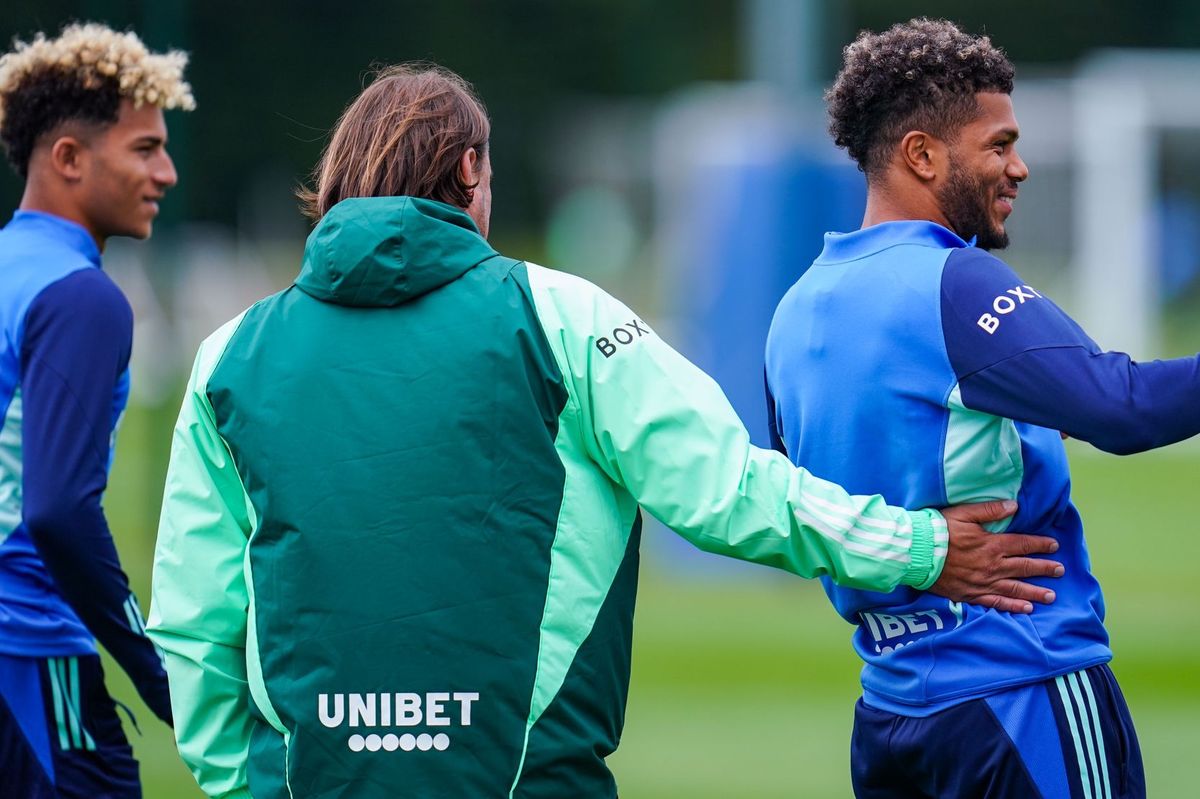
Daniel Farke Faces Dressing Room Tension as Leeds United Prepare for Crucial West Ham Clash
The atmosphere around Leeds United’s final training session ahead of their clash with West Ham United has reportedly become tense, with fresh speculation emerging about unrest inside the dressing room following the early departure of a first-team player from Thorp Arch on the eve of the game.
For Daniel Farke, who has guided Leeds through one of the most demanding campaigns in recent memory, the timing could hardly be worse. The Whites are preparing for a difficult afternoon against a highly motivated West Ham side, yet the focus surrounding the club has suddenly shifted away from tactics, injuries, and momentum toward questions about harmony behind the scenes.
While the club has not officially commented on the nature of the reported incident, the sight of a player leaving the training ground before the conclusion of the final session has inevitably fueled debate among supporters and pundits alike. In football, particularly at a club as emotionally charged as Leeds United, even small incidents can quickly escalate into major talking points.
For Farke, maintaining calm and focus now becomes the biggest challenge.
The German coach has spent much of the season building a reputation for composure under pressure. Since arriving at Elland Road, he has consistently projected stability, discipline, and togetherness. Those qualities have helped Leeds navigate injury setbacks, tactical adjustments, and the relentless expectations that come with managing one of England’s most scrutinized clubs.
But recent weeks have tested that unity.
Injuries have piled up at a crucial stage of the campaign, forcing Farke to repeatedly reshuffle his squad. The manager recently confirmed that several key players were either unavailable or only partially fit heading into the West Ham fixture, including concerns surrounding midfield depth and defensive availability. 
The physical strain has naturally increased emotional tension within the group.
Players who have featured heavily all season are fatigued. Fringe squad members are frustrated over limited opportunities. Meanwhile, uncertainty surrounding summer transfers and contract situations has created an additional layer of anxiety behind the scenes.
Against that backdrop, any disruption during the final training session was always likely to attract attention.
Sources close to the training ground suggest emotions were running high during preparations, although there is no indication of any major confrontation between players and coaching staff. Still, the optics of a player leaving early shortly before one of the club’s biggest fixtures of the season has sparked inevitable questions about morale inside the camp.
Farke’s response over the coming hours could define not only the result against West Ham, but also the tone of Leeds’ immediate future.
The former Norwich City boss has often spoken about creating a “family” atmosphere inside the dressing room. Throughout the campaign, he has emphasized togetherness, professionalism, and emotional balance. That philosophy has generally served Leeds well, particularly during difficult stretches when results threatened to derail momentum.
Even during injury crises and periods of intense criticism, Farke has remained publicly loyal to his players.
That approach has earned him respect among supporters and within the squad itself. Many players have improved under his management, while others who appeared destined to leave the club rediscovered form and confidence under his guidance.
Yet football dressing rooms are rarely free from tension.
At a club competing under immense pressure, disagreements are inevitable. Players want minutes. Senior figures expect influence. Younger talents demand opportunities. When results become unpredictable or injuries weaken tactical plans, frustrations naturally emerge.
What matters most is how a manager responds.
Farke now faces the delicate task of ensuring that any internal issues do not spill onto the pitch against a dangerous West Ham side desperate to finish strongly themselves. The London club remain emotionally charged heading into the fixture, and Leeds cannot afford distractions if they hope to deliver another positive result.
The manager’s recent press conferences suggest he remains determined to keep the focus entirely on football.
Speaking ahead of the match, Farke stressed his desire for Leeds to finish the season strongly despite injury concerns and growing pressure around squad selection.  He also acknowledged the physical demands placed on the team in recent weeks, particularly after international breaks and intense fixtures.
That context matters.
Fatigue often amplifies frustration inside elite football environments. Players carrying knocks may feel vulnerable about losing their place. Others returning from injury are eager to prove themselves immediately. Competition for selection intensifies as the season reaches decisive moments.
In many ways, the current tension at Leeds may simply reflect a squad fighting desperately to maintain standards under difficult circumstances.
Still, supporters will understandably worry about the potential consequences of dressing room unrest.
Leeds fans have seen how quickly instability can damage a season. The club’s recent history is filled with examples of momentum collapsing amid uncertainty, poor communication, or fractured relationships behind the scenes. Stability has therefore become one of the most valued aspects of Farke’s tenure.
That is why the latest reports feel significant.
Whether the issue proves minor or more serious, perception matters in modern football. Rumors spread instantly across social media. Every training-ground incident becomes magnified. Every frustrated reaction sparks speculation about transfer requests, tactical disagreements, or dressing-room divides.
For managers, controlling the narrative becomes almost as important as preparing the team itself.
To Farke’s credit, he has generally handled external pressure impressively. Even during emotionally charged moments earlier this season, he consistently defended his squad while refusing to publicly criticize individuals.  That calm leadership style has helped establish trust among players and staff alike.
Now, however, he faces another test of that leadership.
The challenge is particularly delicate because Leeds are entering a crucial period where momentum and confidence are everything. A strong performance against West Ham could reinforce belief inside the squad and quickly push current tensions into the background. Football has always been reactive; victories heal almost everything.
Defeat, however, would invite even greater scrutiny.
Questions would intensify about player commitment, squad harmony, and whether frustration within the dressing room has begun affecting performances on the pitch. The media narrative around the club could shift dramatically if signs of disunity become more visible in upcoming weeks.
That reality increases the importance of Farke’s man-management.
One of his greatest strengths throughout his coaching career has been emotional intelligence. Players frequently describe him as approachable, calm, and tactically clear. He rarely creates public conflict and generally prefers resolving problems internally rather than through media pressure.
That approach may prove vital now.
Rather than allowing speculation to dominate, Farke is likely to focus on simplifying the environment around the squad. Training sessions will center on tactical preparation, emotional control, and collective responsibility. Senior players will almost certainly be expected to reinforce unity ahead of kickoff.
Inside elite football clubs, these moments often become defining.
Sometimes tension fractures a squad. Other times it strengthens relationships by forcing difficult conversations into the open. Much depends on leadership — both from the manager and from experienced players inside the dressing room.
Leeds still possess enough quality and spirit to respond positively.
Despite injuries and inconsistency, there have been numerous examples this season of the squad rallying under pressure. Their dramatic performances in high-intensity fixtures have demonstrated resilience and character, particularly in emotionally charged environments. 
Farke will hope those qualities emerge again against West Ham.
The tactical challenge itself remains significant. West Ham are expected to attack aggressively, knowing they cannot afford a passive performance. Leeds, meanwhile, must balance defensive discipline with enough attacking ambition to threaten on the counter.
Selection decisions will therefore be critical.
With several midfielders unavailable or doubtful, Farke may once again be forced into tactical improvisation.  That increases the importance of concentration and emotional control, especially if external distractions continue dominating headlines before kickoff.
For supporters, the hope will be that the reported training-ground incident ultimately proves insignificant — merely another example of the emotional intensity that naturally accompanies elite football preparation.
But until clarity emerges, speculation will continue.
What cannot be questioned is the importance of the next 90 minutes for Daniel Farke and his players.
Football has a remarkable way of changing narratives quickly. A convincing Leeds performance against West Ham would immediately shift attention back toward results, tactics, and momentum. Fans would focus once more on the team’s resilience rather than dressing-room rumors.
Conversely, another disappointing afternoon would inevitably deepen scrutiny surrounding the squad’s internal dynamics.
That is the reality of modern football management.
For now, Farke remains the central figure tasked with holding everything together. Calm under pressure, composed in public, and trusted by much of the fanbase, he has repeatedly shown an ability to steady Leeds during turbulent moments.
The coming clash with West Ham may require exactly those qualities once again.
Whether the tension surrounding the final training session becomes a brief footnote or the beginning of a larger problem will likely depend on what happens when Leeds step onto the pitch.









Post Comment