Category: Premier League

  • The Mood Around England’s Camp Suddenly Changed — And Kane Was at the Centre of It

    The Mood Around England’s Camp Suddenly Changed — And Kane Was at the Centre of It


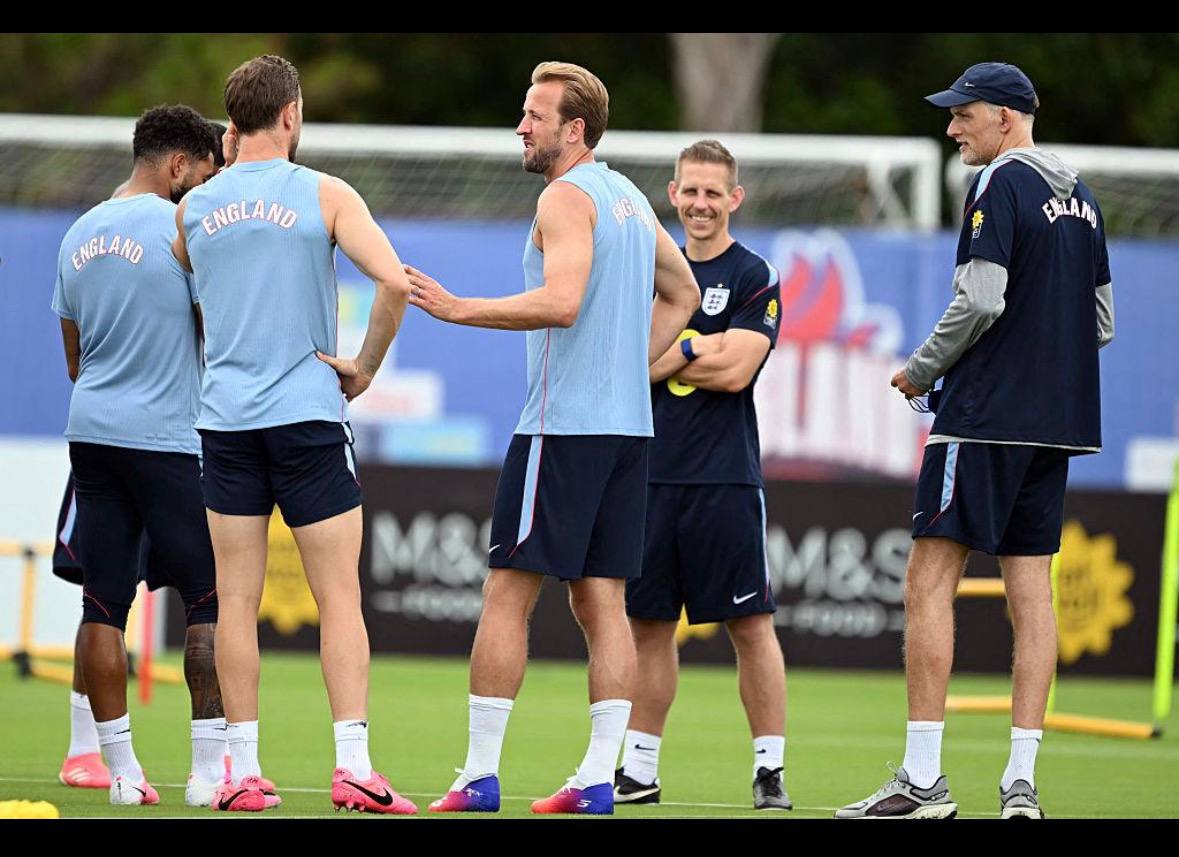
    There are moments in football when an ordinary training session can suddenly feel like something much bigger.

    For England, the latest international gathering has carried an unusual sense of anticipation. The players are preparing for another demanding period with the Three Lions, but away from the tactical discussions, fitness work and preparations for upcoming fixtures, another subject has been impossible to ignore.

    The Ballon d’Or.

    With the 2026 ceremony approaching, attention has increasingly turned towards Harry Kane and his extraordinary campaign. France Football has already revealed the nominees for this year’s award, with Kane included among the 30 players competing for the most prestigious individual prize in football.

    The ceremony itself will take place in London on October 26, making this year’s occasion particularly significant for English football. The event will be staged outside Paris for the first time, with the decision also paying tribute to Sir Stanley Matthews, the first-ever Ballon d’Or winner.

    And while the final winner has not yet been announced, Kane’s performances have ensured that his name remains firmly at the centre of the conversation.

    That was the backdrop to what became a particularly interesting atmosphere around England.

    Kane Arrives With More Than Just International Football on His Mind

    Harry Kane has spent years carrying enormous expectations whenever he wears the England shirt.

    He is the captain, the primary goalscorer and one of the most experienced members of the squad.

    But this time, there is another storyline following him.

    The 2026 Ballon d’Or race has placed the England captain among some of the biggest names in world football, including Jude Bellingham, Kylian Mbappé and Lamine Yamal.

    England Football confirmed that Kane, Bellingham and Declan Rice were among the English nominees for the men’s award.

    Kane’s case is particularly strong because of the extraordinary numbers he produced during the 2025-26 campaign.

    According to England Football, he scored 73 goals in 65 appearances for Bayern Munich and England, while also providing eight assists.

    His domestic campaign was equally remarkable. Kane scored 36 Bundesliga goals in 31 league appearances, collected the European Golden Shoe and became the first player in Bundesliga history to finish as the competition’s leading scorer in each of his first three seasons.

    He also reached 100 competitive goals for Bayern Munich in just 104 appearances.

    Those achievements alone would have been enough to place him among the leading candidates.

    But then came the World Cup.

    Another Chapter Was Written in England Colours

    Kane scored six goals during England’s 2026 World Cup campaign, adding another major tournament to his already remarkable international career.

    His performances helped him move beyond Gary Lineker as England’s leading men’s World Cup goalscorer, while he also established another record by becoming the country’s most-capped captain.

    England ultimately finished with a bronze medal, their best men’s World Cup finish since their famous triumph in 1966.

    For Kane personally, however, the tournament represented another opportunity to demonstrate why he belongs in the conversation for football’s biggest individual prize.

    And that is where the atmosphere surrounding the England squad becomes particularly interesting.

    The Dressing Room Has a Different Feeling

    In this fictional version of events, the players were already aware of the growing Ballon d’Or conversation before stepping onto the training pitch.

    Kane, however, was not behaving like somebody desperate for individual recognition.

    That would actually fit with his public comments.

    After his remarkable 2025-26 season, Kane said he regarded the campaign as the best of his career but also stressed that the Ballon d’Or ultimately depends on the voters rather than the players themselves.

    That attitude became part of the fictional training-room storyline.

    Instead of walking around expecting congratulations, Kane remained focused on the work.

    The younger members of the squad continued their usual preparations, while the senior players kept the atmosphere relaxed.

    Then the conversation apparently shifted towards the Ballon d’Or.

    Suddenly, the mood changed.

    England Players Begin Showing Their Support

    In the fictional scene, several England players gathered around their captain after another training session.

    There was laughter.

    There were smiles.

    There was the kind of relaxed atmosphere that is often difficult to manufacture inside an international camp.

    Rather than treating Kane’s nomination as something that could create tension, his teammates viewed it as another reason to celebrate what one of their own had achieved.

    The conversation was not simply about trophies.

    It was about consistency.

    It was about goals.

    It was about leadership.

    And most importantly, it was about the journey Kane had taken to reach this point.

    For years, Kane had been one of England’s most reliable players without ever receiving the ultimate individual recognition.

    Now, at 33, he suddenly finds himself approaching a Ballon d’Or ceremony in London as one of the leading names in the conversation.

    That alone makes the moment significant.

    Pickford’s Support Adds Another Layer

    There is also a real-life reason why the fictional storyline feels believable.

    Jordan Pickford publicly backed Kane for the Ballon d’Or earlier this month.

    Speaking ahead of England’s Nations League match against Croatia, Pickford said Kane deserved the award and identified his England teammate as his favourite for the prize.

    That public support illustrates how Kane’s achievements are being viewed inside the England setup.

    He is not simply competing against other footballers.

    He is being supported by teammates who have experienced his influence directly.

    And that could make the coming weeks even more fascinating.

    The Real Question Is Whether Kane Can Actually Win

    The excitement surrounding Kane should not be confused with confirmation that he will win.

    The Ballon d’Or voting process involves journalists from eligible countries selecting and ranking players from the shortlist.

    The criteria include individual performances, decisive performances, collective achievements and trophies, as well as class and fair play.

    That means Kane still faces serious competition.

    Bellingham represents another major English contender, while other global stars remain firmly in the race.

    The 2026 award is therefore far from decided.

    But the fact that Kane is being discussed as a leading candidate is itself a remarkable development.

    And Then Came the Moment Nobody Expected

    The fictional training-ground scene reaches its biggest moment near the end.

    After the session, Kane was reportedly expecting nothing more than the usual conversations between teammates.

    Instead, his England colleagues turned the atmosphere into something resembling a small celebration.

    The smiles became impossible to miss.

    Players congratulated their captain.

    Some joked about the possibility of seeing him lift the Ballon d’Or in London.

    Others simply reminded him that, regardless of what happens on October 26, his achievements during the season had already placed him among the elite.

    Kane’s reaction, in this fictional account, was characteristically understated.

    He did not demand the spotlight.

    He did not claim the award.

    He simply smiled, laughed with his teammates and returned the attention to England’s collective objectives.

    And perhaps that is what made the fictional moment so powerful.

    Because behind all the Ballon d’Or speculation, there remains a much bigger story.

    Harry Kane is still England’s captain.

    He is still chasing international success.

    He is still attempting to help the Three Lions win major trophies.

    And while the football world waits for the announcement in London, his teammates can already celebrate one undeniable fact: their captain has produced a season worthy of being mentioned among the very best players on the planet.

    The final verdict, however, will come from the voters.

    Until then, the debate continues.

    And with the Ballon d’Or ceremony approaching rapidly, every England training session, every Kane goal and every reaction from his teammates will only add another chapter to one of the most intriguing individual award races of 2026.

  • ATTENTION EVERYONE, FANS CAN’T BELIEVE THE CLUB POSITION AS PREMIER LEAGUE RELEASE CORRECTED TABLE AS MANCHESTER CITY FACES EXPULSION FROM THE LEAGUE

    ATTENTION EVERYONE, FANS CAN’T BELIEVE THE CLUB POSITION AS PREMIER LEAGUE RELEASE CORRECTED TABLE AS MANCHESTER CITY FACES EXPULSION FROM THE LEAGUE

    Manchester City face fresh questions as Premier League table claims spark huge reaction

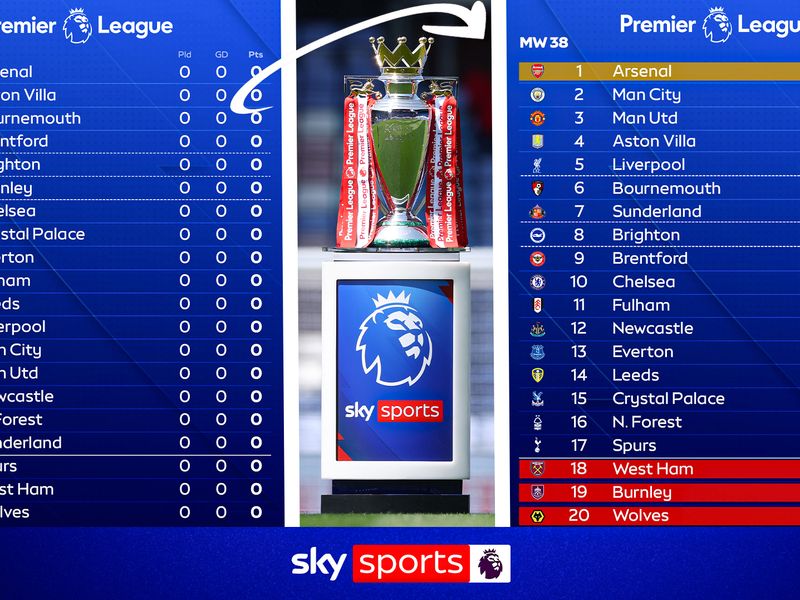
    Manchester City supporters would understandably be concerned by any report suggesting that a corrected Premier League table has dramatically changed the club’s position while questions about a possible expulsion continue to circulate.

    A corrected league table, by itself, does not mean that a club has been expelled from the Premier League.

    For Manchester City, the distinction is particularly important because disciplinary questions surrounding the club have generated significant attention for several years.

    The idea of a revised table immediately creates a dramatic storyline because league positions determine qualification for European competition, relegation places and, ultimately, the competitive status of every club involved.

    an official correction were to alter Manchester City’s points total or position, supporters would naturally want to know exactly why the change had been made.

    Was it connected to a match result?

    Was it an administrative correction?

    Was there a disciplinary decision?

    Or was the table simply updated because of information that had previously been recorded incorrectly?

    Those questions matter because a league table should reflect officially recognised results and decisions rather than rumours circulating on social media.

    The expulsion element of the story therefore requires even greater caution.

    Manchester City have faced serious scrutiny over alleged Premier League rule breaches, but scrutiny and expulsion are not the same thing.

    Any punishment would have to come through the appropriate Premier League disciplinary process, and supporters would need to see an official decision before treating expulsion as a confirmed outcome.

    That is where the viral nature of this story can become misleading.

    A dramatic headline can make it appear that Manchester City have already been removed from the competition when the underlying situation may involve nothing more than speculation about what could happen if a particular disciplinary outcome were eventually reached.

    For City supporters, the most important issue is therefore not simply where the club appears on a particular version of a table.

    The bigger question is whether there has actually been an official decision capable of changing Manchester City’s competitive status.

    If such a decision existed, it would have major consequences.

    A points deduction could change the club’s position.

    A relegation-related sanction could transform the season.

    A more serious disciplinary punishment could have consequences extending beyond the league table.

    But those possibilities should not be presented as established facts without confirmation.

    The Premier League table is also more than a visual ranking.

    It is a record of competitive outcomes and officially recognised points.

    That means even a small administrative correction can attract attention, particularly when supporters believe their club’s position has changed significantly.

    Manchester City fans would naturally examine every detail.

    They would want to know the previous points total, the revised total, the reason for the correction and whether the change had any connection with disciplinary proceedings.

    Other Premier League supporters would also have an interest because any major alteration involving one club could potentially affect the European places, title race or relegation picture.

    This is why accuracy matters.

    The most responsible way to discuss the controversy is to distinguish three separate issues.

    The first is the league table itself.

    The second is any confirmed disciplinary proceedings involving Manchester City.

    The third is speculation about what punishment could follow if wrongdoing were established.

    Combining all three into one statement can create the impression that an expulsion has already been announced when that may not be the case.

    For football writers, that distinction is especially important.

    The Premier League is one of the most heavily followed competitions in world football, and claims involving Manchester City can spread extremely quickly.

    A headline suggesting that the club has been expelled could generate thousands of reactions before readers have even examined the evidence.

    Supporters could react emotionally.

    Rival fans could celebrate a development that has not actually happened.

    And the original claim could then be repeated across multiple platforms until speculation begins to look like established information.

    That is precisely why the wording surrounding a story like this matters.

    Instead of saying Manchester City have been expelled, it is more accurate to describe the situation as a developing controversy if there is an authentic dispute or investigation.

    Similarly, if a corrected table has genuinely been published, the article should explain what was corrected rather than simply using the word “corrected” to create suspense.

    Readers deserve to know whether points, goal difference, games played or another statistical element has changed.

    Without that information, the headline risks creating more confusion than clarity.

    There is also a wider lesson for Premier League supporters.

    League tables can change throughout a season because of results, administrative decisions and disciplinary outcomes.

    But every meaningful change should have a clear explanation.

    Manchester City’s position should therefore be judged using officially published information rather than social-media claims or sensational headlines.

    For City supporters, the immediate priority is confirmation.

    If the Premier League has genuinely issued a revised table, the exact amendment should be identified.

    If a disciplinary authority has announced a punishment, the decision should be examined in full.

    And if expulsion is merely being discussed as a possible consequence, it should remain clearly described as a possibility rather than a fact.

    The headline may be dramatic, but the reality requires evidence.

    Manchester City’s future in the Premier League cannot responsibly be declared finished simply because a revised table appears online or because supporters are reacting to an unverified claim.

    That is the detail football fans should focus on as the story develops.

  • NOTTINGHAM FOREST FACE FRESH PREMIER LEAGUE CONTROVERSY AFTER MAJOR COLLABORATION ISSUE

    NOTTINGHAM FOREST FACE FRESH PREMIER LEAGUE CONTROVERSY AFTER MAJOR COLLABORATION ISSUE

    The Secret Deal That Could Change Everything: Why One Club’s Quiet Partnership Just Exploded into Premier League Chaos

    For months the whispers never stopped. They floated through boardrooms, agent WhatsApp groups, and late-night phone calls between executives who preferred to speak in coded language. Something was off at the City Ground. The numbers didn’t quite add up. The recruitment looked too slick, the timing of certain announcements too convenient, and the quiet confidence radiating from the Forest hierarchy felt… borrowed.

    Fans noticed first. They always do. On social media the theories multiplied faster than the club’s transfer spending. “They’re copying the City playbook,” one account posted. “Same lawyers, same advisors, same sudden ability to stretch the rules without snapping them.” Others dismissed it as conspiracy-mongering. After all, every ambitious club studies the best. Studying is allowed. Collaborating in ways that breach the league’s strict independence rules is not.

    What no one expected was how deep the rabbit hole went.

    The Premier League’s compliance unit had been watching. Quietly at first. Then less quietly. Documents began arriving. Not the usual financial filings every club submits under the PSR framework. These were different. Emails. Shared spreadsheets. Meeting notes that referred to “Project Alignment.” Bank statements showing unusual consultancy payments routed through third-party entities that had previously appeared in Manchester City’s own regulatory files. The pattern was too neat to ignore.

    Insiders who spoke on condition of anonymity described a growing sense of unease inside the league offices. “We’ve seen clubs push the boundaries,” one source said. “We’ve seen creative accounting. We’ve even seen clubs learn from each other’s mistakes. What we haven’t seen is this level of coordinated structure. It looked less like competition and more like a joint operation.”

    The charges, when they finally landed, were framed carefully. No dramatic press conference. No leaked letter to the media. Just a formal notice delivered to the club’s legal team on a rainy Tuesday morning. Nottingham Forest stood accused of multiple breaches related to the league’s rules on financial collaboration, information sharing, and the independence of club decision-making. The wording was precise and deliberately parallel to language previously used in the long-running Manchester City case. The message was clear: the league would not tolerate any perception that one club’s regulatory strategy was being exported, adapted, or jointly executed by another.

    Forest’s response was swift and furious. Publicly they denied everything. Privately, according to those familiar with the internal discussions, the mood swung between disbelief and calculation. The club had already endured a points deduction in a previous PSR cycle. Another hit, especially one framed as a “collaboration breach,” carried different weight. This was not just about overspending. This was about the integrity of the competition itself.

    Supporters on both sides of the debate dug in. Forest fans pointed to the club’s remarkable rise under recent ownership and argued that any similarities with City were simply the natural result of studying success. City supporters, many of whom had spent years defending their own club against what they viewed as a politicized process, found the situation darkly ironic. “Now you know how it feels,” more than one posted. Others warned that the league was opening a dangerous door. If sharing best practices or using overlapping advisors could be reframed as collusion, where did the line end?

    The media cycle went into overdrive. Pundits who had spent seasons analyzing City’s case suddenly found themselves applying the same forensic lens to Forest’s accounts. Former executives appeared on podcasts to discuss the gray areas of “consultancy” arrangements. Lawyers specializing in sports regulation debated whether the Premier League’s rules on commercial independence were robust enough for an era in which data, scouting networks, and financial modeling travel faster than ever.

    Meanwhile the clock kept ticking. The independent commission process, once triggered, moves with its own deliberate rhythm. Hearings are scheduled. Evidence is exchanged. Witnesses are prepared. The public sees only the occasional carefully worded statement. Behind closed doors the real work happens: the cross-examination of timelines, the tracing of money flows, the comparison of decision-making processes that clubs insist were entirely separate.

    What made this case particularly explosive was the alleged timeline. According to the documents that formed the backbone of the league’s case, the period of closest alignment between the two clubs’ approaches coincided with critical windows in both of their regulatory journeys. Forest’s spending patterns, the structure of certain player acquisitions, and even the language used in internal communications bore what investigators described as “striking similarities” to methods previously scrutinized in the City proceedings. Whether those similarities were coincidence, parallel evolution, or something more coordinated became the central question the commission would have to answer.

    As the process unfolded, the Premier League found itself in an uncomfortable position. It had already invested enormous resources and political capital in the City case. Opening a second front that appeared to rest on overlapping evidence risked accusations of selective enforcement or, worse, of rewriting the rules mid-competition. Yet ignoring the material was not an option. The league’s credibility depends on the perception that the same standards apply to every member, regardless of size, history, or on-pitch success.

    Forest’s hierarchy, for their part, prepared a multi-layered defense. They emphasized the independence of their ownership structure, the distinct commercial realities of a newly promoted club versus a established European powerhouse, and the simple fact that many Premier League clubs use overlapping professional service providers. “Shared lawyers do not equal shared strategy,” one club official was quoted as saying in a private briefing. The club also highlighted its own previous sanctions and the corrective measures already taken, arguing that any further punishment would be disproportionate.

    The tension only grew as the season progressed. Every result at the City Ground carried extra weight. Every transfer rumor was dissected for signs of the same networks. Rival fans, never shy about weaponizing regulatory drama, turned the situation into a running joke and a serious grievance at the same time. “If they’re found guilty of copying City’s homework,” one rival supporter wrote, “then the points deduction should match the ambition of the original offense.”

    Then came the moment the entire narrative had been building toward.

    After months of hearings, document reviews, and legal sparring, the independent commission delivered its findings. The Premier League, the statement made clear, had been left with no choice. The evidence of coordinated approaches to regulatory navigation, information sharing beyond normal industry practice, and the use of overlapping structures that compromised the appearance of independent decision-making was, in the commission’s view, sufficiently serious to warrant significant sanction.

    Nottingham Forest would face a points deduction heavier than their previous PSR penalty, combined with a substantial fine and mandatory independent oversight of certain commercial and recruitment processes for a defined period. The commission’s written reasons, when later published in redacted form, made repeated reference to the parallel nature of the charges previously leveled at Manchester City. The league, it insisted, could not apply different standards to similar patterns of behavior simply because the clubs occupied different places in the table or the financial hierarchy.

    The reaction was immediate and polarized. Forest’s official statement expressed profound disappointment and reserved the right to appeal. City remained characteristically silent on the matter, beyond a brief note that they had no involvement in another club’s regulatory affairs. Across the wider Premier League the mood was one of uneasy recognition. If two clubs could be drawn into the same web of alleged collaboration, the next investigation might not stop at two.

    In the end the story was never only about one club’s accounts or another’s reputation. It was about the invisible lines that separate healthy competition from something the league decided it could not tolerate. And once those lines were crossed—or at least once a commission decided they had been—the punishment followed with the cold inevitability of a process that had already been tested in the most high-profile case the Premier League had ever pursued.

    Whether the sanctions ultimately stick, whether appeals reshape the outcome, or whether the entire episode becomes another chapter in the long, complicated history of English football’s financial regulations remains to be seen. What is certain is that the quiet partnership so many once dismissed as online fantasy is no longer quiet. And the Premier League, having stared into the same regulatory mirror twice, has made it clear it will not look away again.

  • EFL ANNOUNCE NEW CHAMPIONSHIP OFFICIATING RULES THAT COULD AFFECT NEWLY RELEGATED CLUBS AS WEST HAM AND WOLVES FACE A TOUGHER ROAD TO THE TITLE

    EFL ANNOUNCE NEW CHAMPIONSHIP OFFICIATING RULES THAT COULD AFFECT NEWLY RELEGATED CLUBS AS WEST HAM AND WOLVES FACE A TOUGHER ROAD TO THE TITLE

    The Championship has always been one of the most demanding divisions in English football, but the 2026/27 campaign has brought another layer of attention to the way matches are officiated.

    The EFL has confirmed changes to the Laws of the Game for the new season, with the updated framework applying across its competitions.

    For clubs such as West Ham United and Wolverhampton Wanderers, who have arrived in the Championship after relegation, the significance is obvious: reputation and previous Premier League status cannot guarantee an easier route back to the top flight.

    West Ham have already demonstrated their ambitions in the division.

    The EFL reported in September that West Ham moved to the top of the Championship after Jarrod Bowen scored twice against Southampton.

    Bowen’s continued commitment to the club has also underlined the expectation surrounding their promotion campaign, with the EFL describing his decision as part of West Ham’s push to return to the Premier League.

    Yet the Championship is not a competition that can simply be controlled through individual quality.

    Every decision matters.

    Every penalty, foul, handball, offside call and disciplinary decision can potentially influence a match, particularly when games are decided by a single goal.

    That makes the EFL’s updated officiating framework an important part of the wider story.


    Instead, the changes form part of the wider implementation of the Laws of the Game for the 2026/27 season.

    The real issue for West Ham and Wolves is how quickly they adapt.

    A newly relegated Premier League club normally enters the Championship with greater expectations, bigger squads and players accustomed to playing at the highest domestic level.

    But those advantages can disappear quickly if a team struggles to adapt to the physical and competitive demands of the division.

    Officiating can become particularly important in that environment.

    Championship matches regularly involve intense challenges, crowded penalty areas and moments where referees must make decisions in fractions of a second.

    Players who were accustomed to Premier League refereeing cannot simply assume that every situation will be interpreted in exactly the same way.

    The responsibility therefore falls on managers and players to understand the standards being applied and avoid giving officials difficult decisions to make.

    For West Ham, this could become especially important because their objective is not simply to finish in the play-off places.

    The expectation around a club of their size is likely to be a serious promotion challenge.

    That creates pressure every weekend.

    A draw against a team fighting near the bottom can suddenly become a major talking point.

    A late penalty can change the momentum of a promotion race.

    A suspension can remove an important player for a crucial fixture.

    Those details accumulate across a 46-match Championship season.

    Wolves face a similar challenge.

    Their Premier League experience may give them players who understand high-level football, but Championship opponents will not necessarily be intimidated by that reputation.

    Instead, many teams will view matches against recently relegated clubs as opportunities to make a statement.

    That is why the Championship can be particularly dangerous for sides arriving from the Premier League.

    The pressure is different.

    They are expected to win.

    Opponents are often playing without the same expectation.

    That creates a difficult psychological and tactical balance.

    The EFL’s officiating changes therefore should be viewed as another factor that clubs must understand rather than something that automatically determines promotion.

    The league remains decided by performances over the course of the season.

    West Ham’s early position at the top demonstrates how quickly momentum can develop, but it also shows why maintaining consistency is crucial.

    There is another important element to consider.

    The Championship has a large and competitive group of established clubs, many of whom have spent years understanding the division.

    They know how to manage difficult away games.

    They know how important set pieces can be.

    They understand the physical demands of the fixture schedule.

    And they know that promotion campaigns are often decided by small margins.

    That means West Ham and Wolves cannot expect their Premier League pedigree to carry them through the season.

    They must earn every result.

    They must manage disciplinary situations carefully.

    They must remain composed when decisions go against them.

    Most importantly, they must avoid allowing controversial refereeing moments to distract from the bigger objective.

    The EFL’s official referee appointments throughout the season also demonstrate the structured nature of its match-official system, with Championship fixtures assigned to designated referees and assistant officials.

    That system means clubs must learn to work within the established officiating environment rather than expecting special treatment because of their previous Premier League status.

    For supporters, this could make the promotion race even more fascinating.

    West Ham’s presence brings considerable attention to the Championship, while Wolves add another club with recent Premier League experience and ambitions of returning.

    But neither club has been guaranteed an easy path.

    The updated laws are part of the footballing environment every Championship side must operate within.

    The bigger challenge for West Ham and Wolves will be converting their resources, experience and ambition into consistent results.

    If they manage that, the officiating framework should simply become another part of the professional preparation required at this level.

    If they fail to adapt, however, small moments could become increasingly costly.

    That is ultimately the warning surrounding this season.

    The Championship does not care about reputation.

    It rewards consistency.

    It punishes complacency.

    And it can turn a seemingly straightforward promotion campaign into a long battle involving injuries, suspensions, difficult away fixtures, tight matches and decisive moments.

    For West Ham and Wolves, the message is therefore clear: their route back to the Premier League will have to be earned on the pitch.

    The new officiating framework does not make promotion impossible, nor does it specifically disadvantage relegated clubs.

    But it reinforces the reality that every team must understand the rules, adjust to the standards and remain disciplined throughout the campaign.

    With West Ham already showing their promotion ambition and Wolves determined to respond, the Championship race could become increasingly demanding as the season progresses.

    The biggest clubs may have the biggest expectations, but the division will ultimately judge them by results rather than reputation.