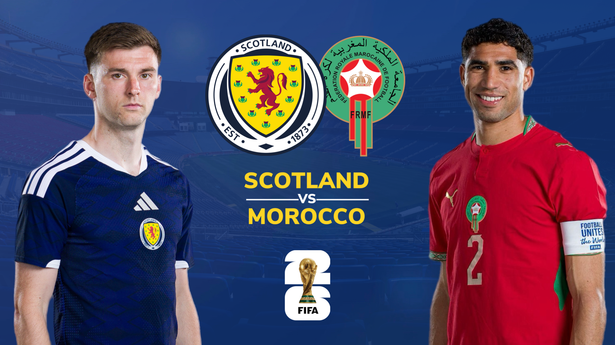
Scotland supporters have been left furious after FIFA reportedly prevented the national team from wearing their iconic navy-blue home kit for their crucial upcoming World Cup clash against Morocco, sparking widespread debate among fans and pundits alike.
The decision, which emerged in the build-up to the Group C encounter, has generated significant backlash across social media, with many supporters questioning why Scotland would be denied the opportunity to wear one of the most recognizable shirts in international football.
For generations, Scotland’s dark navy-blue strip has been synonymous with the national team. It represents the country’s footballing identity, history, and tradition. Seeing the team forced into an alternative kit for one of the biggest matches on the international stage has therefore not gone down well with supporters.
FIFA’s Kit Regulations Under Scrutiny
FIFA has long enforced strict regulations regarding kit selections during major tournaments. The governing body aims to ensure clear visual distinction between competing teams for players, match officials, broadcasters, and supporters watching around the world.
Under tournament guidelines, teams may be instructed to wear alternative kits if FIFA believes there could be a clash between colours, even when the differences appear obvious to supporters.
However, many Scotland fans have questioned whether such measures were necessary ahead of the Morocco fixture.
Scotland’s traditional navy-blue shirt and Morocco’s famous red kit have historically been considered distinct colours. As a result, supporters have struggled to understand why FIFA would intervene.
The controversy has reignited wider discussions about how kit decisions are made during international tournaments and whether governing bodies are becoming overly cautious.
Fans React with Anger
The reaction from supporters was swift.
Across social media platforms, thousands of fans voiced their frustration after learning Scotland would not be wearing their traditional home colours.
Many argued that the navy-blue shirt is an essential part of Scotland’s football identity and should be worn whenever possible, particularly during World Cup matches where national pride is at its highest.
Others suggested that modern broadcasting technology should make colour clashes far less problematic than they were in previous decades.
One common complaint among supporters was that tournament football should showcase the iconic kits that fans associate with their countries. For Scotland, that means navy blue.
Many described the decision as unnecessary and difficult to justify.
Some supporters even compared the situation to other international fixtures in which teams with seemingly similar colours were still permitted to wear their traditional home strips.
The frustration was amplified because World Cup matches carry enormous significance. Every detail, from the shirt worn by the players to the atmosphere created by supporters, becomes part of football history.
For that reason, many fans believe teams should be allowed to display their traditional identities whenever possible.
A Proud Symbol of Scottish Football
Scotland’s navy-blue shirt is one of the most recognizable kits in world football.
The colour has become deeply connected with the national side over decades of international competition. From memorable qualification campaigns to famous victories over some of football’s biggest nations, the navy-blue jersey has been present throughout Scotland’s football journey.
For many supporters, the shirt represents far more than a uniform.
It serves as a symbol of national pride and collective identity.
Every generation of Scotland supporters has memories attached to the famous colours. Whether attending matches in person or watching from home, the sight of the national team wearing navy blue carries emotional significance.
That is why any decision affecting the use of the home kit is likely to attract attention and scrutiny.
Morocco Clash Takes Centre Stage
The timing of the controversy has only increased interest in the upcoming contest against Morocco.
The Group C encounter could prove decisive in determining qualification prospects, placing additional focus on every aspect of the match.
Morocco arrive as one of the strongest teams in the group and have established themselves as a formidable force on the international stage in recent years.
Scotland, meanwhile, are aiming to continue their positive momentum and strengthen their position in the standings.
While managers and players will understandably focus on tactical preparations, the discussion surrounding the kit situation has become one of the major talking points before kickoff.
Supporters hope the attention will not distract from what promises to be a highly competitive encounter.
FIFA Faces Familiar Criticism
This is not the first time FIFA has faced criticism over tournament regulations.
Throughout the years, decisions relating to kits, equipment, scheduling, and tournament protocols have occasionally generated controversy among supporters.
Critics argue that football’s governing bodies sometimes prioritize administrative consistency over tradition and supporter sentiment.
Defenders of FIFA’s approach, however, maintain that standardized regulations are necessary to ensure fairness and operational efficiency throughout major competitions.
They point out that tournament organizers must consider numerous factors beyond what is immediately visible to supporters.
These include television production requirements, visibility concerns for players and officials, sponsorship obligations, and accessibility considerations for viewers with colour-vision deficiencies.
Nevertheless, many Scotland fans remain unconvinced.
For them, the central issue is simple: if there is no obvious clash between navy blue and red, then Scotland should be able to wear their traditional home colours.
Players Focused on the Bigger Picture
Despite the growing debate, Scotland’s players are expected to remain focused on the task at hand.
Footballers are accustomed to wearing alternative kits when circumstances require it, and professional squads generally adapt quickly to such situations.
Most players will likely view the controversy as secondary compared to the importance of securing a positive result.
The primary objective remains earning points and advancing through the tournament.
Still, there is little doubt that representing Scotland in the famous navy-blue shirt carries special meaning.
Many players have spoken in the past about the pride associated with wearing the national colours, particularly on the world’s biggest stage.
Supporters Hope for Reconsideration
As discussion continues, some supporters are still hoping that the decision could be reviewed.
Whether that happens remains uncertain, but the strength of feeling among fans has been impossible to ignore.
The debate highlights the powerful connection between football supporters and the symbols that define their teams.
Kits are not merely clothing. They represent history, tradition, identity, and memories built over generations.
For Scotland supporters, the navy-blue jersey occupies a special place in the nation’s sporting culture.
That is why the prospect of seeing their team take the field in alternative colours against Morocco has generated such a passionate response.
The Final Word
Regardless of what Scotland ultimately wear against Morocco, the controversy has already become one of the major talking points surrounding the match.
Fans believe the iconic navy-blue home shirt should have been allowed, while FIFA’s regulations continue to divide opinion.
As kickoff approaches, attention will gradually shift from kit colours to events on the pitch.
Yet for many supporters, the debate serves as another reminder of the tension that can exist between football tradition and modern tournament regulations.
Whether viewed as a necessary precaution or an unnecessary restriction, the decision has certainly sparked strong emotions among Scotland fans.
Now, all eyes will be on the match itself as Scotland seek a vital result against Morocco-regardless of the colours they are wearing.