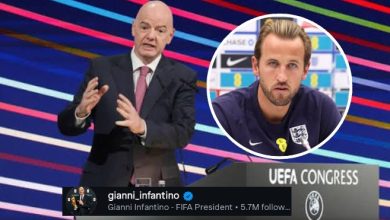
In a move that has sent shockwaves through the football world, the England Football Association has released a blistering fresh statement that underscores just how far the power balance has shifted. What started as Gianni Infantino’s audacious bid to reshape the beautiful game forever has collapsed into one of the most humiliating climbdowns in FIFA history – and England has been right at the heart of the revolt.
This isn’t just another press release. This is the FA drawing a line in the sand, declaring that the days of secret deals and top-down power plays are over. As FIFA president Gianni Infantino performed a spectacular U-turn and abandoned his controversial plan to sell stakes in the World Cup, England’s governing body has gone further, demanding a full and robust review of FIFA’s leadership and governance. The message is clear: football belongs to the game, not to private investors or closed-door schemes.
The Proposal That Sparked Global Outrage
It all began with what many are calling one of the most brazen power grabs in modern football history. Gianni Infantino, the long-serving FIFA president, unveiled plans for a new commercial vehicle called FIFA Forward Enterprise (FFE). The idea? Fold the commercial rights to FIFA’s biggest tournaments – the men’s and women’s World Cups, Club World Cup and more – into a subsidiary valued at around $15-20 billion, then sell minority, non-controlling stakes to private investors. Reports linked potential involvement to figures connected to the Trump orbit, adding political heat to an already explosive situation.
Infantino framed it as a masterstroke for the grassroots. Member associations were promised massive windfalls – up to $40 million each if they signed up by a tight September deadline – with claims that the money would flow especially to nations that needed it most. Reject the plan, the warning went, and the funding package would shrink dramatically. It was classic carrot-and-stick politics.
But the football world saw something darker: the potential mortgaging of the World Cup’s soul. Critics argued that once private capital got a foot in the door, the pressure for ever-greater commercial returns would inevitably reshape the tournament itself – more matches, more commercial breaks, more decisions driven by shareholders rather than the pure spirit of the game. UEFA president Aleksander Čeferin called it a plan that “crosses every line.” The backlash was immediate and ferocious.
England’s Initial Shock and Rising Fury
The England FA’s first public reaction was pure astonishment mixed with deep concern. In a statement that landed like a bombshell in its own right, an FA spokeswoman revealed that the organisation had been “completely unaware” of the proposal. There were no substantive details, no clear conditions, and a glaring lack of proper process or governance. “Based on the limited information, we are deeply concerned about the lack of process and governance to get to this point, and the apparent substance and principles involved,” the FA said. They promised to comment further once full transparency arrived.
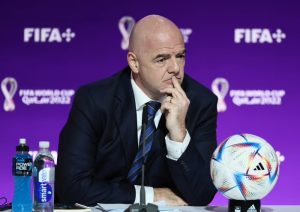
That measured but pointed response was only the beginning. As emergency meetings convened and the scale of opposition became clear, England moved from concern to confrontation. When UEFA’s 55 member associations met and unanimously agreed that no European national teams would participate in FIFA tournaments while the proposals remained in place, the FA stood shoulder to shoulder with its continental colleagues. “We oppose FIFA’s plans. The World Cup belongs to football and will always remain so,” an FA representative declared. England was ready to boycott if necessary.
This was no empty threat. The combined weight of UEFA, CONCACAF and then the Asian Football Confederation created a voting bloc that made Infantino’s plan politically impossible. Senior figures resigned. Political leaders, including UK Prime Minister Andy Burnham, piled on, branding Infantino the “wrong man” to lead FIFA. The pressure became unbearable.
The Great U-Turn – and England’s Fresh Statement
Then came the moment the football world had been waiting for. In the early hours, FIFA released a statement attributable to Infantino himself. The FIFA Forward Enterprise project would not proceed. Having listened to all the views, it had become clear the project had “created divisions of a nature that, regardless of the level of support, are no longer in the interest of the objective set out in the first place.” The purpose, he insisted, had always been to unite and improve. Now the priority was to bring parties back together.
It was a complete reverse. The sell-off was dead. But for many, including the England FA, simply killing the proposal was not enough. The manner in which it had been developed – the secrecy, the compressed timelines, the apparent lack of genuine consultation – had exposed deeper problems in how FIFA is run.
Enter the fresh statement that is dominating headlines today. The Football Association has come out in full support of UEFA’s position, declaring: “We fully support UEFA’s position. It is time for a full and robust review of FIFA’s leadership and governance to ensure that the global game is run transparently, for the benefit of all 211 member nations and with the long-term stewardship of football at its heart!”
This is the major shift the title captures. England did not flip-flop on the substance of the proposal – they opposed it once the details (or lack of them) became clear. What has changed is the ambition of their response. From “deeply concerned” and waiting for more information, to standing ready to boycott, to now demanding systemic reform of FIFA’s leadership itself. That is the U-turn in stance that matters: from cautious critic to active driver of accountability.
Why This Matters So Much for England and the Future of the Game
For England fans, the implications run deep. The Three Lions are perennial contenders, a nation that invests heavily in its national teams and clubs, and one that has long punched below its weight in global governance influence relative to its commercial and sporting power. Standing firm against this proposal – and then pushing for structural change – positions the FA as a defender of the game’s integrity at a moment when trust in FIFA has taken another heavy hit.
The boycott threat was real. Imagine a World Cup without England, France, Spain, Germany and the rest of Europe. The commercial value of the tournament would have cratered. Broadcasters, sponsors and host nations would have faced chaos. By forcing the climbdown without actually having to walk away, European football (with England playing a visible role) has demonstrated that collective action still works.
Yet the deeper questions remain unanswered. How did a proposal of this magnitude advance so far with so little transparent consultation? Who were the “faceless individuals” UEFA has referenced in its own strongly worded criticism of “secret schemes” and “shabby backroom deals”? Will there be real accountability, or will the review become another internal process that changes little?
Infantino’s presidency, once seemingly secure, now looks vulnerable. He has vowed to continue and to reunite the football family, but the loss of confidence expressed by UEFA and echoed by the FA is significant. Re-election dynamics, previously seen as a formality, have become far more uncertain. Other confederations and member associations will be watching closely to see whether genuine reform follows or whether the same leadership style simply continues under a different guise.
The Political and Cultural Earthquake
This saga has also exposed the growing intersection of football governance, politics and big money. UK political figures from the Prime Minister down took public positions. The involvement of investment vehicles linked to prominent political families added a layer of controversy that made the proposal radioactive in certain markets. Fans across social media and in stadiums made their voices heard with a simple, powerful slogan that cut through the complexity: football is not for sale.
For the England national team specifically, the episode reinforces a broader narrative. English football has spent years modernising its own governance, investing in the women’s game, grassroots facilities and safeguarding. Seeing the global governing body appear to prioritise private equity returns over transparent stewardship sits poorly with that domestic direction of travel. The FA’s latest statement aligns the national association firmly with the principle that the World Cup is a collective inheritance, not a financial instrument to be partially privatised.
What Happens Next?
The immediate crisis has passed. The sell-off is off the table. But the aftershocks will continue for months, if not years. UEFA has made clear that the task of rebuilding trust has only just begun and that a thorough review must leave no option off the table. The FA’s endorsement of that position means England will be an active participant in whatever conversations follow.
Expect more statements, more meetings, and intense scrutiny of any future commercial innovations coming out of FIFA. Infantino will attempt to reset relationships. National associations, especially the bigger ones in Europe, will demand clearer processes and genuine voice. Fans will remain vigilant. And the next time a major commercial restructuring is proposed, the bar for consultation and transparency will be set much higher – precisely because of the revolt that England helped lead.
This was never just about one proposal. It was about who controls the soul of the world’s most popular sport. In forcing a U-turn from the most powerful man in football and then issuing a fresh statement that demands lasting change, the England Football Association has signalled that it is prepared to fight for that soul. The game is watching. The fans are watching. And for once, the people who actually love football appear to have the upper hand.
The beautiful game just reminded the world that it still belongs to those who play it, watch it, and protect it – not those who see it primarily as an asset class. England’s latest statement is the clearest expression yet of that hard-won truth. The U-turn is complete. The real work of reforming how global football is governed is only beginning.