
West Ham face major rebuild as leading stars move quickly towards Premier League exits after relegation
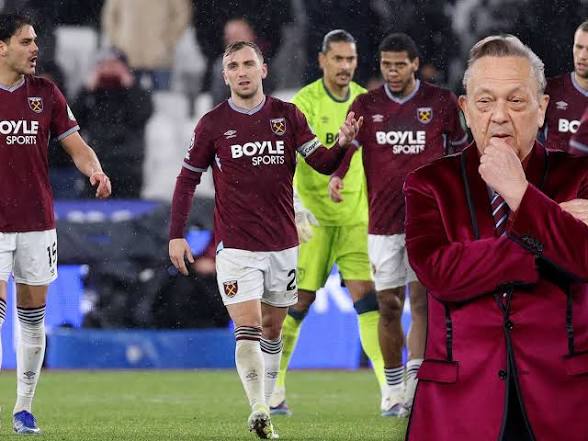
Relegation has barely been confirmed, yet the sense of upheaval surrounding West Ham United is already growing rapidly. Reports linking several senior players with immediate Premier League moves have intensified within hours of the club’s drop being sealed, leaving supporters frustrated and uncertain about what comes next for one of England’s biggest clubs outside the established “Big Six”.
For many West Ham fans, relegation itself was painful enough. But the speed at which transfer discussions appear to be accelerating has added another layer of concern. Three high-profile first-team players are now strongly connected with moves away from the London Stadium, while rival Premier League clubs are reportedly positioning themselves to take advantage of West Ham’s vulnerable situation.
The reality of modern football means relegation rarely arrives alone. It often triggers financial restructuring, dressing-room uncertainty and rapid squad turnover. West Ham now appear to be entering exactly that phase.
Relegation immediately changes the transfer landscape
The hours following relegation are often the most chaotic period inside any football club. Recruitment departments begin reassessing budgets, agents start exploring exit options and rival clubs move quickly to identify opportunities.
That appears to be exactly what is happening at West Ham.
Several players in the current squad still possess significant Premier League value despite the club’s disappointing campaign. Experienced internationals, proven top-flight performers and younger players with resale potential are naturally attracting attention from clubs seeking quality without paying premium fees.
For West Ham, this creates a difficult balancing act.
The club must decide whether to:
Cash in on valuable assets to stabilise finances
Retain experienced leaders for a Championship promotion push
Or attempt a middle-ground rebuild that avoids a complete collapse
Historically, relegated clubs often struggle when too many senior players depart simultaneously. Supporters still remember examples such as Sunderland A.F.C. and Stoke City F.C., whose rapid post-relegation decline became warnings for clubs across English football.
West Ham supporters are understandably anxious about avoiding a similar trajectory.
Which players are attracting attention?
Although speculation continues to evolve, several members of the squad are already being linked with immediate Premier League interest.
The strongest rumours centre around players with:
Premier League experience
International pedigree
Strong athletic profiles
Proven adaptability in multiple tactical systems
Clubs competing for European places are reportedly monitoring the situation closely, particularly because relegation often weakens a selling club’s negotiating position.
This is especially relevant in today’s Premier League market, where Financial Fair Play and sustainability regulations have forced clubs to search more carefully for value.
A relegated side containing experienced Premier League talent becomes extremely attractive under those conditions.
Why Premier League clubs are moving early
The timing of these developments is not surprising from a football operations perspective.
Recruitment departments across the Premier League now work months ahead of transfer windows opening officially. Shortlists are prepared early, financial scenarios are modelled in advance and relegation outcomes are anticipated long before they become mathematically confirmed.
As soon as West Ham’s relegation became official, rival clubs would already have known:
Which contracts contain release clauses
Which players are likely to push for exits
Which positions West Ham may need to sell from first
Approximate valuation reductions after relegation
That explains why movement can appear so sudden to supporters.
From the fan perspective, it feels brutally fast. From a recruitment perspective, however, much of this groundwork is usually prepared long beforehand.
Tactical problems that contributed to West Ham’s collapse
The bigger question now is how West Ham reached this point in the first place.
Throughout the season, several recurring tactical weaknesses repeatedly damaged the team:
Defensive instability in transition
Lack of midfield control
Inconsistent pressing structure
Overreliance on individual moments
Poor chance conversion in key matches
At times, the squad looked caught between tactical identities.
There were matches where West Ham attempted a more aggressive pressing system, only to leave large gaps behind the midfield. In other games, they sat deeper but struggled to progress the ball effectively once possession was recovered.
The imbalance became increasingly obvious against organised Premier League sides capable of controlling central areas.
Statistics across the campaign highlighted these concerns:
Too many goals conceded from transitional moments
Declining possession retention under pressure
Reduced attacking efficiency compared to previous seasons
Defensive errors in crucial late-game situations
The club’s inability to consistently manage matches eventually proved decisive.
Fans react with anger, disappointment and realism
Reaction among the West Ham fanbase has been emotional but divided.
Some supporters are furious that players appear ready to leave so quickly after relegation. Many feel the squad underperformed collectively and should now stay to help repair the damage.
Others recognise the reality of elite football careers.
For players entering their prime years or hoping to remain part of national team setups, spending a season in the Championship can significantly affect visibility and progression. Agents and players alike understand that opportunities at top-flight level cannot always be delayed.
Across UK football forums and social media, many West Ham fans expressed similar frustrations:
Anger at the club hierarchy
Disappointment with player mentality
Concern about recruitment planning
Fear of long-term decline
Interestingly, Nigerian fans following the Premier League have also reacted strongly.
West Ham have built a significant following across Nigeria over the years due to the Premier League’s popularity and the club’s history of entertaining football. Many Nigerian supporters sympathised with the club’s loyal fanbase while also debating whether certain players deserve moves to clubs competing in Europe.
Among younger Nigerian fans especially, conversations focused heavily on how quickly fortunes can change in English football.
One season competing respectably in the Premier League can quickly become a relegation crisis if recruitment and tactical planning fall behind rivals.
The financial reality behind the scenes
Relegation is not only a sporting disaster — it is a financial shock.
Broadcasting revenue drops dramatically outside the Premier League, even with parachute payments included. Commercial value weakens, sponsorship discussions become more difficult and wage structures often become unsustainable.
That is why clubs frequently sell important players immediately after relegation.
West Ham’s wage bill reportedly became increasingly difficult to justify given the team’s league position. If several high earners depart this summer, it would not necessarily reflect panic alone — it may simply reflect economic necessity.
The challenge is ensuring the squad remains competitive enough to fight for immediate promotion.
Championship football is physically demanding, tactically unpredictable and notoriously difficult for relegated clubs who assume they will bounce straight back.
What the next manager must solve
Whether the current manager remains or a replacement arrives, the next phase requires clarity.
The club’s future depends on establishing:
A defined tactical identity
Smarter recruitment
Better squad balance
Greater consistency in midfield
Stronger leadership inside the dressing room
Promotion-winning Championship teams often succeed because they are structurally organised rather than individually brilliant.
West Ham cannot rely solely on reputation.
If too many experienced figures depart, younger players will need to mature quickly. If senior players stay reluctantly, dressing-room morale could become another major issue.
The next few weeks may therefore shape the entire direction of the club.
A defining summer for West Ham United
There is still enough infrastructure, support and quality around West Ham United for the club to recover quickly.
The fanbase remains enormous. The stadium remains Premier League-level. The academy system still produces talent. And financially, West Ham are stronger than many clubs who previously suffered relegation.
But modern football moves fast.
If recruitment mistakes continue, if leadership decisions become reactive, or if too many key players leave without adequate replacements, the risk of long-term instability becomes very real.
For supporters, the most painful aspect may not even be relegation itself.
It is the feeling that the dismantling of the squad has already begun before the emotional dust has even settled.
The coming transfer window will now define whether West Ham respond like a club preparing for an immediate return — or one drifting into a far more uncertain future.












Post Comment