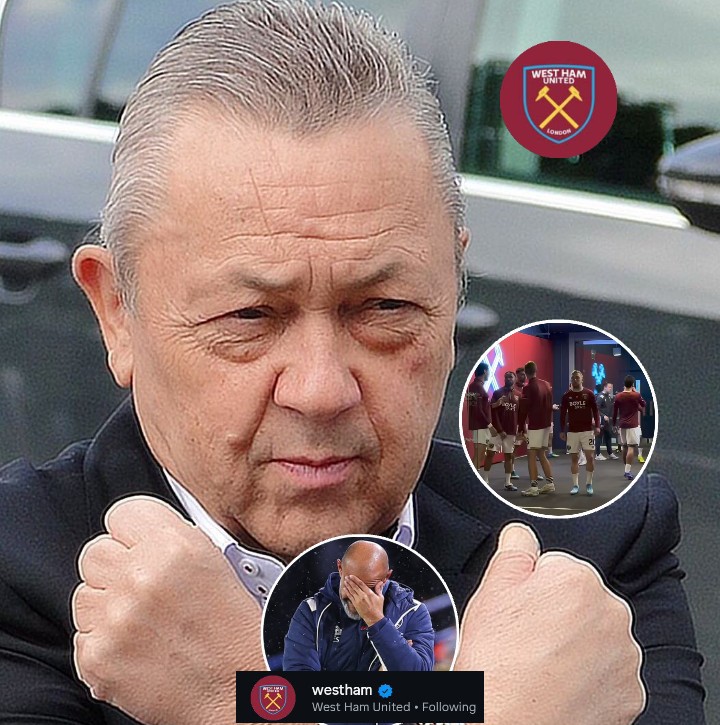
Social media erupts as West Ham fans are left stunned by David Sullivan’s warning before decisive Leeds United clash
Supporters of West Ham United have reacted with anxiety and frustration after reports emerged that club owner David Sullivan delivered a stark internal warning ahead of the Hammers’ crucial showdown with Leeds United.
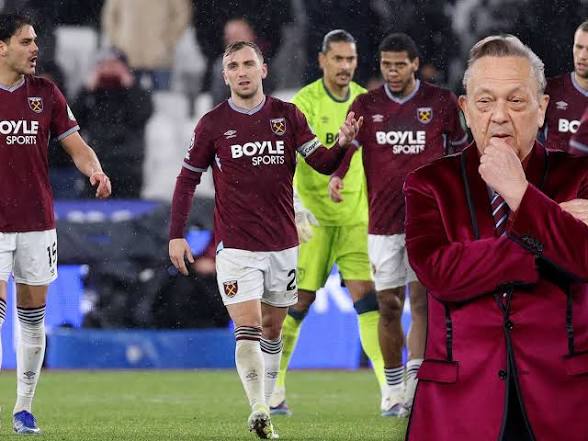
With pressure mounting after a disappointing campaign, the message from the top appears clear: failure to deliver improvements could trigger major structural changes across the football club, including departures within the squad and potential changes behind the scenes.
The timing of the warning has intensified emotions among supporters already concerned about inconsistent performances, recruitment questions, and uncertainty surrounding the long-term direction of the club. Across social media, fans debated whether Sullivan’s intervention was necessary leadership or another sign of instability at a critical moment in the season.
A season that never truly settled
West Ham entered the campaign with expectations of pushing back towards the Premier League’s European positions after several seasons of progress under former manager David Moyes. Instead, the club has struggled for rhythm, balance, and consistency.
While there have been flashes of quality — particularly from attacking players capable of changing games individually — the broader picture has been one of tactical uncertainty and uneven form.
Several issues have repeatedly hurt the Hammers:
Defensive organisation in transition
Lack of creativity against deep defensive blocks
Inconsistent pressing structure
Heavy reliance on moments of individual brilliance
Squad imbalance in midfield areas
Supporters have also questioned recruitment decisions over the past two transfer windows. Expensive arrivals have not consistently delivered the expected impact, while experienced figures within the dressing room appear to be approaching the final stages of their West Ham careers.
That context explains why Sullivan’s reported comments created such a strong reaction. Many fans already suspected significant summer changes were coming. Hearing talk of “major clearouts” and “big sackings” before such an important fixture only increased the sense of tension surrounding the club.
Why the Leeds match matters so much
Matches between West Ham and Leeds United have historically carried intensity, physicality, and emotional pressure. This latest encounter feels even more significant because both clubs are attempting to stabilise themselves after turbulent periods.
For West Ham, the fixture is about more than three points. It is about restoring confidence and showing supporters there is still a clear direction under the current leadership structure.
A poor result would likely deepen concerns in several areas:
Confidence within the squad
The manager’s authority
Recruitment strategy
Ownership decision-making
Dressing room morale
Leeds, meanwhile, arrive with their own ambitions and pressure. Their aggressive style and high-energy pressing have historically caused problems for sides uncomfortable in possession. West Ham’s midfield discipline will therefore be crucial.
Tactical concerns behind the scenes
One reason tensions have grown at the London Stadium is because the team’s tactical identity has appeared unclear throughout large parts of the season.
Under Moyes during West Ham’s strongest recent years, the side had a recognisable structure:
Compact defensive shape
Direct transitional attacks
Strong set-piece organisation
Physical midfield control
Fast wide runners exploiting space
That formula helped the club qualify for Europe and ultimately win the UEFA Europa Conference League in 2023.
However, attempts to evolve stylistically since then have produced mixed results. At times West Ham have tried to dominate possession more consistently, but without the technical midfield control required to sustain pressure against organised opponents.
Against high-intensity teams such as Leeds, that becomes dangerous.
If West Ham lose possession cheaply in central areas, Leeds will attempt to attack quickly through vertical passes and aggressive movement between the lines. That places huge importance on players such as:
Jarrod Bowen
Mohammed Kudus
Lucas Paquetá
Particularly Kudus, whose dribbling ability and explosive movement have made him one of West Ham’s few consistently dangerous attacking outlets.
Nigerian perspective: why Kudus remains central to the discussion
Although Ghanaian rather than Nigerian, Kudus has become hugely popular among African football fans across the UK and West Africa because of his fearless style and ability to influence major matches.
Many Nigerian supporters following the Premier League have admired the way he adapted to English football. In a difficult season for West Ham collectively, Kudus has often looked like the player capable of lifting the team emotionally and tactically.
Among Nigerian fans online, reactions to Sullivan’s warning largely focused on protecting the club’s core talent rather than dismantling the squad completely.
Some supporters argued:
The squad needs smarter tactical coaching rather than wholesale changes
Key attacking players should be retained at all costs
Recruitment failures, not effort levels, are the bigger issue
Constant instability prevents long-term growth
That perspective reflects wider concerns often seen across Premier League clubs outside the traditional top six: owners demanding instant progress while squads remain incomplete or tactically imbalanced.
Fan reaction splits opinion
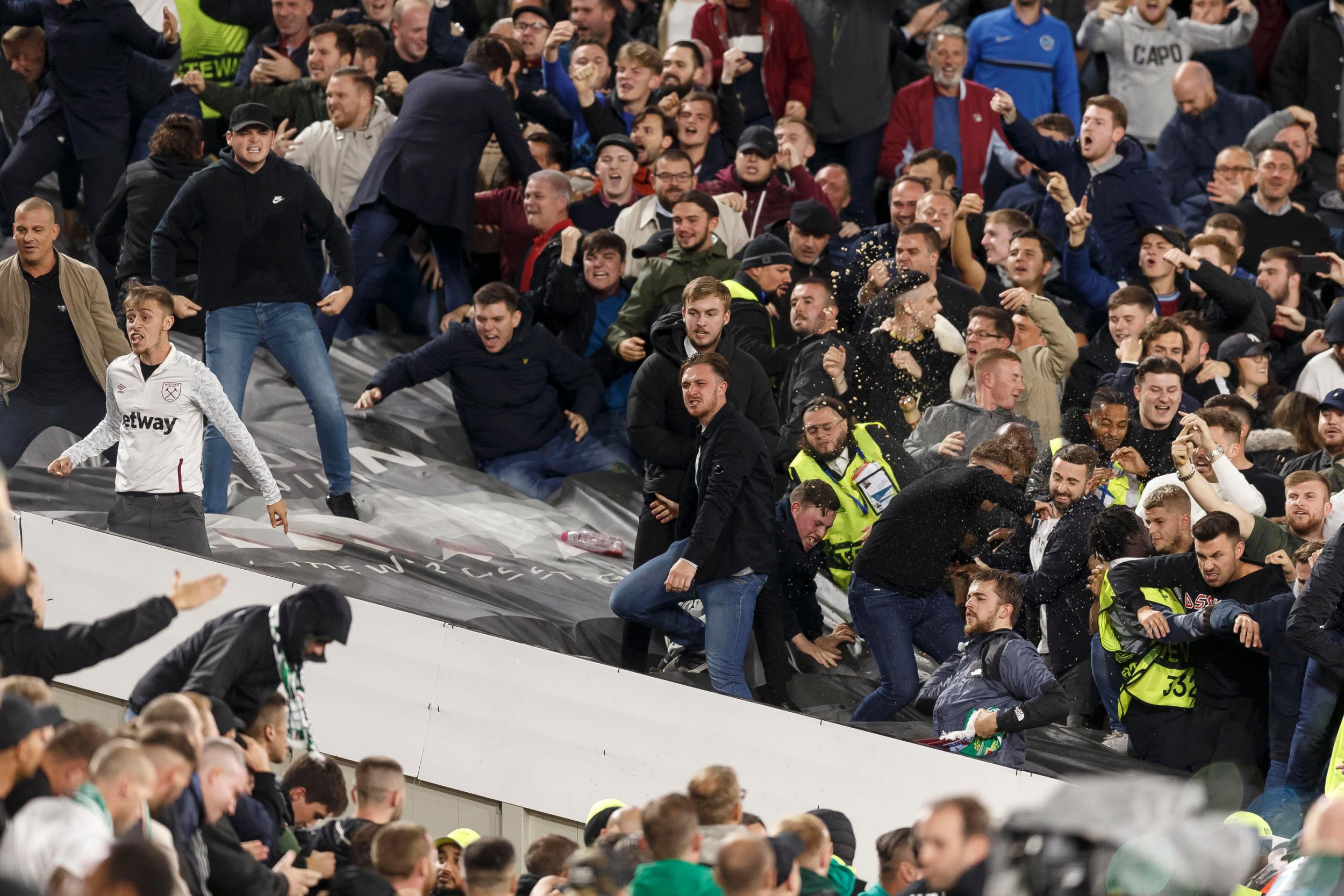
The reaction among West Ham supporters has been deeply divided.
One section of fans welcomed Sullivan’s strong message, arguing that too many underperforming figures at the club have escaped accountability for poor performances.
Others believe public pressure and internal threats rarely improve stability before major matches.
On supporter forums and social platforms, common reactions included:
Fans supporting the warning
“Too many players have become comfortable.”
“The standards have dropped badly.”
“Massive changes are needed this summer.”
“The club cannot drift again.”
Fans criticising the approach
“Why create more pressure before a huge game?”
“Ownership should look at recruitment mistakes first.”
“Managers keep changing but the same problems remain.”
“This creates panic, not confidence.”
That split captures the broader uncertainty surrounding West Ham’s future direction.
Recruitment questions refuse to disappear
One recurring criticism aimed at the hierarchy involves squad planning.
Over recent seasons, West Ham have spent heavily attempting to bridge the gap between European qualification contenders and the Premier League elite. Yet many signings have struggled to fully adapt.
Historically, West Ham’s strongest teams have been built around:
Physical midfielders
Hard-running wide players
Direct counter-attacking football
Experienced leaders
Tactical discipline without the ball
Attempts to shift toward a more possession-based model require different profiles entirely — technically secure midfielders, progressive defenders, and coordinated pressing systems.
The club currently appears caught between those identities.
That uncertainty explains why Sullivan’s comments have sparked debate not only about individual players, but also about the overall football strategy.
The pressure on senior figures
Several experienced players now face uncertain futures.
Supporters increasingly expect:
Squad age reduction
Higher-intensity football
Younger recruitment targets
Tactical modernisation
Greater consistency away from home
Senior dressing-room figures traditionally carry enormous influence during difficult moments. If results continue to disappoint, however, ownership pressure often shifts quickly toward both coaching staff and experienced squad members.
The phrase “major clearout” therefore carries serious weight.
At clubs like West Ham, summer restructuring can dramatically alter dressing-room chemistry, tactical identity, and supporter expectations.
Leeds could expose familiar weaknesses
From a football perspective, Leeds represent an awkward opponent for a side already under emotional pressure.
Their aggressive pressing and transitional speed can force mistakes from teams lacking composure in midfield. West Ham’s ability to bypass that press quickly will be decisive.
Key tactical battles include:
Midfield control
Can West Ham prevent Leeds from dominating second balls and turnovers?
Defensive transitions
Will the Hammers cope with Leeds attacking quickly after regaining possession?
Set-pieces
West Ham traditionally remain dangerous from dead-ball situations, an area that could prove decisive.
Emotional control
Perhaps most importantly, can the team handle the atmosphere surrounding the fixture after Sullivan’s warning became public?
Matches played under heavy psychological pressure often become tactically chaotic. The first goal could completely change the emotional direction of the contest.
Bigger implications beyond one match
Regardless of the result against Leeds, the broader message is clear: West Ham may be approaching another major transition period.
Premier League football has become increasingly unforgiving for clubs positioned between survival battles and European ambitions. The financial gap continues to grow, and recruitment efficiency matters more than ever.
For West Ham, the coming months could define:
The manager’s long-term future
The club’s recruitment strategy
Which senior players remain
Whether the team commits to a clear tactical identity
Their ability to compete for Europe again
Supporters do not simply want dramatic statements. They want evidence of long-term planning and football coherence.
Conclusion
David Sullivan’s warning ahead of the Leeds United clash has intensified an already tense atmosphere around West Ham United. While some supporters see the comments as a necessary demand for accountability, others fear the timing reflects deeper instability inside the club.
What happens against Leeds will not decide everything, but it may significantly influence the mood heading into a potentially transformative summer.
West Ham still possess talented individuals capable of rebuilding momentum, particularly in attacking areas. However, talent alone will not solve the structural and tactical questions surrounding the club.
The next phase for the Hammers will require more than emotional reactions or short-term pressure. It will require clarity — in recruitment, coaching, tactical identity, and leadership.
For supporters watching nervously before this decisive fixture, that clarity cannot come soon enough.











Post Comment