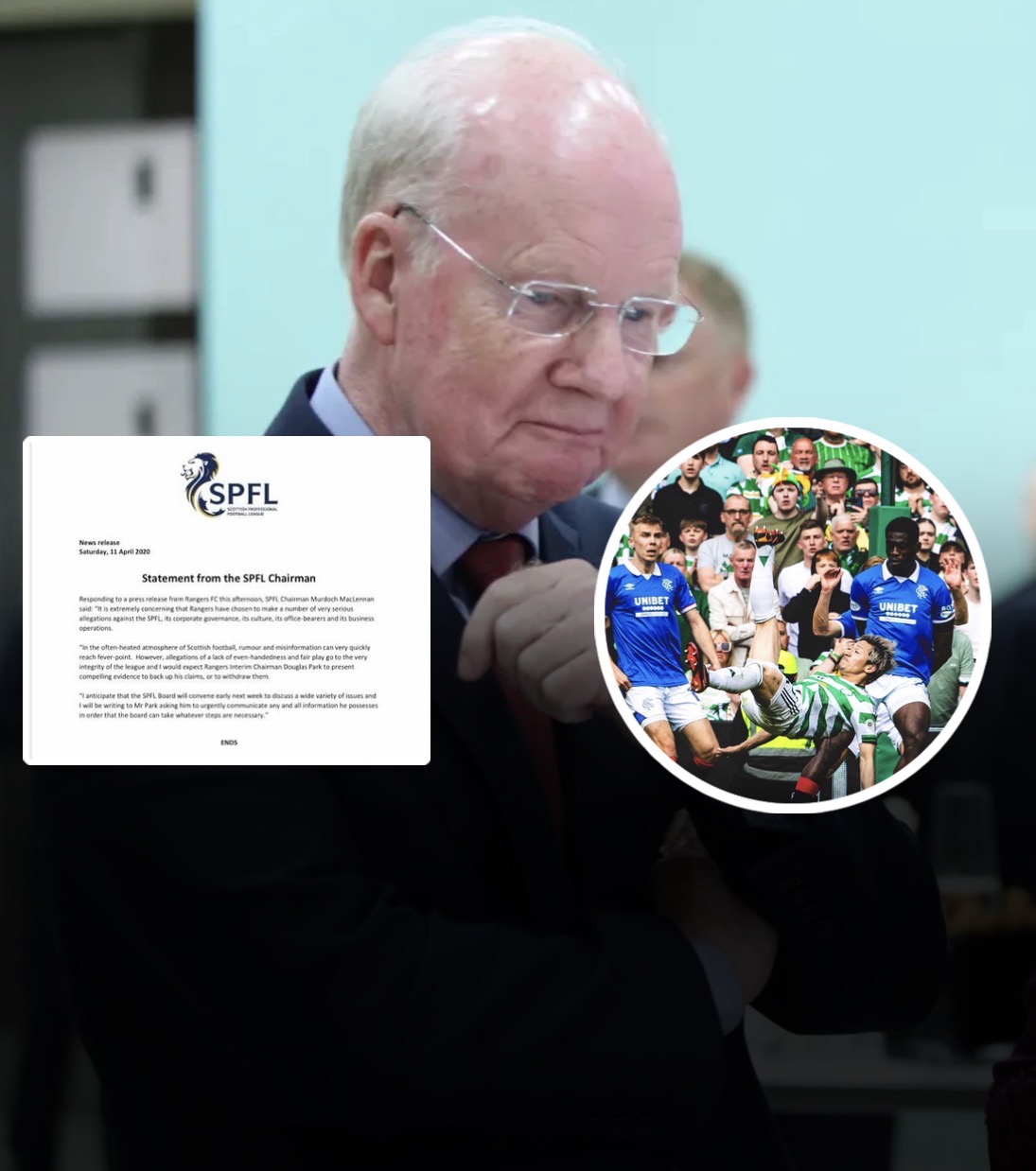
SPLF Drops Final Verdict On Greatest Glasgow Derby Goal As Celtic Fans Challenge The Decision
The debate over the greatest goal in the history of the Glasgow derby has reignited after the Scottish Professional Football League released its final fan-voted ranking this week — and the reaction online has been exactly what Scottish football thrives on: emotional, tribal and deeply divided.
Few fixtures in world football produce the same intensity as matches between Celtic F.C. and Rangers F.C.. Every tackle, every refereeing call and especially every goal becomes part of football folklore in Glasgow. So when the league announced what it considered the greatest derby strike of the modern era, social media exploded within minutes.
The SPLF’s final selection placed Paulo Di Canio’s famous scissor-kick winner for Celtic in 1996 at the top of the list — a technically brilliant finish that remains one of the most replayed moments in Scottish football history. While many neutrals praised the choice, a large section of Celtic supporters argued that other goals carried greater emotional significance or were scored under higher-pressure circumstances.
For Rangers supporters, meanwhile, the decision reopened memories of painful derby defeats, although some admitted the Italian’s strike was impossible to ignore purely from a technical perspective.
Why Di Canio’s Goal Still Dominates Scottish Football Conversations
The goal itself remains iconic nearly three decades later.
Celtic were locked in a tense derby battle at Parkhead when Di Canio reacted instinctively to a floated cross, producing an acrobatic volley that flew beyond the Rangers goalkeeper. It was not simply the aesthetics of the finish that made the moment unforgettable; it was the timing, atmosphere and consequence.
At that stage of the 1995–96 campaign, Rangers were chasing another title during their dominant domestic era under Walter Smith. Celtic, meanwhile, were desperately attempting to close the gap psychologically as much as competitively.
The Italian forward’s goal instantly became part of Old Firm mythology.
Key reasons many fans still rate it highly:
Extraordinary technical execution under pressure
Scored in one of football’s most emotionally charged fixtures
Lasting cultural impact beyond the match itself
Frequently replayed in Scottish football broadcasts and documentaries
Symbolic moment during Rangers’ dominance of the 1990s
Even opposition supporters often acknowledge that the strike belongs among the finest goals ever scored in Scottish football.
Celtic Fans Push Back Against The Verdict
The controversy began when Celtic supporters questioned whether “best” should purely mean technical quality.
Across supporter forums and social media platforms, many argued that emotionally decisive goals should rank higher than aesthetically pleasing finishes.
Several fans pointed toward Tom Rogic’s dramatic late winner in the 2017 Scottish Cup semi-final, a goal that effectively preserved Celtic’s unbeaten domestic season under Brendan Rodgers.
Others highlighted strikes from club legends such as Henrik Larsson or Shunsuke Nakamura, arguing that those goals carried greater pressure and tactical significance.
One common criticism online was that the SPLF appeared to favour nostalgia over context.
Some supporters also questioned whether modern-era goals are unfairly disadvantaged because older moments gain legendary status through repeated television exposure.
That debate reflects a broader truth about Scottish football culture: memories matter as much as statistics.
Rangers Fans Had Mixed Reactions
Interestingly, reaction from Rangers supporters was less unified than expected.
While many understandably opposed celebrating a Celtic goal, some admitted Di Canio’s finish deserved recognition simply because of its difficulty.
Others insisted goals such as Brian Laudrup’s solo derby efforts or Alfredo Morelos’s recent derby strikes better captured the intensity and aggression associated with the fixture.
The disagreement underlined how the Glasgow derby is often remembered differently depending on which side of the city supporters come from.
For Celtic fans, artistry and emotional release dominate the memory. For Rangers fans, resilience, atmosphere and competitive edge frequently matter more.
That contrast is part of what keeps the fixture culturally unique.
The Tactical Evolution Of Derby Goals
One fascinating aspect of the debate is how derby goals themselves have evolved tactically across different eras.
During the 1990s, Old Firm matches were often frantic, direct and emotionally combustible. Space appeared suddenly, transitions were chaotic and individual brilliance frequently decided games.
Di Canio’s goal came during that era — a period when defenders often operated man-to-man and games became stretched under pressure.
Modern derby football looks very different.
Managers like Brendan Rodgers and Philippe Clement have introduced more structured pressing systems, controlled build-up patterns and positional rotations. As a result, spectacular individual goals are arguably harder to produce because defensive shapes remain more compact.
That tactical evolution partly explains why older goals continue dominating “greatest ever” discussions.
Football has become more efficient.
Moments of improvisational chaos are rarer.
Why Nigerian Fans Continue Following The Old Firm So Closely
The strong reaction to the SPLF ranking was not limited to Scotland.
Across Nigeria, many supporters joined the debate online, reflecting the continued popularity of Scottish football among West African fans.
Historically, Nigerian audiences have maintained strong interest in British football beyond the Premier League, particularly where emotional rivalries and passionate atmospheres are involved.
The Glasgow derby remains one of the most watched non-English British fixtures among many Nigerian supporters because of:
Its intense atmosphere
Historic rivalry narrative
Strong television accessibility over the years
Links between Scottish clubs and African players
Similar football passion culture to West African rivalries
There is also growing Nigerian interest in tactical analysis and football heritage discussions, especially among younger fans who consume archived clips online.
For many supporters, debates like this are not simply about nostalgia. They are about identity, football education and understanding how iconic moments shape club culture.
The Power Of Football Memory In Scotland
Perhaps the most interesting aspect of this controversy is that nobody truly expects universal agreement.
Scottish football survives on disagreement.
The Old Firm rivalry is built on competing memories, inherited loyalties and emotional storytelling passed between generations. Every supporter believes their defining derby moment carries more weight than another.
That emotional investment explains why discussions around “greatest goals” become so heated.
Unlike statistical debates, football memories cannot be measured objectively.
A technically perfect volley may mean less to a supporter than a scrappy winner that secured a title race advantage.
Similarly, younger fans often connect more strongly with modern moments because they experienced them live rather than through archive footage.
The SPLF likely understood this reaction would happen. In many ways, the debate itself is part of the entertainment.
Broader Implications For Scottish Football’s Global Appeal
The viral response to the ranking also highlights something important for Scottish football commercially.
The global fascination with the Glasgow derby remains extremely powerful.
At a time when financial disparities between leagues continue widening, Scottish football still possesses one asset many competitions cannot replicate: emotional authenticity.
The rivalry between Celtic and Rangers cuts across generations and borders in a way that continues attracting international audiences.
Social media has amplified that appeal dramatically. Historic goals now circulate constantly through short-form video platforms, introducing younger supporters worldwide to moments they never watched live.
That digital rediscovery strengthens the global image of Scottish football far beyond league coefficients or transfer spending.
For league organisers, content built around nostalgia and iconic derby moments remains one of the strongest engagement tools available.
Conclusion
Whether supporters agree with the SPLF’s decision or not, the fierce reaction proves one thing clearly: the Glasgow derby still occupies a unique emotional space in British football.
Paulo Di Canio’s famous volley may officially hold the crown in this latest fan ranking, but debates over the greatest Old Firm goal are unlikely to end anytime soon. Every generation produces its own defining moments, shaped by tactics, pressure and club identity.
And perhaps that is exactly how it should be.
In Glasgow, football history is never settled permanently. It is constantly rewritten through memory, rivalry and argument — often loudly online.






Post Comment