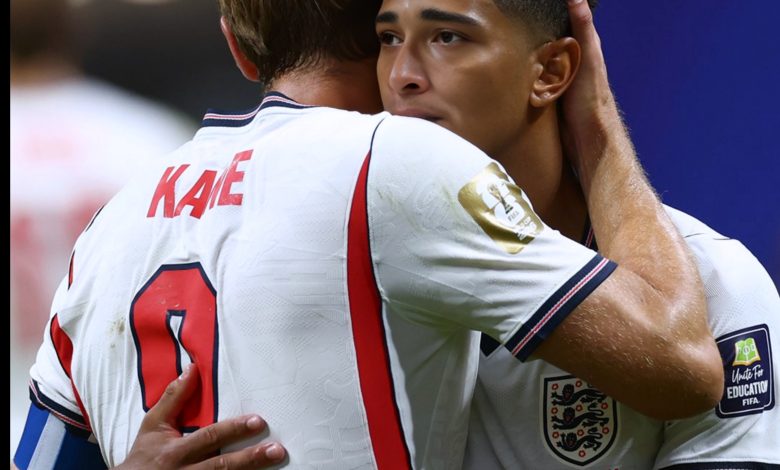
The provocative statement from an ex-Scottish captain encapsulates a long-running debate in English football: the perceived gap between superstars Harry Kane and Jude Bellingham and the rest of the Three Lions squad. As England navigated the 2026 FIFA World Cup in North America under Thomas Tuchel, reaching the semi-finals before falling to Argentina, this view gained traction. It highlights both the brilliance of the duo and questions about squad depth, mentality, and the definition of “world-class” in modern international football.
Defining “World-Class”: A Subjective Standard
“World-class” is an elastic term in football discourse. It typically denotes players who consistently perform at the highest level across major clubs and international tournaments, influencing games decisively against elite opposition. Metrics include individual awards, Champions League or equivalent success, statistical dominance, and impact in high-stakes matches.
Harry Kane, England’s all-time leading scorer with over 85 international goals by mid-2026, exemplifies this. At Bayern Munich, he has thrived post-Tottenham, blending clinical finishing, playmaking, and leadership. His record at major tournaments—scoring crucial goals despite England’s historical semi-final exits—cements his status. Jude Bellingham, the dynamic Real Madrid midfielder, complements him perfectly. Bursting onto the scene as a teenager at Birmingham and Borussia Dortmund, Bellingham’s all-action style (goals, assists, defensive contributions, and leadership) has drawn comparisons to legends like Steven Gerrard or even Zinedine Zidane in versatility.
The ex-Scottish captain’s claim implies that while England boasts talent, few others match this consistent, game-defining excellence on the global stage. Critics point to players like Declan Rice (a top defensive midfielder but not always a creative force), Bukayo Saka (excellent but injury-prone or inconsistent at times), Phil Foden or Cole Palmer (club brilliance not always replicated internationally in 2026), and defenders like John Stones or Jordan Pickford (reliable but not transformative). This perspective echoes sentiments from pundits like Gary Neville, who pre-tournament viewed Kane as the sole clear world-class option, later upgrading Bellingham.
Kane and Bellingham: The Dynamic Duo Carrying England
Throughout the 2026 World Cup, Kane and Bellingham shouldered immense responsibility. Reports indicate they accounted for a massive share of England’s goals—around 12 of 14 in early stages in one analysis—with Kane providing leadership and poaching, and Bellingham delivering moments of magic, including braces and game-changing interventions.
Kane’s evolution as captain stands out. No longer just a goalscorer, he has grown into a vocal leader, fostering togetherness amid media scrutiny over squad dynamics with Tuchel and Bellingham. Bellingham, often called England’s “talisman,” elevated his game with superstar mentality, scoring key goals and embodying big-game temperament. Their “brotherhood,” highlighted in pre-tournament bonding, symbolized synergy.
Yet, reliance on them fueled the “only two world-class” narrative. In the semi-final loss to Argentina, despite strong performances, England’s inability to sustain intensity without their spark exposed vulnerabilities. Kane addressed over-reliance claims diplomatically, crediting the full squad’s contributions—Pickford’s saves, defensive blocks, and collective effort—but the stats and eye test often told a different story.
This dynamic isn’t new. England has historically produced “Golden Generations” that underperformed relative to talent: the 2004-2010 era of Rooney, Gerrard, Lampard, and Beckham delivered quarter-finals at best. Depth existed, but cohesion, mentality, or tactical execution faltered. In 2026, Tuchel’s system emphasized physicality and transitions, suiting Kane and Bellingham’s profiles but exposing others in possession or against high-pressing sides.
The Broader Squad: Talented but Not Elite?
England’s 2026 squad was one of the deepest on paper, featuring Premier League winners, Champions League regulars, and young prospects. Declan Rice anchored midfield with composure and leadership potential. Bukayo Saka offered flair on the wing. Defenders like Marc Guéhi, Reece James (when fit), and goalkeepers like Pickford provided solidity. Emerging talents such as Anthony Gordon, Elliot Anderson, or others added energy.
However, critics argue many are “very good” rather than “world-class.” Rice excels but lacks Bellingham’s attacking ceiling. Saka dazzles domestically but faces questions in tournament knockouts. Full-backs and center-backs often struggle against top attackers’ quality. This gap manifests in tight games: England grinds results through effort and Kane/Bellingham interventions rather than total dominance.
Club vs. country disparity plays a role. Many English players shine in the Premier League’s intensity but face stiffer technical and tactical tests internationally against sides like Spain, France, Brazil, or Argentina, stacked with Ballon d’Or contenders. England’s domestic league strength ironically dilutes international edge, as players compete against each other rather than consistently facing Europe’s best in varied systems.
The Scottish perspective adds spice. Scotland, often punching above weight through organization and spirit despite lesser individual talent, frequently highlights England’s “overhyped” squad. An ex-captain’s bluntness reflects Old Firm rivalry and broader British football banter, but it underscores a valid point: talent alone doesn’t guarantee success. Scotland has produced icons like Kenny Dalglish or Denis Law, but collective resilience defines them. England’s challenge is converting individual excellence into team trophies.
Historical Context and Comparative Analysis
England’s last major trophy was the 1966 World Cup. Subsequent near-misses (1990, 1996, Euro 2020/2024 semis) fuel frustration. Compare to rivals:
– **France**: Multiple world-class talents (Mbappé, Kanté, Pogba in prime, now successors).
– **Germany/Spain**: Deep, tactically flexible squads with systemic production.
– **Argentina/Brazil**: Superstars plus cultural winning mentality.
England ranks high in squad value and youth development (via academies and EPPP), yet “streetwise” or “clutch” qualities lag. Kane and Bellingham bridge this—Kane as the reliable finisher/leader, Bellingham as the X-factor. Without them, England might exit earlier groups or rounds.
Pundits debate inclusions/exclusions. Omissions or limited roles for players like Trent Alexander-Arnold, Phil Foden, or Cole Palmer in 2026 sparked controversy, with Tuchel favoring balance and athleticism. This pragmatism yielded semi-final progress but invited “lacking quality” critiques.
Tactical and Psychological Dimensions
Tuchel’s tenure emphasized leadership from Kane, Rice, and Bellingham. Post-match interviews revealed tensions (e.g., Bellingham’s spiky responses), quickly dismissed by Kane as media fabrication, highlighting squad unity.
Tactically, England’s 4-2-3-1 or variations relied on Kane dropping deep to link, Bellingham surging box-to-box, and wide threats. This created moments of brilliance but vulnerability to counter-press or fatigue in later stages. The altitude and conditions in North America amplified physical demands, where depth matters.
Psychologically, the “golden generation” pressure weighs heavy. Media hype, fan expectations, and scrutiny amplify small failures. The ex-Scottish captain’s quote might sting but serves as a reality check: England needs more players stepping into world-class territory through consistent tournament impact.
Youth Pipeline and Future Outlook
England’s future is bright. The FA’s investments yield talents like Bellingham (already world-class at 23), potential successors in midfield and attack. Academies produce technically proficient players, but international exposure and mentality coaching are key. By Euro 2028 or 2030 World Cup, a fuller complement of elites could emerge if club pathways align with national needs.
Kane, at 32-33 during 2026, nears twilight but remains pivotal. Bellingham is the heir apparent, potentially captaining and elevating those around him. The debate should evolve from “only two” to “how do we develop more?”
Counterarguments: Depth and Context Matter
Not everyone agrees with the quote. Some analysts highlight Rice, Saka, or Pickford as approaching or achieving world-class in roles. England’s progress to semis despite challenges shows resilience. Team success isn’t solely individual brilliance—cohesion, tactics, and luck factor in. Over-focusing on stars ignores contributions from “unsung” players who enable them.
In club football, “world-class” clusters around super-teams (Real, City, Bayern). Internationally, it’s rarer. England’s Premier League stars face unique pressures adapting.
Conclusion: A Catalyst for Growth
The ex-Scottish captain’s statement, while blunt and rivalry-tinged, spotlights England’s core strength and challenge. Kane and Bellingham are undeniable world-class pillars, carrying the team through the 2026 World Cup with goals, leadership, and flair. Their performances validated high expectations but exposed the need for broader excellence.
England must address squad depth, tactical flexibility, and mentality to end the trophy drought. Investment in youth, smarter selections, and fostering winning culture are vital. The quote isn’t dismissal but a challenge: produce more Kane and Bellingham-level talents or optimize the current crop.
As football evolves with data, analytics, and global scouting, England’s rich talent pool positions it well. The 2026 campaign, ending in bronze or semi-final disappointment, provides lessons. With Kane’s legacy and Bellingham’s prime ahead, plus emerging stars, the narrative can shift from “only two” to a squad brimming with elites.
The debate enriches the beautiful game, driving improvement. Scotland’s perspective reminds us that heart and organization complement talent. For England, the quest continues—not just for world-class individuals, but a world-beating collective.