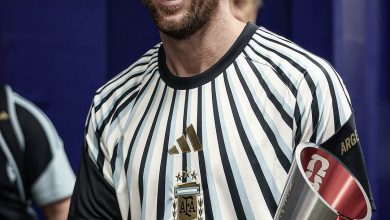
In the glittering lights of MetLife Stadium in New Jersey on July 19, 2026, the curtain fell on one of the most storied careers in football history. Lionel Messi, the man who had rewritten the record books, inspired a nation, and cemented his status as the greatest player of all time for many, walked off the pitch not as a triumphant hero but as a figure shrouded in disappointment. Spain had just defeated Argentina 1-0 in extra time, with Ferran Torres’ strike in the 106th minute sealing the deal for La Roja. For Messi, at 39 years old, it was the end of his World Cup journey—a final that many will remember not for glory, but for his conspicuous absence when the stakes were at their absolute highest.
The headline writes itself: Messi’s final disgrace. He was invisible when it mattered most. This wasn’t just another match; it was the pinnacle, the opportunity to bow out as a two-time World Cup winner, to etch his name even deeper into immortality. Instead, the narrative shifted to one of fading brilliance, tactical neutralization, and a team performance that bordered on the chaotic. Argentina’s campaign, marked by grit, controversy, and flashes of genius from their captain, ended in a manner that left fans, pundits, and even some former players questioning whether the magic had finally run its course.
The Build-Up: A Tournament of Records and Expectations
To understand the weight of that final disappointment, one must revisit Messi’s 2026 World Cup journey. Entering the tournament as defending champions from 2022, Argentina carried the burden of history and the aura of Messi. The 39-year-old had already defied Father Time with Inter Miami in MLS, but the World Cup was different. It was his arena.
Messi exploded out of the blocks. He scored a hat-trick in the opener against Algeria, breaking records left and right. By the end of the group stage and into the knockouts, he had tallied eight goals and four assists, surpassing previous benchmarks and becoming the all-time leading scorer in World Cup history. He broke Miroslav Klose’s record, scored in multiple consecutive games, and delivered moments of sheer wizardry—dribbles that left defenders in the dust, visionary passes that unlocked defenses, and that trademark low center of gravity that made him unstoppable in tight spaces.
Against England in the semifinals, trailing 1-0, Messi flipped the switch. His intensity surged; eyes narrowed, the “beast” awakened, as Thierry Henry described it. He set up crucial goals, dragging his team back into contention. Pundits hailed it as vintage Messi, proof that even at an age when most players are long retired, he could still bend tournaments to his will. Argentina advanced, and the dream of back-to-back titles felt tangible. Messi himself spoke of legacy, of closing the circle once more.
The final against Spain promised fireworks. Spain, a young, dynamic side built on tiki-taka evolution and relentless pressing, represented the future. Argentina, led by the old guard, embodied resilience and experience. The stage was set in New Jersey, with a record U.S. audience tuning in. Expectations were sky-high for Messi to deliver one last masterclass.
The Final: Where the Magic Vanished
What unfolded was a stark contrast to the narrative. From the first whistle, Messi was marked tightly. Spain’s midfield and defense, orchestrated brilliantly, denied him space. Touches were limited—reports indicate around 54 in the entire match, a fraction of his usual involvement. He registered one shot, but it lacked the venom or precision that defined his career. No assists, no game-changing dribbles, no moments that made the world hold its breath.
Messi drifted to the periphery. While teammates like Julián Álvarez and others tried to create, the service dried up. Spain dominated possession and territory. Enzo Fernández’s red card in the second half left Argentina with 10 men, shifting the dynamic further. The game grew ill-tempered, with niggling fouls, yellow cards, and confrontations that painted Argentina as aggressors. Post-match clashes only amplified the negativity.
Ferran Torres’ extra-time goal came as a culmination of Spain’s superiority. Argentina fought valiantly but couldn’t break through. Messi, the talisman, couldn’t conjure the spark. In the moments that mattered most—the final’s decisive phases—he was a spectator in his own story. Pundits were ruthless. Piers Morgan called him “completely missing.” Others labeled the performance an “unapologetic imposter” leading a side accused of dark arts. Even Toni Kroos weighed in indirectly, celebrating football’s win amid comparisons.
Messi’s post-match demeanor added fuel. Visibly distraught, he reportedly had emotional words in the tunnel, admitting the pain was immense. Spain’s dominance was acknowledged, but the optics of Argentina’s physicality left a sour taste. For a player whose legacy is built on genius rather than grit alone, the final felt like a mismatch between expectation and reality.
The Broader Context: Age, Tactics, and Team Dynamics
Critics argue this wasn’t entirely unexpected. At 39, the physical toll of a long career, including stints in Europe and now MLS, was evident. While Messi had moments of brilliance earlier in the tournament, the final exposed limitations. Spain’s high press and compact shape neutralized his dropping deep or linking play. Without the explosive pace of his youth, he struggled to find pockets of space.
Argentina’s style under Lionel Scaloni relied heavily on Messi’s creativity, but in the final, the supporting cast faltered. The red card compounded issues, forcing a more defensive posture. Some defenders of Messi point to poor service and the team’s overall underperformance, arguing one man can’t carry everything forever. Yet, that’s precisely what Messi has done time and again—2002, 2014, 2018, 2022. The 2026 final was supposed to be the capstone.
Controversy surrounded Argentina’s approach: late challenges, simulations, and post-whistle incidents. While Messi wasn’t the primary instigator, his leadership role drew scrutiny. Images of him approaching referees or involved in heated moments fed the “disgrace” narrative. For fans who idolize his humility and skill, it clashed with the polished image.
Legacy in the Balance: GOAT Debate Reignited
Despite the final, Messi’s overall legacy remains towering. Eight goals and four assists in the tournament underscore his excellence. He leaves as World Cup winner (2022), multiple Ballon d’Or holder, Copa América champion, and record-breaker. Comparisons to Pelé, Maradona, Ronaldo, and now Mbappé or Rodri (Golden Ball winner) will persist. Many argue the 2022 triumph and consistent greatness outweigh one subdued final.
Defenders highlight his age and the context. Football evolves; Spain represented a new era of athleticism and tactical sophistication. Messi’s influence extended beyond stats—leadership, inspiration for teammates, and global icon status. His MLS stint with Inter Miami proved he could still dominate, winning titles and drawing crowds.
Critics, however, see the final as symbolic. “Invisible when it mattered” echoes past near-misses before 2022. At 39, was it realistic to expect more? Or does it underscore that even the greatest have limits? The “disgrace” label is harsh, but it captures the emotional letdown for a generation that grew up watching him defy odds.
Post-tournament, Messi returned to Rosario for rest. Speculation swirls about his future—another Copa América in 2028? Continued play with Inter Miami? Retirement whispers grow louder. Whatever comes next, the 2026 final will be a footnote, but a poignant one.
The Human Element: Pain, Reflection, and Resilience
Messi’s silence-breaking comments revealed raw emotion: “Pain is immense.” In a career of few public vulnerabilities, it humanized him. He gave everything, as he always has. From La Masia prodigy to Barcelona legend, Paris Saint-Germain, and Miami trailblazer, his path was one of relentless pursuit.
The final wasn’t just about football; it was about closure. Argentina’s “brutes” narrative and Messi’s peripheral role tarnished the occasion, but they don’t erase the body of work. Fans chanted his name, social media erupted in defense and criticism alike. The divide reflects football’s passion—love it or scrutinize it mercilessly.
Tactical Breakdown and What Went Wrong
Spain controlled the midfield with players like Rodri, exploiting Argentina’s gaps. Messi’s positioning was restricted; he couldn’t roam freely. Argentina’s counter-attacks lacked precision. Extra time favored the fresher, more cohesive Spanish side. Coaches’ decisions—substitutions, formations—will be debated endlessly.
Data paints a clear picture: low key passes, minimal progressive carries, no big chances created in the final. Contrast that with group stage dominance, and the disparity is jarring. Neutralization is part of elite sport, but for Messi, it felt final.
Cultural Impact and Global Reaction
The match shattered viewership records, underscoring Messi’s draw. In Argentina, mourning mixed with pride. In Spain, jubilation. Globally, debates raged on podcasts, social media, and forums. Reddit threads called him the “invisible man,” while others defended his tournament haul. AI-generated fake videos of cheating only muddied waters, highlighting misinformation in modern sports discourse.
Messi’s influence transcends results. Academies worldwide teach his techniques; kids wear his jersey. The final disappointment may motivate a new generation to emulate his resilience.
Looking Ahead: End of an Era?
As Messi contemplates the next chapter, football moves on. Spain’s victory signals a shift toward youth and systems over individual brilliance. Yet, icons like Messi redefine eras. His “final disgrace” is more a challenging ending than a defining stain.
In sum, the 2026 World Cup final exposed vulnerabilities but amplified Messi’s enduring greatness. He was invisible that night, yes—but over two decades, he illuminated the sport like few others. The pain will fade; the legacy endures. Football owes him gratitude, not condemnation. At 39, carrying a nation’s hopes one last time, he deserved better optics, but sport is unforgiving. Messi remains the GOAT for countless millions, final or no final.