UEFA’s EXPLANATION FOR DENYING ENGLAND A PENALTY AGAINST SPAIN SPARKS FURY AS FANS DEMAND REFEREE BAN

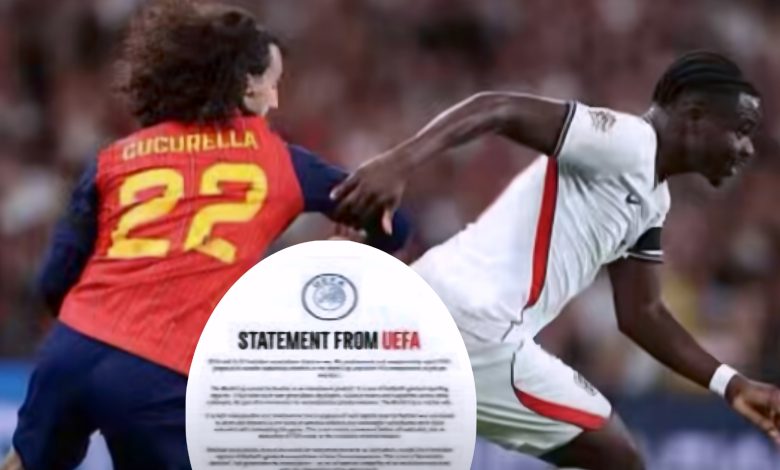
UEFA’s clarification on the double-touch rule and the handling of England’s penalty against Spain has ignited widespread anger among Three Lions supporters, with many calling for the Italian referee to face a ban after Spain’s dramatic 3-2 Nations League victory at Wembley.**
On a tense Saturday night in late September 2026, world champions Spain edged England 3-2 in the opening fixture of UEFA Nations League Group A3. What should have been a showcase of two of Europe’s strongest sides instead became defined by a pivotal second-half penalty incident that left England fans seething. Harry Kane’s missed spot-kick, complicated by an accidental double-touch, and the subsequent application of IFAB rules clarified by UEFA, turned the momentum decisively. Social media and fan forums erupted with demands for accountability, including calls to ban referee Davide Massa.
A Match That Turned on a Spot-Kick
Spain struck early. Lamine Yamal capitalised on a defensive error by Marc Guéhi in the second minute to give the visitors the lead. England responded strongly. Anthony Gordon equalised in the 36th minute, and Kane headed the hosts in front before half-time. The stage was set for a famous Wembley night under Thomas Tuchel.
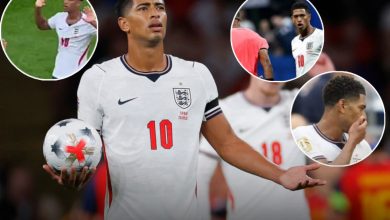
Nine minutes into the second half, Jude Bellingham went down under a challenge from Rodri inside the box. Massa initially waved play on, but VAR official Marco Di Bello intervened. After reviewing the pitchside monitor, Massa pointed to the spot. English celebrations were tempered by the knowledge that the decision was marginal; some Spanish observers and refereeing analysts later argued Bellingham had initiated the contact or gone down too easily.
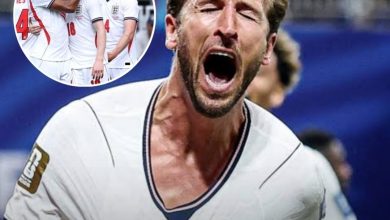
Kane stepped up. As he struck the ball, his standing left foot appeared to make contact before his right foot completed the kick. The shot smashed against the underside of the crossbar and stayed out. Replays confirmed the double-touch. Because the ball did not enter the goal, Massa awarded Spain an indirect free-kick inside their own area rather than ordering a retake. Spain capitalised ruthlessly. Substitute Álex Baena equalised on the hour after another English error, and Mikel Oyarzabal produced a delicate chip in the 74th minute to seal a 3-2 win.
The result left England with a losing start to their Nations League campaign against the side that had lifted the World Cup only weeks earlier. For many supporters, the scoreline was secondary to a sense that the decisive moment had been mishandled.
UEFA’s Rule Explanation and the Double-Touch Clarification
The incident brought renewed attention to Law 14 of the Laws of the Game. In June 2025, following controversy involving Julián Álvarez’s disallowed penalty for Atlético Madrid against Real Madrid in the Champions League, IFAB issued a clarification. UEFA promptly adopted it across its competitions.
The clarification states that if a penalty taker accidentally kicks the ball with both feet simultaneously or the ball touches the non-kicking foot or leg immediately after the kick, the outcome depends on whether the ball enters the goal. If it does, the kick is retaken. If it does not, an indirect free-kick is awarded to the defending team (or the attempt is recorded as a miss in a shoot-out). UEFA’s statement at the time confirmed: “UEFA will immediately implement the clarification provided by IFAB of Law 14 with regard to cases of double touch of the ball by the player taking a penalty kick. Consequently, all UEFA matches will now be played under the new interpretation of Law 14.”
In Kane’s case, the miss triggered the free-kick provision. Officials correctly applied the letter of the clarified law. Yet the timing and visibility of the double-touch—clear only on replay—fuelled perceptions that England had been denied a genuine second chance or that the original award itself was soft. Spanish refereeing analyst Iturralde González publicly questioned the penalty, suggesting Bellingham went down before significant contact. English fans focused on the cumulative effect: a borderline award followed by a technical denial of any further opportunity once Kane’s effort hit the woodwork.
Fan Fury and Calls for a Referee Ban
The reaction was immediate and intense. Across X (formerly Twitter), fan forums and phone-ins, supporters accused Massa of inconsistency and of contributing to a momentum-killing moment. Petitions and viral posts called for the Italian official to be banned from future England matches or stripped of high-profile assignments. Critics pointed to the VAR process that led to the original award and the subsequent free-kick decision as evidence of refereeing that failed to protect the integrity of a high-stakes contest.
This anger sits within a longer pattern of England-Spain refereeing controversies. In 2018, Harry Kane publicly criticised Dutch referee Danny Makkelie for disallowing a late Danny Welbeck equaliser at Wembley, claiming the official had “bottled” the decision. At Euro 2024, Anthony Taylor’s refusal to award Germany a penalty against Spain for a handball by Marc Cucurella sparked petitions with tens of thousands of signatures demanding punishment and a replay—though that incident involved Germany, not England. The latest episode has revived familiar grievances about elite refereeing under pressure.
Kane himself has a complicated history with penalties. His miss against Spain was his first since the 2022 World Cup and came after a strong run of successful spot-kicks. The double-touch added an unusual layer: had the ball gone in, the goal would have been disallowed and a retake ordered, potentially sparing him embarrassment only for a second failure. Instead, the miss stood, and Spain seized control.
Broader Context: Rule Changes, Consistency and Trust
The double-touch clarification itself arose from genuine concern. Álvarez’s disallowed goal in March 2025 was widely viewed as excessively harsh for an accidental contact. IFAB balanced the need to prevent deliberate double-touches against fairness for unintentional ones, while recognising that altered ball trajectories can disadvantage goalkeepers. UEFA’s swift adoption ensured uniformity. Yet the rare application in a match of this magnitude has exposed how technical rules can feel arbitrary to supporters when they decide outcomes.
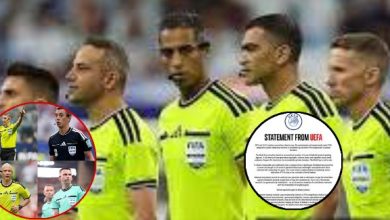
Refereeing transparency remains a flashpoint. Massa, a UEFA elite official with extensive Champions League experience, was not selected for the 2026 World Cup. His appointment for the Nations League opener placed him under intense scrutiny. Italian media later noted the VAR’s role in prompting the on-field review for the original penalty and the subsequent check for the double-touch. While the laws were followed, the sequence—initial non-award, VAR intervention, soft penalty, technical free-kick—left little room for goodwill among the home crowd.
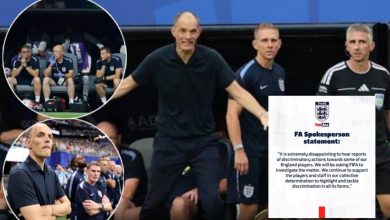
Thomas Tuchel acknowledged the penalty as a potential “decisive punch” that could have shifted belief and momentum. Kane and teammates have previously spoken about the need for officials to remain strong in big moments. The absence of any public UEFA statement specifically defending Massa’s performance in the immediate aftermath only amplified the sense among fans that the governing body was content to hide behind the rulebook.
Looking Ahead
England must now regroup quickly in a competitive Nations League group. Spain, unbeaten for an extraordinary run heading into the fixture, reinforced their status as the benchmark. For UEFA, the episode is another reminder that rule clarifications, however well-intentioned, require clear communication and consistent application if public trust is to be maintained.
Fans demanding a ban for Massa are unlikely to succeed. Referees are protected by protocols that prioritise the Laws of the Game over popular sentiment. Yet the volume of the reaction underscores a deeper issue: when technical decisions intersect with pivotal moments in matches between major nations, the sport’s governing bodies face an uphill battle to convince supporters that justice has been served. The double-touch rule is now firmly established. Whether it will be remembered as a fair evolution or another source of controversy depends on how rarely—and how transparently—it is invoked in future high-stakes encounters.
The Wembley night of 26 September 2026 will be remembered less for Yamal’s early brilliance or Oyarzabal’s winner than for the sequence of events that left England’s penalty opportunity unfulfilled and a large section of the English football public calling for accountability from the man in the middle. UEFA’s explanation of the rules may be technically correct. For many fans, that is not enough.