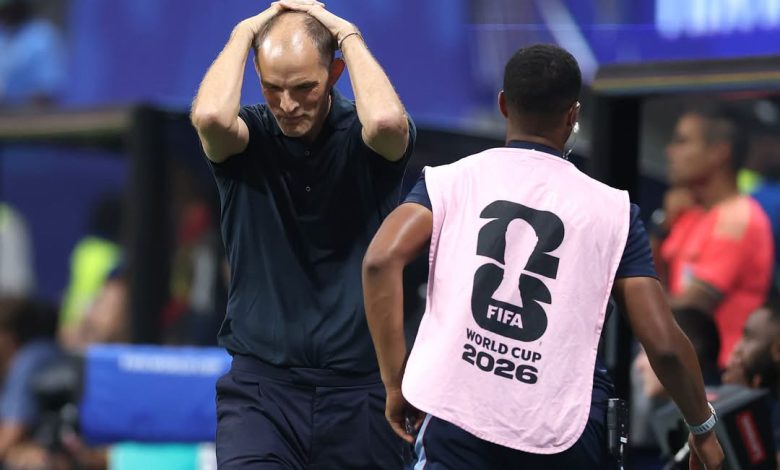
The Football Association has reportedly reached a dramatic conclusion following England’s painful FIFA World Cup semi-final defeat to Argentina, with Thomas Tuchel set to lose his position as national team manager in one of the most stunning managerial decisions in recent English football history.
Tuchel, appointed with the expectation of ending England’s long wait for major international silverware, arrived with an elite reputation built on success across Europe. The German tactician had won the UEFA Champions League, collected domestic trophies in Germany and France, and earned widespread praise for his tactical intelligence and ability to organize teams defensively.
However, tournament football is ultimately judged by results, and England’s latest World Cup campaign has ended in bitter disappointment after a 2-1 defeat to Argentina in the semi-finals. While reaching the last four would normally represent a respectable achievement, the manner of England’s elimination has reportedly convinced senior FA officials that a change is necessary before preparations begin for the next European Championship.
High Expectations From Day One
Tuchel inherited arguably the deepest England squad in decades.
With world-class talent spread across every area of the pitch, expectations extended well beyond simply competing. England possessed elite attacking players, experienced defenders and midfielders playing for Europe’s biggest clubs.
The objective was straightforward: win the World Cup.
Anything short of lifting the trophy would inevitably invite scrutiny, especially given England’s consistent progress under previous managers, who had already established the Three Lions among international football’s elite.
The FA believed Tuchel’s tactical expertise could provide the final piece of the puzzle.
Instead, England once again fell just short.
A Tournament That Promised So Much
England’s World Cup campaign began in encouraging fashion.
The team navigated the group stage with confidence, displaying defensive organization while creating enough opportunities to suggest they were genuine contenders.
As the knockout rounds progressed, belief continued to grow.
England overcame difficult opponents through a mixture of tactical discipline and individual quality, reaching another World Cup semi-final and appearing capable of finally ending decades of international frustration.
Players spoke confidently.
Supporters dreamed once again.
The route to the final seemed achievable.
Then came Argentina.
Argentina Produce a Masterclass
Argentina entered the semi-final with enormous confidence and produced arguably their finest performance of the tournament.
Their intensity immediately unsettled England.
Quick passing combinations bypassed England’s midfield, while intelligent movement stretched Tuchel’s defensive structure throughout the opening stages.
Although England remained competitive for long periods, Argentina consistently looked the more dangerous side whenever possession changed hands.
Every attack carried genuine threat.
Every mistake was punished.
Despite England managing to pull a goal back and create late pressure, Argentina controlled key moments of the contest with greater composure and tactical clarity.
Their victory was deserved.
For England, it represented another painful chapter in a long history of near misses.
Tactical Questions Begin to Mount
The aftermath of the defeat quickly shifted attention toward Tuchel’s tactical decisions.
Observers questioned England’s cautious approach during important phases of the match.
Several attacking players appeared restricted by defensive responsibilities, reducing the team’s ability to exploit Argentina’s weaknesses in transition.
Substitutions also attracted criticism.
Many supporters felt changes arrived too late to influence the contest, while others questioned the balance of the starting lineup altogether.
Although tournament football often hinges on fine margins, critics argued that England spent too much of the game reacting rather than dictating.
Against elite opposition, that proved costly.
Players Left Frustrated
Reports suggest disappointment extended beyond supporters.
Several members of the squad were said to be frustrated by England’s conservative tactical setup during the biggest match of the tournament.
While no public criticism emerged immediately after the defeat, the emotional reaction inside the dressing room reflected a group that believed more could have been achieved.
Many players felt England possessed sufficient attacking quality to challenge Argentina more aggressively.
Instead, opportunities came too infrequently.
As the final whistle confirmed elimination, visible frustration spread across the squad.
Those emotions reportedly continued during post-match evaluations.
FA Conduct Internal Review
Following England’s exit, FA executives reportedly conducted an immediate review of the tournament.
Rather than focusing solely on results, officials examined broader themes, including tactical identity, squad management, player development and long-term planning.
Sources indicate the review concluded that England had failed to maximize one of the strongest generations of players in modern history.
While reaching the semi-finals remains a notable achievement, expectations inside the FA had risen significantly.
Officials reportedly believed the national team should now be measured against winning major tournaments rather than simply competing deep into them.
That shift in expectation has dramatically increased pressure on every England manager.
Why the Argentina Defeat Became the Turning Point
Losing to Argentina carried significance beyond simple elimination.
England had prepared extensively for the challenge.
Coaching staff possessed detailed scouting reports.
Players entered the contest fully fit.
There were few external excuses.
The defeat therefore became viewed as a reflection of strategic shortcomings rather than unfortunate circumstances.
The FA reportedly concluded that England’s talented squad should have delivered a stronger tactical performance against one of the world’s elite teams.
Instead, Argentina appeared better prepared, more flexible and more decisive.
That comparison proved difficult to ignore.
Tuchel’s Record Under the Microscope
Tuchel’s overall record contains positives.
England remained difficult to beat throughout qualification.
The defensive structure improved considerably during several periods.
Young players continued receiving opportunities.
Discipline generally remained high.
However, critics argue the biggest matches define international management.
England have repeatedly assembled talented squads capable of challenging for major honours.
The challenge has been converting potential into trophies.
Tuchel was appointed specifically because of his experience handling high-pressure knockout football.
Failing to reach the World Cup final has therefore intensified debate over whether his appointment truly delivered the expected upgrade.
The Search for a New Direction
If the reported decision is confirmed, attention will immediately turn toward identifying Tuchel’s successor.
The FA faces another crucial appointment.
England possess a squad entering its competitive prime, meaning the next manager will inherit enormous expectations.
Potential candidates are likely to include experienced international coaches alongside successful Premier League managers should they become available.
The priority will be finding someone capable of balancing tactical sophistication with the freedom required for England’s attacking stars to flourish.
Continuity will remain important.
So too will maintaining the positive culture developed over recent years.
Players Face Their Own Questions
Although much attention has focused on Tuchel, England’s players cannot escape responsibility.
The semi-final exposed moments where experienced individuals failed to deliver their highest standards.
Passing lacked precision during crucial periods.
Defensive concentration occasionally disappeared.
Attacking combinations broke down too easily against Argentina’s organized defensive shape.
International football offers limited opportunities.
Fine margins separate glory from disappointment.
England’s leading players know they must also improve if they are to become world champions in future tournaments.
Changing the manager alone will not guarantee success.
Supporters Divided
Reaction among England supporters has been mixed.
Some believe reaching another World Cup semi-final represents clear progress and argue dismissing Tuchel would be unnecessarily harsh.
Others insist England’s extraordinary squad should consistently challenge for trophies rather than moral victories.
Many point toward the quality available across Europe’s biggest clubs and argue that England underperformed relative to its talent.
Social media has reflected those contrasting opinions.
Calls for patience have competed with demands for sweeping change.
Ultimately, however, the FA appears focused on delivering silverware rather than settling for respectable tournament runs.
The Pressure of Managing England
Few positions in world football carry greater scrutiny than managing England.
Every tactical decision receives microscopic analysis.
Every substitution becomes headline news.
Every tournament ultimately becomes judged through one simple question: did England win?
Managers from different tactical backgrounds have all experienced similar pressure.
Successive generations have promised much before falling agonizingly short.
Tuchel understood those expectations upon accepting the role.
The reported decision illustrates just how unforgiving international football can become when ultimate objectives remain unfulfilled.
What Happens Next?
Should the FA formally announce Tuchel’s departure, preparations for England’s next competitive campaign would begin almost immediately.
The new manager would inherit one of international football’s strongest player pools but also one of its heaviest burdens.
Supporters are no longer satisfied merely reaching quarter-finals or semi-finals.
The expectation is lifting trophies.
England remain blessed with exceptional talent, depth across multiple positions and players entering the peak years of their careers.
The challenge now lies in finding the coach capable of transforming that potential into sustained international success.
For Thomas Tuchel, the reported decision would represent a surprisingly brief chapter in an outstanding coaching career. For England, it marks yet another attempt to solve the puzzle that has frustrated generations: turning promise into championship glory. After another heartbreaking defeat to Argentina, the Football Association appears ready to conclude that a fresh voice is required if the Three Lions are finally to fulfil their enormous potential on football’s biggest stage.