UEFA SANCTIONS ENGLAND STAR FOLLOWING DISCRIMINATORY BEHAVIOR IN SPAIN AS CONTROVERSY ERUPTS AFTER 3-2 VICTORY

The decision has sparked renewed debate about supporter behaviour, discrimination and the responsibilities of football authorities in tackling offensive conduct inside stadiums.
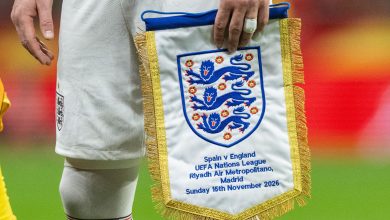
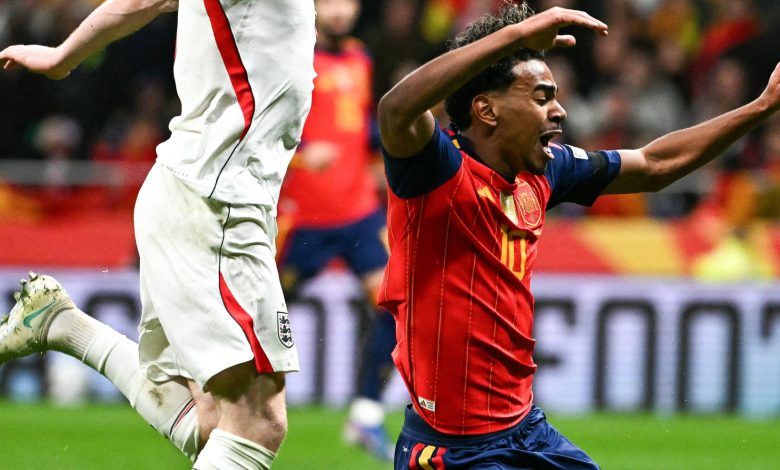
The incident occurred during Sunday’s highly anticipated encounter at the Metropolitano Stadium, where England secured an impressive 3-2 victory against Spain.
However, while the result was a major talking point on the pitch, events in the stands have now attracted significant attention from UEFA’s disciplinary authorities.
According to reports, the disciplinary action relates to an offensive chant directed at religious and Irish communities. UEFA classified the conduct as racist and/or discriminatory under its disciplinary regulations, which prohibit behaviour that insults the dignity of individuals or groups on grounds including religion and ethnic origin.
Following an investigation, UEFA’s Control, Ethics and Disciplinary Body ruled that the Football Association should pay a €15,000 fine. England have also received a suspended one-match restriction on selling tickets to supporters for an away international fixture.
Importantly, the restriction will not take immediate effect. Instead, it has been suspended for a probationary period of two years. This means that if England supporters are found responsible for another qualifying offence during that period, the suspended restriction could be activated, potentially leaving the national team without its travelling supporters for a competitive away fixture.
The Football Association has responded firmly to the incident, making it clear that discriminatory and offensive behaviour will not be tolerated.
In its statement, the FA described the chanting as unacceptable and deeply offensive. The governing body also confirmed that it would work alongside police officers who attend England’s home and away matches to identify those responsible and take appropriate action.
The punishment comes despite England’s impressive performance on the pitch. Their 3-2 victory over Spain represented a significant achievement, with the team overcoming a difficult challenge in front of the Spanish crowd.
The match had also attracted considerable attention before kick-off because of concerns surrounding potential discriminatory incidents. England manager Thomas Tuchel had reminded his players about UEFA’s anti-racism protocols ahead of the encounter.
Those concerns were partly influenced by the previous meeting between the two nations in Madrid in 2004, when England’s Black players were subjected to racist abuse from sections of the home crowd.
The latest incident has therefore added another chapter to the ongoing conversation about discrimination in international football and the importance of ensuring that stadiums remain welcoming environments for everyone.
UEFA’s decision also highlights that disciplinary responsibility does not end with players, managers and club officials. Football associations can face serious consequences when their supporters engage in conduct that violates the governing body’s regulations.
Interestingly, the case comes shortly after Spain itself faced disciplinary action following discriminatory chanting directed at Muslims during a friendly against Egypt in Barcelona. That incident resulted in a €15,000 fine and an order for partial stadium closure during Spain’s next friendly.
The developments demonstrate that UEFA is continuing to apply its disciplinary framework to national associations when discriminatory behaviour occurs among supporters.
Nevertheless, the latest decision raises important questions about how football authorities can identify individual offenders while ensuring that the wider supporter community is not unfairly affected by the actions of a minority.
For England, the immediate financial penalty is relatively limited compared with the potential consequences of the suspended ticket restriction. Losing away support for a competitive international fixture could create a difficult atmosphere for the team, particularly during important qualification or Nations League matches.
The FA will now face the challenge of identifying those responsible and preventing similar incidents from happening again.
Ultimately, England’s victory over Spain should have been remembered primarily for the football. Instead, the disciplinary controversy has shifted attention towards supporter conduct and UEFA’s determination to address discriminatory behaviour.
With the two-year probationary period now in place, England supporters will be under increased scrutiny, while the FA must demonstrate that it is taking meaningful steps to prevent a repeat of the incident.
One thing is clear: the consequences of discriminatory behaviour can extend far beyond the individuals responsible, potentially affecting an entire national team’s supporters.