England website attention surges as Thomas Tuchel leaves out two fan favourites ahead of UEFA Nations League opener

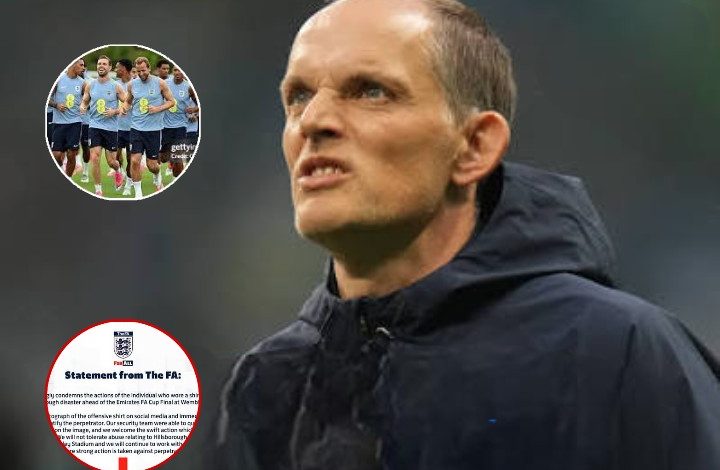
England are preparing for the start of a new UEFA Nations League campaign, but Thomas Tuchel’s latest squad selection has already generated significant discussion among supporters.
The Three Lions are due to begin their 2026–27 Nations League campaign against Spain at Wembley on Saturday, 26 September, with the match scheduled for 7.45pm BST. England have been drawn alongside Spain, Croatia and Czechia in League A Group 3.
The attention surrounding Tuchel’s squad has been particularly focused on the absence of two familiar names, with the England head coach continuing to make difficult selection decisions as he shapes the next phase of the national team.
England’s official squad announcement confirmed a 27-man group for the extended September and October international window. Among the notable inclusions were Trent Alexander-Arnold, Jude Bellingham, Dominic Calvert-Lewin, Lewis Hall, Rio Ngumoha, Jarrad Branthwaite, Myles Lewis-Skelly and Alex Scott.
However, the selection also highlighted some significant omissions.
Tuchel makes his selection calls
Tuchel’s latest squad represents a mixture of established internationals, returning players and emerging talent.
The manager has shown that previous England status alone will not guarantee a place in his plans. That approach has created competition throughout the squad, particularly in midfield and attack, where England have several players capable of operating in similar positions.
The official squad includes 121-cap captain Harry Kane, Jude Bellingham, Bukayo Saka, Anthony Gordon, Eberechi Eze, Morgan Rogers and Dominic Calvert-Lewin among the attacking options.
Rio Ngumoha is also included after continuing his development at Liverpool. The teenager is one of the younger players in the group and represents the type of emerging talent Tuchel has been willing to introduce into the senior setup.
At the other end of the experience scale, Kane remains the most prolific player in the group, with 85 England goals recorded in the latest official squad statistics.
That mixture demonstrates the balance Tuchel appears to be seeking.
Two familiar faces left out
Among the biggest talking points has been the omission of two established England figures.
Phil Foden and Jordan Henderson were not included in the current squad, with their absence naturally attracting attention from supporters who have watched both players contribute to England over previous international campaigns.
Their omissions should nevertheless be viewed in the context of Tuchel’s wider squad-building process rather than as confirmation that either player has permanently ended their England career.
The current selection shows the manager assessing different combinations and giving opportunities to players who can fit the tactical requirements of the new campaign.
Tuchel has also previously demonstrated that returning to the squad remains possible.
Trent Alexander-Arnold, for example, returned to the England setup after previously being outside the manager’s plans. Tuchel explained that the Real Madrid defender had started matches for his club and had made a positive start to the season.
That example underlines an important point: international selections can change quickly.
The squad changed again after withdrawals
The England squad announced on 18 September did not remain unchanged.
On 21 September, England confirmed that Tino Livramento, Kobbie Mainoo, Cole Palmer, Marcus Rashford and Declan Rice had withdrawn from the squad because of injury issues.
James Garner and Morgan Gibbs-White were subsequently called up to replace them.
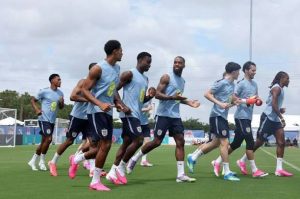
Those changes have added another layer to Tuchel’s preparations.
Garner brings additional midfield options, while Gibbs-White provides another creative player capable of operating between midfield and attack. Both players were officially added to the squad after the withdrawals.
It means Tuchel has had to make adjustments before England even step onto the Wembley pitch.
Why the Spain match matters
The opening fixture could hardly be more demanding.
Spain enter the new Nations League campaign as the newly crowned world champions, while England are coming off a third-place finish at the 2026 FIFA World Cup.
England’s last competitive World Cup match saw them lose 2–1 to Argentina in the semi-final before recovering to beat France 6–4 in the bronze-medal match.
The Spain fixture therefore represents the beginning of another chapter under Tuchel.
It also provides an early opportunity to see how the manager intends to balance experience with younger players.
The Nations League group contains three strong opponents, meaning England cannot afford to treat the opening fixtures simply as experimentation.
The official schedule has England hosting Spain before travelling to Prague to face Czechia on 29 September. They then travel to Croatia on 3 October before returning to Wembley to face Czechia again on 6 October.
A new midfield picture
One of the most interesting areas to watch will be midfield.
With Rice and Mainoo unavailable for this window, and with Henderson not included in the original squad, Tuchel has had to consider different combinations.
Bellingham remains a central figure, while Anderson, Garner, Gibbs-White, Lewis-Skelly and Scott give the manager different profiles to work with.
The official statistics show that Bellingham already has 56 England caps and 13 international goals, making him one of the most experienced players in the squad despite his age.
The manager will therefore have to decide whether to build around established figures or use the Nations League to accelerate the development of England’s younger generation.
That decision could become one of the defining tactical themes of the campaign.
Attack still provides plenty of options
Despite the absences, England remain well stocked in attacking areas.
Kane remains the central reference point, while Saka, Gordon, Eze, Rogers, Calvert-Lewin and Ngumoha offer different attacking qualities.
Calvert-Lewin’s return is particularly notable after he was included in the squad alongside a number of players returning to the senior setup.
Saka also remains one of England’s key attacking players, with 56 caps and 17 goals recorded in the latest official squad statistics.
The challenge for Tuchel will be finding the right combinations rather than simply selecting the biggest collection of attacking names.
Supporters have plenty to discuss
The reaction from England supporters is likely to remain intense whenever a familiar player is left out.
That is particularly true when the player has built a strong relationship with the national-team fanbase.
However, international football is increasingly about competition for places, tactical suitability and current club form.
Tuchel’s squad demonstrates that he is willing to make selection decisions based on what he believes his team needs for the particular international window.
The fact that several players can return after being left out should also keep competition alive.
Alexander-Arnold’s return is an obvious example. His inclusion shows that being outside one squad does not necessarily mean being permanently excluded from the national-team picture.
What comes next for England
The immediate focus is Spain.
England’s first Nations League match is scheduled for Wembley on Saturday evening, with a sold-out stadium expected for the opening fixture of the campaign.
From there, the schedule becomes demanding.
Czechia away follows just three days later before England travel to Croatia and then return home to face Czechia.
The group stage continues in November, when England will host Croatia before travelling to Spain.
That means Tuchel will have relatively little time to settle on his preferred team.
The decisions made now could influence the entire Nations League campaign.
The bigger picture
The most important issue surrounding the latest squad is not simply which two fan favourites have been left out.
It is what Tuchel is attempting to build.
England have a deep pool of established internationals, but the current squad also contains several players who could become important figures for the next generation.
Branthwaite, Lewis Hall, Nico O’Reilly, Lewis-Skelly, Anderson, Scott and Ngumoha are among the players whose development could become increasingly important.
At the same time, experienced players such as Kane, Bellingham, Saka and Alexander-Arnold provide the established core around which the team can operate.
That creates a delicate balance.
Tuchel must manage expectations while also developing a squad capable of competing against Europe’s strongest nations.
For supporters, the omission of familiar names may be frustrating, but the selections also make clear that the England manager is not simply relying on reputation.
The real answer will come on the pitch.
If the new-look England side performs well against Spain, the conversation surrounding the squad will inevitably change. If the team struggles, questions over selection decisions will become louder.
For now, though, the facts are clear: England are entering a new Nations League campaign with a significantly competitive squad, several notable omissions and a manager prepared to make difficult decisions.
The first major test arrives at Wembley against Spain.
And with the Nations League group stage stretching into November, Tuchel’s choices over the coming weeks could provide an early indication of the direction England are taking under his leadership.