Callum McGregor’s Cryptic Tweet Sparks Debate as Scotland Fans Question Steve Clarke’s Direction

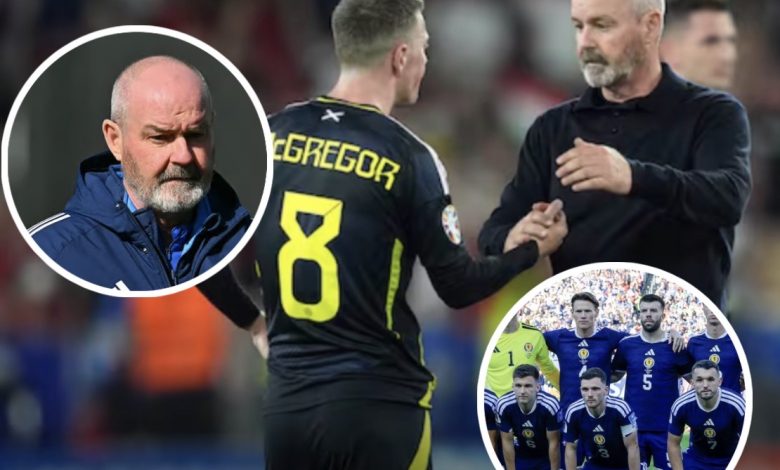
Few things ignite debate among Scotland supporters quite like comments from former internationals, and that is exactly what happened when Callum McGregor appeared to weigh in on the state of the national team with a social media post that quickly caught the attention of fans.
The former Scotland midfielder, who stepped away from international football two years ago to focus on his club career, rarely comments publicly on the national side. That is why his latest message has generated such intense discussion across social media platforms, with many supporters interpreting it as a subtle criticism of Scotland manager Steve Clarke.
Whether McGregor intended to send a warning, a suggestion, or simply express frustration remains open to interpretation. However, one thing is certain: the tweet has reopened the debate surrounding Scotland’s current direction following a disappointing run of results and growing concerns about the team’s performances on the biggest stage.
Why the Tweet Has Caused Such a Stir
Football supporters are often experts at reading between the lines, especially when comments come from respected former players.
McGregor’s reputation within Scottish football means every public statement carries weight. As a player who represented Scotland with distinction and captained one of the country’s biggest clubs, his views naturally attract attention.
The timing of the tweet is perhaps what has made it so controversial.
Scotland are currently facing significant scrutiny following disappointing World Cup performances, and pressure has inevitably increased on Steve Clarke. Questions are being asked about tactics, team selection, player development and whether the current squad is maximising its potential.
Against that backdrop, any comment from a former international was always likely to be analysed in great detail.
Supporters quickly began debating whether McGregor was effectively calling for changes to the team, changes to the tactical approach, or even broader changes within the national setup.
Others felt he was simply voicing concerns shared by many Scotland fans after a series of frustrating performances.
The reality may lie somewhere in between.
The Respect Between McGregor and Clarke
It is important to remember that Callum McGregor and Steve Clarke have shared a long history within Scottish football.
Clarke selected McGregor on numerous occasions during his Scotland career, and the midfielder was one of the most trusted members of the national squad before deciding to retire from international duty.
There has never been any public indication of personal disagreement between the pair.
In fact, McGregor frequently praised Clarke’s leadership during Scotland’s qualification campaigns and major tournament appearances.
That is why some supporters believe the tweet was not intended as a direct attack on the manager.
Instead, they argue it may have been an expression of concern regarding Scotland’s current trajectory rather than criticism of a specific individual.
Nevertheless, football fans rarely separate the team from the manager.
Whenever results disappoint, attention inevitably shifts towards the man in charge.
Scotland’s Recent Problems Cannot Be Ignored
The discussion surrounding McGregor’s comments reflects wider frustrations among supporters.
Scotland’s performances in recent matches have left many questioning whether the national side has stalled after several years of progress.
Under Clarke, Scotland achieved significant milestones.
Qualification for major tournaments helped restore optimism among supporters who had endured years of disappointment.
The national team became more competitive, more organised and more difficult to beat.
However, football is a results-driven business.
Past achievements provide credit in the bank, but they do not guarantee future support indefinitely.
Recent displays have led some supporters to wonder whether Scotland have become too predictable.
Others believe the squad lacks creativity in key moments.
There are also questions regarding squad depth, particularly in attacking areas.
These concerns have existed for some time but have become more prominent following recent setbacks.
As a result, McGregor’s tweet landed in an environment already filled with tension and uncertainty.
Why Fans Believe He Wants Changes
A large section of supporters immediately interpreted the tweet as a call for tactical changes.
One of the biggest criticisms directed at Scotland in recent months has been the perceived lack of flexibility.
Fans argue that opponents have become increasingly familiar with Scotland’s preferred system and are finding ways to exploit it.
When results are positive, tactical consistency is often praised.
When results decline, the same consistency can be viewed as stubbornness.
Many supporters believe McGregor understands the strengths and weaknesses of the current squad better than most former players.
Having spent years inside the dressing room, he possesses first-hand knowledge of what works and what does not.
That is why some fans believe his comments were carefully chosen.
Rather than directly criticising Clarke, they argue McGregor was highlighting the need for evolution.
International football constantly changes.
Teams that fail to adapt often find themselves overtaken by rivals.
Supporters interpreting the tweet in this way see it as constructive criticism rather than outright condemnation.
Others Believe the Reaction Has Been Overblown
Not everyone agrees with that assessment.
Another group of supporters believes social media has exaggerated the significance of the tweet.
Modern football culture often encourages over-analysis.
A short comment can generate hundreds of theories within minutes.
In many cases, interpretations become more dramatic than the original message.
Some fans argue there is no evidence McGregor intended to target Clarke at all.
Instead, they suggest he may simply have been expressing disappointment with Scotland’s performances in general.
Former players are supporters too.
Many remain emotionally invested in the national team long after retirement.
Expressing frustration does not automatically mean they are demanding managerial changes.
This perspective has gained support among those who believe Clarke deserves credit for Scotland’s progress over the last several years.
The Steve Clarke Debate Returns
Regardless of McGregor’s intentions, the episode has reignited debate about Steve Clarke’s future.
Clarke remains one of the most successful Scotland managers of the modern era.
He guided the team to major tournaments and helped restore belief among supporters.
His achievements should not be overlooked.
Yet football rarely stands still.
Success creates new expectations.
Qualifying for tournaments was once considered a major accomplishment.
Now supporters want Scotland to compete consistently against elite opposition.
That shift in expectations is a sign of progress.
However, it also increases pressure on the manager.
Fans now judge Scotland against higher standards than they did several years ago.
As a result, every disappointing result attracts greater scrutiny.
The reaction to McGregor’s tweet demonstrates just how sensitive the current atmosphere has become.
What Current Players Might Be Thinking
Current Scotland players are likely aware of the growing debate.
Modern footballers live in a world dominated by social media.
Discussions that once remained confined to newspapers and television now spread instantly across multiple platforms.
Players inevitably see headlines and fan reactions.
Some may agree with concerns being raised.
Others may feel criticism has become excessive.
What matters most is how the squad responds on the pitch.
Strong performances have a way of ending debates.
Poor performances, meanwhile, tend to amplify them.
The next few matches could therefore prove crucial not only for Scotland’s results but also for the wider conversation surrounding Clarke’s leadership.
McGregor’s Legacy Gives His Words Extra Weight
Part of the reason this story has generated so much attention is McGregor’s standing within Scottish football.
He was not a fringe international.
He was a key figure for both club and country.
Players with that level of experience often command respect long after retirement.
Supporters know he understands the pressures associated with representing Scotland.
They know he appreciates the challenges faced by players and coaching staff.
Consequently, even a brief social media message can carry considerable influence.
Fans naturally wonder whether he possesses insights unavailable to the public.
That curiosity fuels speculation.
Whether justified or not, it explains why the tweet became such a major talking point.
The Bigger Issue Facing Scotland
Perhaps the most important aspect of this story is that it highlights broader concerns about the national team’s future.
The debate is no longer solely about Steve Clarke.
It is about Scotland’s long-term development.
Questions include:
- Is enough young talent coming through?
- Are tactical approaches evolving quickly enough?
- Can Scotland consistently compete against stronger nations?
- What lessons can be learned from recent disappointments?
These are complex issues that cannot be solved through managerial changes alone.
Successful football nations constantly evaluate and improve every aspect of their structure.
Scotland faces the same challenge.
McGregor’s tweet may have acted as a catalyst, but the underlying questions already existed.
Fan Reactions Continue to Divide Opinion
As expected, supporter reactions remain mixed.
Some believe McGregor was absolutely right to speak out.
They argue respected former players should not remain silent when they believe improvements are needed.
Others feel public comments risk creating unnecessary distractions during an important period for the national team.
A third group believes both sides are missing the point.
They argue Scotland’s focus should remain on performances rather than social media debates.
Despite differing opinions, one thing unites supporters: everyone wants Scotland to succeed.
The disagreement centres on how best to achieve that objective.
Conclusion
Callum McGregor’s tweet may have consisted of only a few words, but its impact has been enormous.
Coming from a respected former Scotland international who retired from national-team duty two years ago, the message was always going to attract attention.
Whether it was intended as a warning, a suggestion, or merely an expression of frustration remains unclear.
What is clear is that many supporters have interpreted it as a sign that changes may be needed within the Scotland setup.
At the same time, others believe the reaction has been exaggerated and that Steve Clarke still deserves significant credit for transforming Scotland’s fortunes over recent years.
Ultimately, the real answers will not come from social media.
They will come from performances on the pitch.
If Scotland respond positively and produce strong results, the controversy surrounding McGregor’s tweet will quickly fade.
If struggles continue, however, supporters will inevitably revisit the message and wonder whether the former midfielder was highlighting concerns that many others were reluctant to voice.
For now, Scotland finds itself at a crossroads, with fans, former players and pundits all debating the same question: what comes next for Steve Clarke’s team?