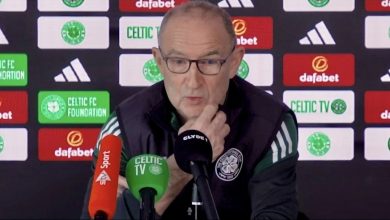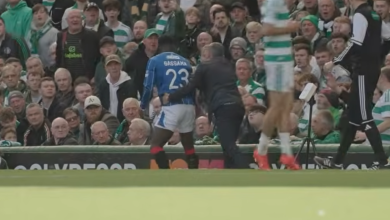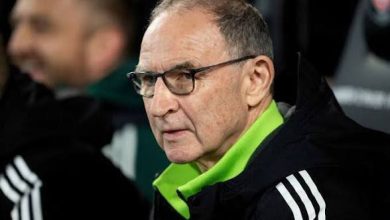
- Celtic’s season has been hit by another wave of uncertainty after talented winger Haissem Hassan was forced into intensive treatment following a worrying injury setback. Just when supporters hoped the club’s growing injury list was beginning to ease, fresh concerns have emerged from the training ground, raising difficult questions about squad depth, tactical flexibility, and the pressure building around manager Martin O’Neill.
Few moments create more anxiety inside a football club than seeing an important player removed from training and placed under the care of medical specialists. While injuries are an unavoidable part of elite football, timing often determines their significance. For Celtic, this latest setback arrives during one of the busiest and most demanding periods of the campaign, with domestic fixtures, European ambitions, and the relentless expectation of competing for every trophy all colliding at once.
Supporters immediately began wondering how serious the problem might be. Although the phrase intensive treatment does not automatically indicate a long-term absence, it suggests that the medical staff are prioritizing recovery through constant monitoring, rehabilitation sessions, and specialized therapy designed to accelerate healing while minimizing the risk of further damage.
### A Cruel Blow at the Worst Possible Time
Momentum is everything in football. Teams can survive tactical mistakes, difficult away matches, and even disappointing results, but losing influential players during a packed schedule often proves far more damaging.
Haissem Hassan has become the kind of winger every modern manager values. His direct running, willingness to attack defenders one-on-one, intelligent movement without possession, and ability to stretch compact defensive lines make him a unique attacking weapon. Even in matches where he does not score or assist, his presence changes the shape of opposition defenses, creating space for teammates to exploit.
That is precisely why this injury feels so significant.
Martin O’Neill has spent weeks searching for greater consistency from his side. Celtic’s recent performances have shown flashes of brilliance alongside frustrating moments of vulnerability, particularly in transition. Hassan’s pace offered an outlet whenever Celtic won possession quickly, allowing the team to transform defense into attack within seconds.
Without him, O’Neill may be forced to rethink his entire attacking structure.
### What Does “Intensive Treatment” Really Mean?
Football fans often hear medical terminology without understanding what it involves. Intensive treatment is not necessarily surgery or a career-threatening diagnosis. Instead, it usually refers to an aggressive rehabilitation program involving several daily recovery sessions.
A typical schedule could include:
* Physiotherapy to reduce pain and restore mobility.
* Strength and stability exercises targeting the injured area.
* Ice, compression, and inflammation management.
* Hydrotherapy to allow movement with reduced impact.
* Continuous assessment by club doctors before returning to full training.
The objective is simple: return the player as safely and as quickly as possible.
However, modern sports medicine has also taught clubs a valuable lesson. Rushing talented players back too early often leads to recurrence, turning a short absence into a lengthy spell on the sidelines. Celtic’s medical department therefore faces the delicate balance between urgency and caution.
### Martin O’Neill’s Biggest Dilemma
Managers rarely enjoy ideal circumstances. Injuries force difficult decisions, and great coaches are often judged by how they adapt rather than complain.
O’Neill now has several tactical questions to answer.
Should Celtic continue using natural wingers, or shift toward narrower attacking midfielders?
Should another youngster be trusted with meaningful minutes?
Or should experienced players change positions to compensate for Hassan’s absence?
Each option carries risks.
Replacing pace with creativity may improve possession but reduce counter-attacking threat. Promoting youth introduces energy but also inconsistency. Moving established players out of their preferred roles could weaken multiple positions simultaneously.
This is where elite squad management becomes essential.
Rather than finding another Haissem Hassan, O’Neill must find another solution.
### The Psychological Impact Inside the Dressing Room
Injuries affect more than team selection.
Every dressing room reacts emotionally when a teammate is sidelined. Players train alongside one another every day, celebrate victories together, and share the disappointment of defeats. Seeing an important colleague receive intensive medical attention naturally creates concern.
Leaders within the squad become even more important during moments like these.
Senior figures must maintain confidence, encourage younger players stepping into larger roles, and prevent uncertainty from spreading throughout the group. Championship-winning teams are often defined not by avoiding adversity, but by their collective response to it.
For Celtic, this may become one of those defining moments.
### Supporters React With Concern
Few fanbases are as passionate as Celtic’s. News of an injury immediately sparks thousands of discussions across social media, supporter forums, and matchday conversations.
Some fans inevitably fear the worst.
Others remain optimistic, believing modern rehabilitation can dramatically reduce recovery time.
Many simply hope the club avoids repeating a familiar football mistake—bringing an important player back before he is physically ready.
Supporters understand that trophies are won over an entire season, not a single weekend. Losing Hassan for one additional match may ultimately prove wiser than risking several months through an unnecessary gamble.
Patience, although difficult, is sometimes the strongest form of support.
### Why Hassan’s Playing Style Is So Difficult to Replace
Statistics only tell part of the story.
Wingers like Hassan influence games through constant movement. Defenders cannot relax because they know one burst of acceleration can completely change the match.
His qualities include:
Explosive pace: allowing Celtic to attack open space quickly.
Direct dribbling: forcing defenders into uncomfortable one-versus-one situations.
Wide positioning: stretching defensive lines and creating central passing lanes.
Aggressive pressing: contributing without possession as well as with the ball.
These characteristics are difficult to replicate using a single replacement. More likely, Celtic will need several players collectively to reproduce the same tactical impact.
### Opportunity Knocks for the Fringe Players
Every injury creates disappointment for one footballer and opportunity for another.
Squad players who have patiently waited for chances now find themselves competing for meaningful minutes. Training intensity naturally increases because places suddenly become available.
Young academy graduates may also view this as their breakthrough moment.
Throughout football history, countless careers have begun because an established player suffered an unfortunate injury. What starts as emergency cover occasionally develops into a permanent first-team role.
O’Neill’s challenge is identifying who possesses the mentality—not merely the talent—to seize that opportunity.
### The European Factor
European football leaves little room for recovery.
Travel, intense competition, tactical preparation, and limited rest days combine to create enormous physical demands. Managing player workloads has become almost as important as tactical coaching.
If Hassan misses key continental fixtures, Celtic’s attacking approach could change significantly. Away matches especially require pace capable of punishing opponents during transitions.
Without that natural outlet, Celtic may emphasize structured possession rather than rapid counters.
Whether that adjustment succeeds depends largely on midfield creativity and the movement of the remaining forwards.
### Medical Staff Working Behind the Scenes
Supporters often praise goalscorers and managers while overlooking one of the club’s most important departments.
The sports science and medical team work relentlessly away from cameras.
Their responsibilities extend beyond treating injuries. They analyze training loads, monitor fatigue levels, assess muscle recovery, recommend rest periods, and communicate constantly with coaching staff regarding player availability.
For Hassan, intensive treatment likely involves collaboration between physiotherapists, strength coaches, doctors, and rehabilitation specialists.
Recovery is rarely a straight line.
Some days bring excellent progress.
Others require reduced intensity after unexpected soreness.
That unpredictability explains why clubs often avoid announcing precise return dates until players complete multiple stages of rehabilitation.
### Can Celtic Maintain Their Title Ambitions?
Championship races reward consistency more than perfection.
Every contender experiences injuries, suspensions, and dips in form. The difference lies in how effectively squads absorb those setbacks.
If Celtic continue collecting points despite Hassan’s absence, this period may eventually be remembered as proof of the squad’s resilience.
If performances decline dramatically, critics will inevitably question recruitment, squad depth, and tactical planning.
Either way, the coming weeks could become one of the defining chapters of the season.
### What Happens Next?
The immediate priority is not rushing Haissem Hassan back onto the pitch—it is ensuring he returns fully fit.
The expected rehabilitation pathway would likely include:
* Pain and inflammation control.
* Individual gym rehabilitation.
* Ball work away from full contact.
* Partial team training.
* Full training clearance.
* Matchday selection.
Only after completing every stage should a competitive return be considered.
For players whose game depends heavily on acceleration and sharp changes of direction, complete recovery is essential. Returning at ninety percent can be the difference between starring for the team and suffering another frustrating setback.
### A Test of Character
Every successful football club eventually encounters adversity. Injuries, criticism, fixture congestion, and mounting expectations are all part of competing at the highest level.
For Haissem Hassan, this is a personal battle requiring patience, determination, and trust in the rehabilitation process.
For Martin O’Neill, it is a managerial examination demanding tactical intelligence and squad management.
For Celtic’s supporters, it is another emotional rollercoaster filled with hope, concern, and unwavering belief that the team can overcome yet another obstacle.
Whether Hassan returns in weeks or longer, one thing remains certain: Celtic’s response to this setback may ultimately define the character of their entire campaign.