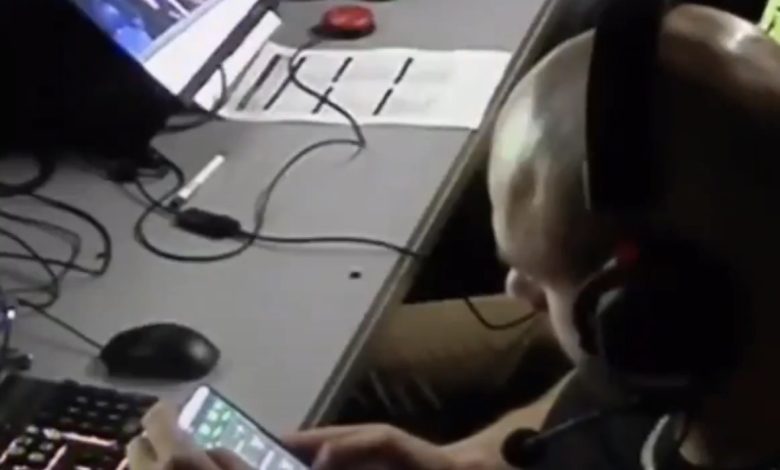
The fallout from Scotland’s narrow 1-0 defeat to Morocco at the FIFA World Cup has continued to dominate discussion across social media, with a new controversy emerging that has left supporters demanding answers. A viral image circulating online appears to show a VAR official looking at a mobile phone during the match, prompting widespread speculation and fierce debate among football fans.
The controversy arrives at a time when emotions are already running high following Scotland’s defeat and the heated discussions surrounding a penalty appeal involving Scott McTominay. While no official evidence has been produced to confirm any wrongdoing by match officials, the viral footage has fueled intense reactions from supporters who believe greater transparency is needed regarding the use of technology and officiating decisions at major tournaments.
As the images spread across platforms such as X, Facebook, TikTok, and Instagram, fans have questioned whether the incident raises broader concerns about confidence in VAR and the integrity of football officiating. Others have urged caution, pointing out that social media speculation often moves much faster than verified facts.
How the Controversy Started
The latest storm began when screenshots and edited images started circulating online claiming that a VAR official working during Scotland’s clash with Morocco had been seen using a mobile phone while on duty.
Some social media posts went much further, alleging that the official was using a betting application and had somehow profited from the match outcome. However, no credible evidence has emerged to support those claims.
The images quickly gained traction because they appeared shortly after one of the most debated moments of the match—the challenge on Scott McTominay that many Scotland supporters believed should have resulted in a penalty.
As frustration over the decision continued to grow, the viral images became linked to wider criticism of the officiating team despite the absence of verified information connecting the two issues.
Within hours, thousands of comments had appeared online, with supporters expressing anger, disbelief, and concern about what they believed they were seeing.
Scotland’s Frustration Over the Penalty Incident
Much of the outrage surrounding the viral footage stems from lingering frustration regarding a controversial incident involving Scott McTominay.
During the match against Morocco, Scotland players and supporters felt McTominay was unfairly denied a penalty after a challenge inside the area. The incident was reviewed, but play continued without a spot kick being awarded.
The decision immediately became one of the most discussed moments of the game.
Supporters pointed to screenshots, freeze frames, and slowed-down replays that they believed showed sufficient contact to justify a penalty.
Former players, pundits, and fans offered differing opinions.
Some argued that the challenge clearly prevented McTominay from playing the ball and should have resulted in a penalty.
Others maintained that the contact was either minimal or not enough to justify overturning the referee’s original decision.
Regardless of which side fans supported, the incident significantly increased scrutiny of the VAR team and created an environment where any subsequent controversy was likely to attract enormous attention.
Social Media Reacts
Few stories spread faster in modern football than those involving VAR.
Within minutes of the images appearing online, hashtags related to Scotland, Morocco, VAR, FIFA, and corruption began trending among football communities.
Many supporters expressed outrage.
Others called for a full investigation.
Some demanded that FIFA release an official statement.
However, another group of supporters urged caution and highlighted the dangers of jumping to conclusions based on low-quality screenshots and edited social media content.
Several users noted that it was impossible to determine exactly what application was being displayed on the phone.
Others questioned whether the image had been manipulated or taken out of context.
The divide highlighted a growing challenge in modern sports coverage: the speed at which information spreads compared to the speed at which facts can be verified.
The Problem With Viral Images
One of the biggest issues in modern football discourse is that screenshots often tell only part of the story.
A single image can quickly generate millions of impressions online, even when the full context remains unclear.
In this case, critics of the viral claims have pointed out several important considerations.
First, the image quality is poor.
Second, there is no confirmed evidence showing what application was open on the device.
Third, no official source has confirmed that betting activity took place.
Fourth, there is no evidence that any official won money related to the match.
Without verified information, conclusions based solely on screenshots remain speculative.
Football fans have seen similar situations in the past where viral images appeared convincing at first glance but later turned out to have innocent explanations.
That does not mean questions should not be asked.
However, it does mean that accusations should be treated carefully until facts are established.
Why VAR Faces So Much Scrutiny
Even before this controversy, VAR was already one of the most debated subjects in world football.
Since its introduction, the technology has generated passionate arguments among players, managers, pundits, and supporters.
Proponents argue that VAR helps eliminate clear errors and ensures more accurate decisions.
Critics believe it has created confusion, inconsistency, and frustration.
Scotland’s defeat to Morocco has once again highlighted how quickly trust can be damaged when supporters disagree with major decisions.
For many fans, the issue is not simply whether VAR makes correct decisions.
The issue is whether those decisions are explained clearly enough.
When supporters do not understand why a decision was reached, suspicion and frustration often follow.
That lack of transparency can create an environment where rumors spread rapidly.
Calls for Greater Transparency
One of the most common reactions to the controversy has been calls for greater transparency from football authorities.
Many supporters believe releasing more information would help reduce speculation.
Suggestions from fans include:
- Publishing VAR audio after matches.
- Providing detailed explanations for major decisions.
- Showing more replay angles during reviews.
- Offering post-match reports on controversial incidents.
- Increasing communication between officials and supporters.
Several other sports already provide greater insight into officiating decisions.
Rugby, cricket, and American football often allow audiences to hear discussions between officials.
Many football supporters believe similar measures could help rebuild trust.
The Impact on Scotland
For Scotland, the controversy has become another chapter in what has already been an emotionally charged World Cup campaign.
The defeat to Morocco significantly affected the team’s position in Group C and increased the importance of upcoming fixtures.
Players and coaching staff have largely attempted to focus on football matters rather than social media speculation.
However, it is impossible to ignore the level of attention surrounding the debate.
Supporters remain convinced that key decisions went against their team.
Whether justified or not, that perception has become a major talking point among the Scotland fanbase.
The challenge for Steve Clarke’s side now is ensuring that the focus remains on upcoming matches rather than external controversies.
Morocco’s Perspective
While much of the discussion has centered on Scotland’s grievances, Morocco’s players and supporters have been celebrating a significant victory.
From their perspective, the result reflected a disciplined and determined performance.
Morocco defended effectively, limited Scotland’s opportunities, and capitalized on their chances.
As often happens in football, controversies surrounding officiating can sometimes overshadow the efforts of the winning team.
Moroccan supporters have argued that their side deserves recognition for securing an important result rather than seeing the conversation dominated by refereeing debates.
That viewpoint highlights how differently the same match can be perceived depending on which team supporters follow.
What Happens Next?
At the time of writing, no official confirmation has been provided supporting claims that a VAR official was using a betting application or won money connected to the match.
Without verified evidence, such allegations remain unproven.
Nevertheless, the incident demonstrates how rapidly controversies can develop in modern football.
Football authorities may decide to address the concerns publicly if speculation continues to grow.
Even if no wrongdoing is found, supporters are likely to continue demanding greater transparency regarding officiating procedures and VAR operations.
The debate also serves as a reminder of the responsibility that comes with sharing information online.
Supporters understandably care deeply about their teams and want answers when controversial decisions occur.
However, accusations involving corruption or betting misconduct require strong evidence rather than assumptions.
Conclusion
The viral images allegedly showing a VAR official using a mobile phone during Scotland’s World Cup clash with Morocco have sparked one of the most talked-about controversies of the tournament so far.
Coming on the heels of Scotland’s disputed penalty appeal involving Scott McTominay, the footage has intensified scrutiny of VAR and reignited broader concerns about transparency in football officiating.
Yet despite the widespread reaction, no verified evidence has emerged proving that a betting app was being used or that any official profited from the match. For now, the images remain the subject of speculation rather than established fact.
What is certain is that the incident has exposed the fragile relationship between supporters and modern officiating systems. In an era where every decision is examined frame by frame and every image can spread globally within minutes, football authorities face increasing pressure to provide clarity, transparency, and accountability.
Whether the controversy eventually proves significant or turns out to be a misunderstanding, one thing is clear: the debate surrounding VAR is far from over, and Scotland’s dramatic defeat to Morocco will continue to be discussed long after the final whistle.