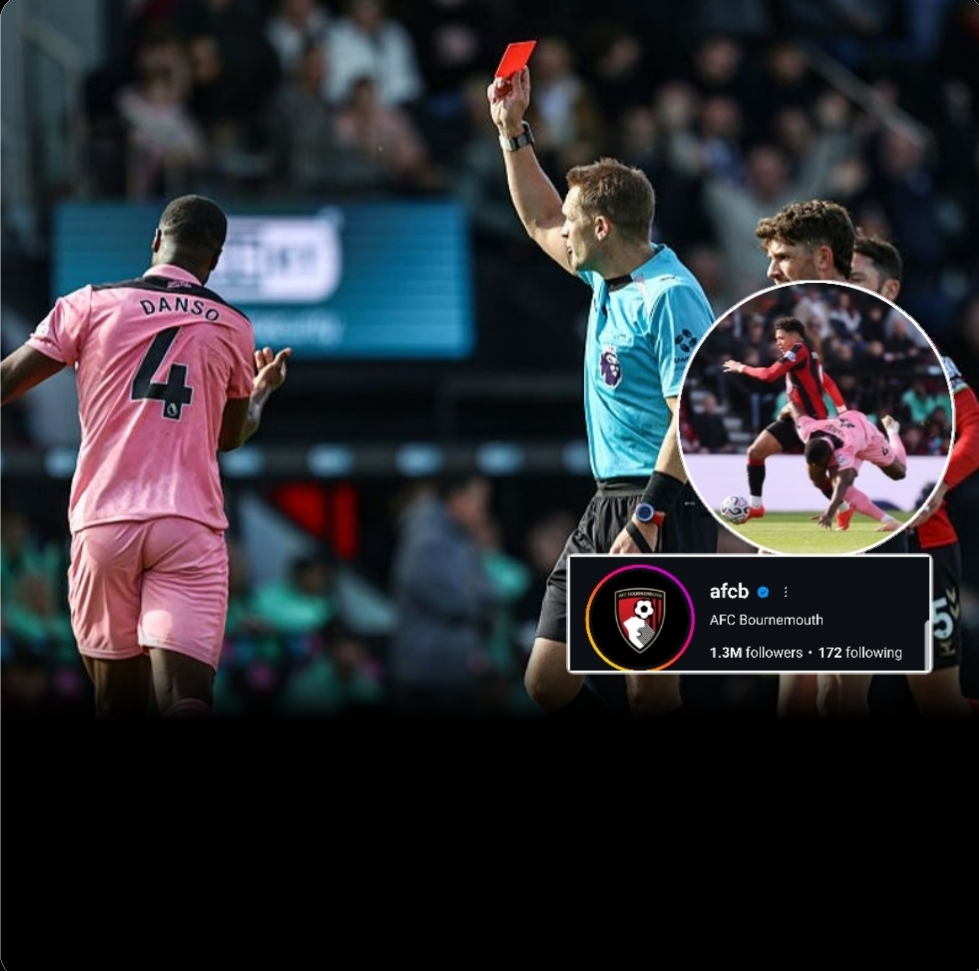
The controversy surrounding refereeing decisions in the Premier League continues to raise serious questions about accountability, transparency and the pressure placed on football clubs when they publicly challenge match officials.
Bournemouth are at the centre of a reported controversy involving statements about the Premier League, refereeing decisions and alleged Video Assistant Referee (VAR) errors, with claims that the club was forced to issue an urgent apology.
Nevertheless, the subject raises an important issue for English football: how should clubs respond when they believe that refereeing decisions have been handled incorrectly, and where should the line be drawn between legitimate criticism and inappropriate public accusations?
For Bournemouth, any dispute of this nature would be particularly significant because a club’s public statements can influence supporters’ perceptions, attract attention from football authorities and shape discussions about the credibility of the officiating system.
Why the controversy matters for Bournemouth
The Premier League is one of the most closely followed football competitions in the world, with millions of supporters scrutinising decisions that can determine the outcome of matches.
A disallowed goal, an unawarded penalty or a controversial red card can change the direction of a game within seconds.
For clubs operating in such a competitive environment, these moments can have serious sporting consequences, especially when points are lost in matches that could influence their position in the league table.
Bournemouth, like every other Premier League club, have a legitimate interest in ensuring that decisions affecting their team are made according to the Laws of the Game.
When a club believes that an important decision has been handled incorrectly, it may seek clarification from the relevant authorities or raise its concerns through established channels.
However, communicating those concerns publicly requires care.
If the reported apology followed a statement that contained inaccurate information or inappropriate language, it would demonstrate the importance of verifying claims before releasing them.
If it concerned a different issue, the explanation would need to be considered on its own merits.
Without the original statement and the apology, it would be premature to conclude precisely why Bournemouth was reportedly required to apologise.
The growing debate surrounding VAR
VAR was introduced to help match officials correct clear and obvious errors involving goals, penalties, direct red cards and mistaken identity.
Its purpose is to reduce significant mistakes without turning football into a game in which every decision is repeatedly examined.
However, the technology has not eliminated controversy.
Instead, some decisions have generated fresh debate about how the system is applied, how long reviews should take and whether similar incidents are being judged consistently.
Supporters often struggle to understand why one incident results in a lengthy VAR review while another apparently comparable situation receives little attention.
The difference between a subjective judgement and a factual decision can also make the process difficult to follow.
For example, determining whether a player was offside can often involve examining the positions of players at a specific moment.
Deciding whether contact constitutes a foul, however, may require an interpretation of the circumstances and the referee’s assessment of the incident.
VAR is not designed to replace every on-field judgement simply because another interpretation is possible.
Nevertheless, when a decision appears to contradict the available evidence, clubs and supporters naturally want a convincing explanation.
That is why any reported dispute involving Bournemouth and statements about VAR deserves to be examined through verified facts rather than speculation.
Why clubs must be careful with public statements
Football clubs face considerable pressure from supporters who expect them to defend their interests.
When fans believe their team has been disadvantaged by a referee, they may demand an official response from the club’s leadership.
Remaining silent can create the impression that the club is unwilling to challenge a decision, even when its officials are pursuing the matter privately.
On the other hand, issuing a strongly worded statement without sufficient evidence can create a separate controversy.
Public accusations may damage relationships with football authorities, distract attention from the original incident and expose the club to scrutiny over the accuracy of its claims.
This is why responsible communication matters.
A club can question a decision, request an explanation and demand consistency without presenting an unproven allegation as an established fact.
If Bournemouth did issue an apology because its original comments crossed that line, the club would need to clarify what was inaccurate or inappropriate.
An apology relating to the wording of a statement would not necessarily mean that the club had abandoned its concerns about the original refereeing decision.
Equally, an apology would not prove that the referee or VAR had made a mistake.
These are separate questions, and each requires evidence.
The Premier League’s responsibility to explain decisions
The responsibility for maintaining confidence in the officiating system does not rest solely with individual clubs.
The Premier League and the organisations responsible for appointing and managing match officials also have a role in explaining major controversies.
Supporters want clear answers when an important decision affects their team.
They want to know what the referee saw, what VAR examined and why the final decision was reached.
When explanations are vague or arrive after considerable public criticism, frustration can increase.
One relevant example came in 2024, when the disallowed Bournemouth goal against Newcastle United became a subject of discussion involving refereeing chief Howard Webb on Match Officials Mic’d Up.
The incident demonstrated how reviewing a specific decision and explaining the reasoning behind it can contribute to a wider discussion about officiating standards.
Such explanations do not guarantee that everyone will agree with the final judgement.
However, they provide supporters with information that can help them understand how the decision was reached.
If the reported Bournemouth controversy concerns a particular VAR incident, the most useful response would be a clear account of the decision, the relevant rules and any subsequent assessment by the appropriate authorities.
Without those details, the public debate risks becoming more focused on the language used by the club than on the football incident itself.
Supporters deserve more than speculation
For Bournemouth supporters, the reported apology may raise questions about whether their club’s concerns have been properly addressed.
Fans naturally want their team to receive fair treatment, regardless of the opponent, the match venue or the importance of the fixture.
They also expect club officials to represent their interests professionally.
However, supporters should not be encouraged to reach conclusions before the full circumstances are known.
An apology can have several explanations.
It may concern an inaccurate description of an incident, a factual error, the tone of a public statement or a misunderstanding that required clarification.
It could also be connected to a separate communications issue rather than the validity of the original refereeing complaint.
The exact circumstances determine how the situation should be interpreted.
For journalists and football commentators, this distinction is particularly important.
A headline suggesting that Bournemouth was forced to apologise may attract attention, but the accompanying article must establish who requested the apology, what prompted it and whether the club confirmed the details.
If those facts remain unavailable, the report should be presented as an unverified claim rather than a settled development.
Credible football journalism depends on maintaining that distinction, even when a story involves a controversial decision or a popular club.
What the incident could mean for future disputes
Whatever the verified circumstances of this case, the wider debate highlights the need for a more effective process through which clubs can challenge controversial decisions.
There should be a clear route for requesting explanations, reviewing incidents and communicating findings to the teams involved.
Such a process would help prevent disagreements from becoming prolonged public disputes.
It would also give clubs an opportunity to raise legitimate concerns without relying entirely on statements designed to attract attention.
At the same time, clubs must recognise that referees operate under considerable pressure.
Officials are required to make decisions quickly, often in front of millions of viewers and with supporters examining every available replay.
Mistakes can happen, but criticism should focus on identifiable decisions and established evidence rather than unsupported claims about individual officials.
The objective should be to improve standards, not to make refereeing an arena for personal attacks.
The Premier League must also ensure that its disciplinary and communications processes are applied fairly and consistently.
If a club’s public statement is inaccurate, the appropriate response should address that specific issue.
If a refereeing decision is subsequently found to be incorrect, that should also be acknowledged through the relevant procedures.
Accountability should operate in both directions.
Conclusion
The reported Bournemouth apology over statements concerning Premier League refereeing and VAR errors raises important questions about communication, accountability and the relationship between clubs and football authorities.
If confirmed, the circumstances behind the apology deserve close examination, particularly whether the issue concerned the accuracy of the club’s claims, the language it used or a separate dispute with the league.
However, an apology alone cannot establish whether the original refereeing decision was correct or whether Bournemouth’s concerns were justified.
Those questions must be answered using the available evidence and the applicable Laws of the Game.
Ultimately, the Premier League needs an officiating system that is consistent, transparent and prepared to acknowledge demonstrable mistakes.
Clubs, meanwhile, must ensure that their public statements are accurate and proportionate, particularly when criticising match officials.
Bournemouth supporters deserve clarity about what happened, just as supporters of every other club deserve confidence that important decisions are being assessed fairly.
Leave a Reply