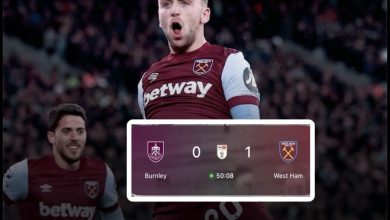
Malick Diouf Faces Shock Red Card Twist as FA Re-Evaluates Explosive Burnley Match Footage – Will It Be Yellow or the Ultimate Red Nightmare?

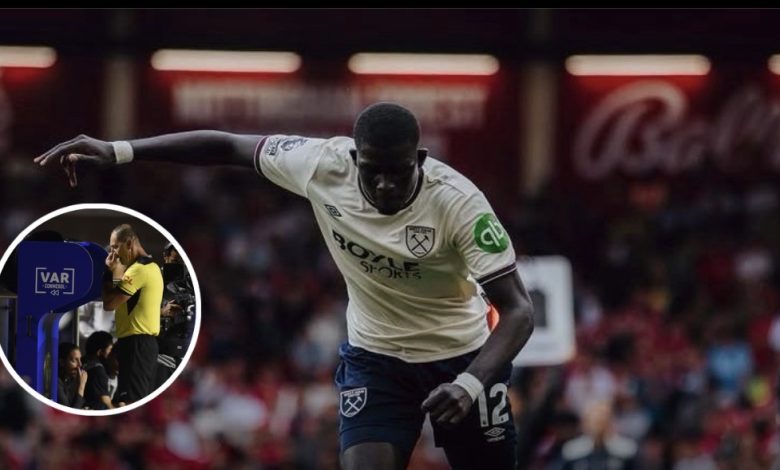
In the high-stakes world of Premier League drama, where one wrong move can rewrite seasons, careers, and club fortunes overnight, a fresh controversy is exploding around West Ham United’s rising Senegalese star El Hadji Malick Diouf. The talented left-back, already turning heads with his attacking flair and defensive grit since his big-money move, now finds himself at the centre of a storm that has fans, pundits, and club officials on edge. The Football Association is reportedly diving back into the footage from a recent clash involving Burnley, and the question hanging over everything is simple, brutal, and impossible to ignore: is this heading for a yellow card confirmation… or a full-blown red card that could sideline him at the worst possible moment?
The incident in question stems from a heated encounter that saw Diouf in the thick of the action against the Clarets. Known for his overlapping runs, pinpoint crosses, and willingness to put his body on the line, the 21-year-old delivered moments of brilliance – including key contributions that helped swing results – but one challenge, one moment of contact, has suddenly come under the microscope again. What looked in real time like a robust but fair intervention, or at worst a routine booking, is now being picked apart frame by frame. Sources close to the process suggest the FA’s disciplinary team has requested additional angles and slowed-down sequences, the kind of forensic review that has overturned decisions, extended bans, or, in rarer cases, rescued players from wrongful dismissals in the past.
This is pure Premier League soap opera. Diouf, born in Dakar and having taken a winding path through Norwegian and Czech football before landing in east London, has quickly become a fan favourite at the London Stadium. His pace down the left, ability to create chances, and improving defensive reading of the game have made him one of the more exciting young full-backs in the division. An assist against Burnley in a previous meeting already showcased his quality – a whipped delivery that led to a crucial goal. Yet football at this level is unforgiving. One mistimed tackle, one high boot, one moment where the referee’s view is imperfect and VAR’s intervention is incomplete, and suddenly the narrative flips from hero to potential villain.
The “twist” is what has social media and matchday forums in meltdown. Initial reports and on-pitch officials treated the challenge as a yellow-card offence – a caution for a foul that stopped a promising Burnley attack without being deemed reckless enough for an immediate sending-off. No straight red was shown. No second yellow compounded into a dismissal. Diouf stayed on the pitch, continued contributing, and the game moved on. But the FA’s decision to re-examine the footage changes everything. In an era of microscopic scrutiny, where every boot, arm, and knee is frozen and analysed from six camera angles, what once seemed settled can be reopened. Precedent exists: players have seen red cards rescinded after successful appeals, and others have faced retrospective bans when video evidence later revealed something the referee missed in the heat of the moment.
What exactly are the FA looking for? Insiders whisper about the intensity of the challenge, the point of contact, the force involved, and whether Diouf’s action denied a clear goal-scoring opportunity or crossed into the territory of serious foul play. Was there studs showing? Was the foot high? Did the opponent’s reaction exaggerate the contact, or was the impact genuinely dangerous? These are the questions that keep referees, VAR officials, and now independent commissions awake at night. Burnley, fighting their own battles, will naturally push for the harshest possible outcome if they believe their player was endangered. West Ham will counter that the original decision was correct, that Diouf is a clean competitor whose aggression is channelled productively, and that retrospective action risks punishing players for the physical nature of the English game.
The stakes could hardly be higher. A confirmed yellow changes little beyond adding to Diouf’s tally and the usual caution about accumulation. A red card – whether converted from the original yellow or issued retrospectively – brings an automatic suspension. In a congested fixture list, with every point precious in the scramble for mid-table security or European contention, losing a key starter for one, two, or even three matches is a body blow. Diouf’s attacking output from left-back has been a genuine difference-maker; his absence would force tactical reshuffles, greater reliance on alternatives, and a dip in the team’s ability to stretch opposition defences. For a young player still establishing himself in English football, a high-profile ban also carries reputational weight. Media narratives can harden quickly: one moment he’s the exciting Senegal international who helped his country to major tournament success; the next he’s the “reckless” defender whose challenge required FA intervention.
Fans are already split into passionate camps. West Ham supporters point to Diouf’s overall discipline and the physical demands placed on full-backs who are expected to bomb forward and track back tirelessly. They argue that re-evaluating every robust challenge sets a dangerous precedent that could sanitise the game into something unrecognisable. Burnley fans and neutrals who saw the challenge as dangerous counter that player safety must come first, that modern technology exists precisely to correct injustices the naked eye misses, and that young talents must learn boundaries early. Pundits have weighed in with the usual mix of outrage and measured analysis. Some former referees insist that if the contact was high or with excessive force, the threshold for a red is met. Others stress the importance of real-time context: speed, intent, and the full sequence of play, not just the freeze-frame that makes every challenge look worse.
The process itself is deliberately opaque, which only fuels the speculation. The FA’s independent regulatory commissions review evidence, hear submissions from the clubs, and issue written reasons only after the fact. Until a decision drops, the rumour mill churns. Will new camera angles reveal a studs-up lunge that the on-field official simply couldn’t see? Or will the review confirm that the original yellow was proportionate, protecting the integrity of the referee’s call? History offers both outcomes. There have been high-profile rescissions where cover was present or the opportunity was not clear. There have also been cases where a challenge initially waved away or booked was later deemed worthy of a ban once the full video evidence was assessed.
Diouf’s broader story adds emotional weight. From academy football in Senegal to trials in colder climates, through title-winning campaigns abroad and a Premier League leap, he has already shown remarkable adaptability. Representing Senegal at major tournaments, delivering assists in big matches, and earning praise for his work rate – these are the building blocks of a potential star. A red-card cloud at this stage feels especially cruel. Yet the modern game demands accountability. Clubs invest heavily in sports science and coaching to reduce reckless challenges; governing bodies invest in technology to enforce standards. The tension between those two realities plays out in moments like this.
What happens next will be watched closely beyond just the two clubs involved. Other managers will study the outcome for clues about how strictly the FA intends to police similar challenges. Players will take note of the threshold for retrospective action. Broadcasters will prepare packages of slow-motion replays and expert panels. Social media will explode the second any official statement appears. In the meantime, the uncertainty itself is the story. Every training session Diouf completes carries a shadow. Every team-sheet speculation includes the asterisk of possible unavailability. The original match result stands, but the disciplinary aftershocks could still reshape the weeks ahead.
So, is it going to be a yellow card or a red card? The honest answer is that no one outside the review room can say with certainty until the FA speaks. The original on-pitch decision pointed firmly toward yellow – a caution for a foul that stopped play without the clear criteria for a straight red being met in the referee’s and VAR’s immediate assessment. Re-evaluation introduces the possibility of escalation if the footage is judged more serious than first thought. Yet the bar for overturning or upgrading a decision is deliberately high precisely to avoid constant second-guessing. Most reviews of this nature either uphold the original call or, in clear cases of error, correct it. Given the information available and the typical conservatism of such processes, a confirmed yellow remains the more probable outcome – but the very existence of the re-evaluation means a red cannot be ruled out.
That ambiguity is pure clickbait fuel, and football thrives on it. One challenge, one review, one young player’s immediate future hanging in the balance. Malick Diouf’s talent is not in doubt. His contribution against Burnley and in other matches has already shown what he can offer. Whether the FA ultimately decides the challenge deserved only a yellow or something far more severe will determine if that talent stays available or is forced to watch from the stands. Until the verdict lands, the twist remains unresolved, the tension remains electric, and the debate will rage on every platform that covers the beautiful, brutal, endlessly dramatic game.
The next chapter is coming. When it does, the football world will be watching to see whether Diouf walks free with a yellow on his record – or stares down the red card that could define a difficult chapter in an otherwise bright young career.