Celtic FC announce a major departure just before a scheduled conference or media engagement, with some linking the speculation to Martin O’Neill potentially stepping away and investors preparing to exit. These claims appear to stem from the club’s well-documented off-field turbulence over the past year, combined with the 74-year-old manager’s sudden hospital admission. However, available reporting and official club statements paint a different picture: O’Neill is recovering from a “small procedure,” is expected to be released in the coming days, and continues as permanent manager after delivering a dramatic domestic double last season.
Celtic’s 2025-26 campaign was one of the most turbulent in recent memory. Brendan Rodgers resigned in October 2025 amid a poor start and public friction with the board, particularly principal shareholder Dermot Desmond. Martin O’Neill, who had previously managed the club with distinction between 2000 and 2005 (winning multiple trophies including a domestic treble), returned as interim boss and steadied the ship. He briefly stepped aside for Wilfried Nancy, whose 33-day tenure ended in early January 2026 after a string of defeats. O’Neill returned again and guided Celtic to a remarkable late surge, overhauling Hearts to claim the Scottish Premiership title on the final day and adding the Scottish Cup for a domestic double. In June 2026 he was confirmed as permanent manager on a one-year deal with an option for a further year, following talks with Desmond.
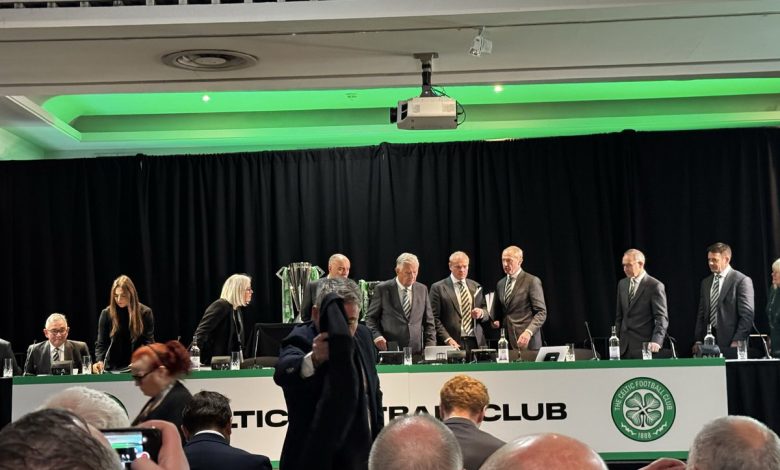
That appointment brought short-term stability after a season marked by fan protests, an abandoned AGM in November 2025 featuring “sack the board” chants, and the resignation of chairman Peter Lawwell, who cited intolerable abuse and threats. Interim chairman Brian Wilson and chief executive Michael Nicholson have faced ongoing scrutiny over recruitment, communication, and the club’s self-sustaining financial model. Supporters have repeatedly voiced frustration at perceived lack of ambition in the transfer market, especially after high-profile departures and difficulty competing with English clubs for targets. Minutes from meetings with supporter groups earlier in the summer reflected O’Neill’s own concerns about squad strength and the challenges of dealing with agents and higher-spending leagues.
Against this backdrop, the current wave of speculation is unsurprising. Celtic opened the 2026-27 Premiership season with a 1-0 win over Dundee on 3 August, with O’Neill in the dugout. Shortly afterwards the club confirmed he had undergone a small hospital procedure and was expected to be discharged within a day or two, asking for privacy for him and his family. No details of the procedure were released. At the time of writing there is no indication this health issue is linked to any resignation or departure from the managerial role. O’Neill had spoken in pre-season about the need for subtle tactical tweaks, the difficulty of the coming campaign against a stronger Rangers and determined Hearts, and the urgency of adding quality players ahead of Champions League play-off ties.
Claims of investors “ready to announce their departure” also lack substantiation in public reporting. Dermot Desmond remains the major individual shareholder and has repeatedly emphasised continuity and support for the manager. Other institutional holders have adjusted stakes over time, as is normal for a publicly listed club, but no coordinated mass exit or board-level investor withdrawal has been announced in connection with the current rumours. Historical share activity and AGM disruption reflected fan discontent more than a formal investor revolt. The club’s financial approach—prioritising sustainability, UEFA compliance, and avoiding over-reliance on external funding—has been both a point of pride for the hierarchy and a source of criticism from sections of the support who want greater spending power.
What, then, might a “huge departure” actually refer to if one materialises? The summer transfer window has already seen several exits and loan returns, creating gaps that O’Neill and the recruitment team have been working to fill. Key players such as Alistair Johnston and Arne Engels have attracted interest from English clubs, with bids reported and rejected or under discussion. Celtic have brought in new faces including striker Kasper Høgh, yet many observers note the pace of incomings has lagged behind the need created by departures and the looming European fixtures. A significant player sale close to a media conference could generate the kind of headline the rumours anticipate. Alternatively, any further board-level or executive change would fit the pattern of last season’s instability, though none has been confirmed. Staffing around O’Neill was itself a point of discussion when his permanent deal was finalised.
The broader context is a club still navigating the aftermath of a near-civil war between sections of the support and the hierarchy. Protests, season-ticket hesitancy, and public statements from both sides marked 2025-26. Wilson has spoken of improved supporter engagement structures, including a new Head of Supporter Engagement role and a Celtic Connect group, while stressing mutual respect and the need for unity inside the stadium. O’Neill himself has been a unifying figure for many fans precisely because of his history and the success he delivered under pressure. At 74 he is one of the oldest managers in European football at this level; questions about succession planning and long-term vision are legitimate even as he continues in the role.
Celtic’s model has delivered sustained domestic dominance for over a decade, multiple Champions League group-stage appearances in previous eras, and relative financial stability compared with many peers. Critics argue it has also produced repeated late or inadequate transfer windows, European setbacks (including last season’s qualifying exit), and a sense that the club is reactive rather than proactive. O’Neill’s double was achieved despite those constraints and after two interim periods; sustaining that form will require tangible reinforcement and clearer communication.
As of the latest available information on 6 August 2026, Martin O’Neill is not out as manager. He is recovering in hospital from a minor procedure and is expected home soon. No investor departure announcement has been issued. The rumour mill thrives in the vacuum created by genuine problems—recruitment delays, residual fan distrust, and the pressure of defending a hard-won title while preparing for Europe. A conference or media engagement in the coming days will likely focus on the manager’s recovery, squad updates, and the immediate fixtures rather than any dramatic exit.
Celtic’s story remains one of resilience mixed with unresolved tensions. The double under O’Neill provided a memorable high after months of discord. Whether the club can convert that into a more stable, ambitious next chapter depends less on speculative departures and more on concrete action in the transfer market, clearer governance signals, and a sustained effort to rebuild trust with the support that fills Celtic Park. Fans, players, and the board all share an interest in moving beyond the cycle of crisis and rumour that has defined recent seasons. Until verified announcements emerge, the responsible course is to treat claims of an imminent “huge departure” of the manager or major investors as unconfirmed speculation rather than established fact.
The coming days and weeks will clarify O’Neill’s fitness and the direction of recruitment. In the meantime, the focus for most supporters remains the same as it has been through thicker and thinner periods: supporting the team on the pitch while holding the off-field leadership to account for delivering the competitive standards the club’s history and size demand.