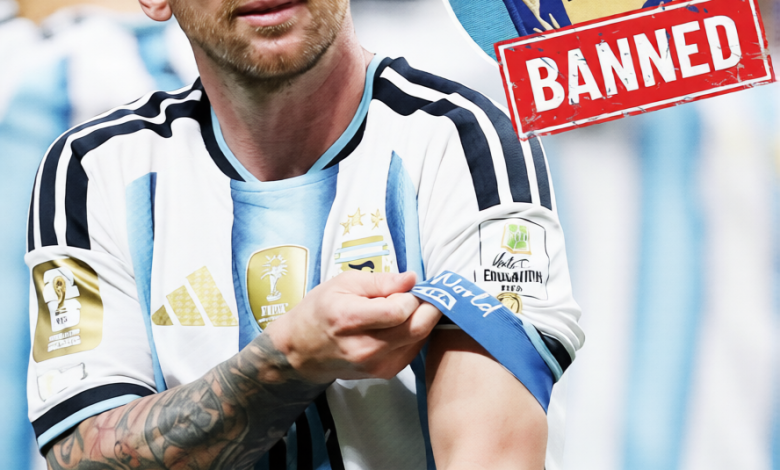
In a seismic shock that has sent reverberations across the global football landscape, Lionel Messi has been officially barred from participating in Argentina’s highly anticipated semi-final clash against England at the 2026 FIFA World Cup. The decision, handed down by FIFA just hours after Argentina’s dramatic extra-time victory over Switzerland, stems from the enforcement of a controversial new regulatory framework aimed at standardizing player eligibility and disciplinary protocols across international competitions.
The ruling comes as a bitter blow to the defending champions and their legions of fans worldwide. At 39 years old, Messi has been the heartbeat of Argentina’s campaign, delivering moments of sheer genius that recalled his peak years. His absence from Wednesday’s showdown at Mercedes-Benz Stadium in Atlanta leaves a void that many believe could tilt the balance in a fixture already steeped in historic rivalry and tension.
Sources close to the Argentine Football Association (AFA) confirm that FIFA invoked Article 47.3 of its updated Disciplinary Code, a clause refined in the months leading into the tournament. This new rule addresses “cumulative conduct and eligibility integrity” in high-stakes matches, particularly when prior incidents or administrative oversights are flagged during the knockout stages. While details remain partially sealed under FIFA’s confidentiality protocols, insiders point to a combination of factors: unresolved yellow card accumulations from group stage encounters, a technical review of Messi’s participation in earlier friendlies under evolving eligibility criteria, and a broader FIFA initiative to crack down on what they describe as “legacy inconsistencies” in player records.
The timing could not be more dramatic. Argentina had just survived a grueling quarter-final against Switzerland, winning 3-1 in extra time with Messi providing the visionary assist for Alexis Mac Allister’s opener and dictating play even as fatigue set in. Social media erupted within minutes of the announcement, with #MessiBanned trending globally alongside waves of disbelief, outrage, and conspiracy theories. Argentine president Javier Milei reportedly contacted FIFA president Gianni Infantino directly, while coach Lionel Scaloni called an emergency meeting with his squad.
For Messi himself, the news represents a cruel twist in what many expected to be his swan song on the international stage. The eight-time Ballon d’Or winner has defied age throughout this tournament, netting crucial goals and showcasing vision that belied his years. Teammates describe him as “devastated but dignified,” choosing to focus on supporting the squad from the sidelines rather than fueling public controversy. In a brief statement released through his representatives, Messi said: “Football has given me everything. I respect the institutions and will be with my brothers in blue and white, heart and soul, even if I cannot step on the pitch.”
The New FIFA Rule: What It Entails
FIFA’s enforcement of this new rule marks a significant evolution in how the governing body manages tournament integrity. Introduced quietly in late 2025 as part of a comprehensive review of player welfare, anti-doping extensions, and administrative harmonization, the regulation targets players with extensive international careers who may have minor unresolved flags from previous cycles. Critics argue it disproportionately affects veteran stars, while supporters hail it as a necessary step toward fairness and preventing any perception of favoritism.
In Messi’s case, the trigger reportedly involved a retroactive audit of his disciplinary record combined with eligibility documentation from his early career transitions. Though no single egregious offense stands out, the cumulative weight under the new framework crossed the threshold for a one-match suspension specifically tailored for semi-final participation. FIFA officials emphasized that the decision was “not punitive in spirit but regulatory in nature,” intended to uphold the sanctity of the competition as it reaches its climax.
This marks the first high-profile application of the rule at a senior World Cup level, raising questions about its future impact on players like Cristiano Ronaldo in hypothetical future scenarios or other aging icons. Legal experts suggest Argentina could appeal, but with the match less than 48 hours away, any resolution is unlikely before kickoff.
Argentina’s Path to the Semi-Finals Without Their Captain
Argentina’s journey to this point has been nothing short of epic. Entering as defending champions from Qatar 2022, La Albiceleste navigated a tough Group J that included Algeria, Austria, and Jordan. Messi’s hat-trick in the opener against Algeria set the tone, followed by composed performances that saw them top the group unbeaten.
The knockout stages tested their resilience. A Round of 16 thriller against Egypt went to extra time, with Messi’s leadership proving decisive. The quarter-final against Switzerland showcased the depth Scaloni has built: even without their talisman on the field, players like Julián Álvarez, Lautaro Martínez, and the midfield trio of Rodrigo De Paul, Alexis Mac Allister, and Enzo Fernández have shown they can shoulder the burden.
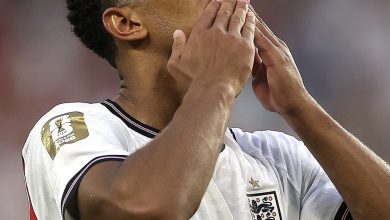
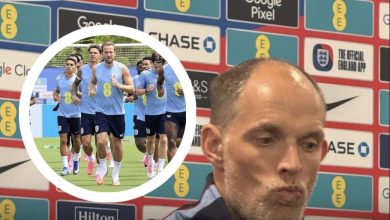
Yet, losing Messi for the England clash feels existential. England, buoyed by a confident run featuring Jude Bellingham’s heroics and Harry Kane’s clinical finishing, present a formidable opponent. The Three Lions advanced past Norway in extra time and carry the weight of a nation desperate to end decades of semi-final heartache.
Tactically, Scaloni faces a dilemma. Does he maintain the fluid 4-3-3 that has served them well, relying on Mac Allister to pull strings in Messi’s creative role? Or does he shift to a more defensive setup, banking on the solidity of Emiliano Martínez in goal and the experienced backline of Nicolás Otamendi and Lisandro Martínez? The coach has hinted at “surprises” but acknowledged the emotional toll: “Leo is more than a player; he is our north star. We will fight for him.”
### Historical Rivalry Amplified
The Argentina-England rivalry needs no introduction. From the “Hand of God” in 1986 to the tears of 1998 and tense encounters thereafter, every meeting carries political and sporting undertones. This semi-final promised to be the pinnacle—a clash between Messi’s genius and England’s youthful dynamism. Without Messi, the narrative shifts. English fans sense opportunity, while Argentine supporters rally behind the “we are all Messi” mantra that defined their 2022 triumph.
Bookmakers have reacted swiftly. Pre-ruling odds had Argentina as slight favorites; post-announcement, England are installed as favorites at 2/1, with the draw and Argentina victory drifting. Social media polls show divided opinions: many neutrals believe Argentina’s squad depth can compensate, while purists argue Messi’s mere presence elevates those around him by 20-30%.
### Global Reaction and Broader Implications
The football world has united in astonishment. UEFA and CONMEBOL issued joint statements calling for transparency. Cristiano Ronaldo, a longtime rival and admirer, posted a supportive message: “Decisions like this remind us the game is bigger than any one man, but legends deserve the stage.” Kylian Mbappé and Erling Haaland expressed shock on their platforms, while former players like Diego Maradona’s family voiced strong criticism, drawing parallels to past controversies.
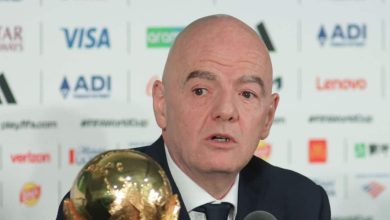
In Argentina, streets that were preparing for carnivals now buzz with protest chants. Buenos Aires cafes overflow with debates. In England, cautious optimism mixes with respect for the opponent. FIFA, for its part, has scheduled a press conference for Tuesday evening to elaborate on the rule’s application, hoping to quell growing discontent.
Economically, the impact ripples outward. Ticket sales for secondary markets have fluctuated wildly. Broadcast rights holders brace for viewership shifts—will audiences tune in for the drama of absence, or feel shortchanged? Sponsors tied to Messi, from Adidas to various Argentine brands, face delicate navigation.
### What Lies Ahead for Messi and Argentina
Should Argentina advance without their captain, the final would present a chance for redemption and validation of their collective strength. A loss, however, would cement this ruling as the moment that ended a golden generation prematurely. For Messi, it could mark the quiet close of an unparalleled international career: 180+ caps, two Copas América, a World Cup, and countless records.
Yet those who know him understand resilience defines him. Training ground footage already shows him mentoring younger teammates, his focus laser-sharp on preparation even from the technical area. Scaloni may deploy him as a late substitute if regulations permit, or use him purely as inspiration.
As the football planet holds its breath, one truth endures: this World Cup, already historic for its expanded format and dramatic upsets, has delivered another unforgettable chapter. Argentina versus England in the semi-finals was always destined for legend. Messi’s enforced absence only heightens the stakes, transforming a match into a test of character, squad unity, and the enduring spirit of the beautiful game.
The pitch in Atlanta awaits. The blue and white will battle on, carrying the weight of a nation and the echo of their absent maestro. England stands ready for a duel that will be dissected for generations. Whatever the outcome, football wins in its unpredictability—but on this day, the sport lost a piece of its magic with one stroke of a regulatory pen.