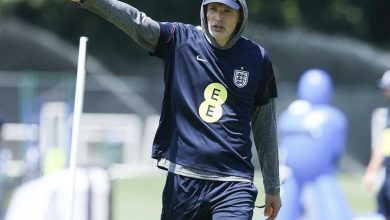
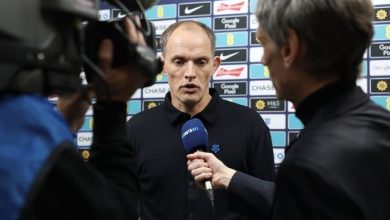
“THEY GET AWAY WITH EVERYTHING” – SOLBAKKEN SLAMS VAR AFTER NORWAY’S CLEAR GOAL IS DENIED

In a World Cup quarterfinal that will be remembered as much for its officiating controversies as for its footballing quality, Norway’s dream run came to a heartbreaking end with a 2-1 defeat to England. The match, played under sweltering South Florida conditions at Hard Rock Stadium, encapsulated the fine margins of modern elite football — and reignited fierce debates about the role of Video Assistant Referee (VAR) technology.
Norway, appearing in their first-ever World Cup quarterfinal, took a deserved lead through Andreas Schjelderup’s thunderous strike in the 36th minute. England equalized on the stroke of halftime via Jude Bellingham, but the goal was immediately mired in controversy. Later, a potential go-ahead goal for Norway was chalked off, prompting head coach Ståle Solbakken to unleash a scathing post-match critique of the officials and the system.
A Historic Clash Built on Momentum
Norway’s path to the last eight was nothing short of sensational. After a long absence from major tournaments, they stunned observers by topping their group and eliminating Brazil in the round of 16. Led by talismanic striker Erling Haaland, creative force Martin Ødegaard, and a disciplined collective under Solbakken, the Norwegians played with a blend of tactical maturity and Viking spirit that had fans roaring “Ro, ro, ro!” from the stands.
England, meanwhile, arrived as one of the pre-tournament favorites under manager Thomas Tuchel, boasting a squad rich in Premier League talent and World Cup pedigree. The Three Lions had navigated earlier rounds with a mix of grit and flair, with players like Bellingham and Harry Kane expected to shine. Yet on this humid evening, it was Norway who dictated much of the tempo, particularly after taking the lead.
Schjelderup’s opener was a moment of pure quality: a left-footed rocket from the edge of the box that left Jordan Pickford grasping at air. The Norwegian bench erupted, and for a period, it seemed as though the underdogs might pull off another giant-killing. Haaland, though well-marked, caused constant problems with his movement, while the midfield trio of Ødegaard, Oscar Bobb, and others controlled the center.
The Turning Point: Bellingham’s Equalizer and the “Cable Controversy”
Just before halftime, England struck back. Bellingham produced a moment of individual brilliance, cutting inside and firing a low shot past Ørjan Nyland. The goal leveled the scores at 1-1 and shifted momentum. However, replays quickly highlighted a highly unusual incident.
After a goal kick from Nyland, the ball appeared to strike one of the overhead skycam cables suspended above the pitch. The deflection dropped the ball favorably for England’s Anthony Gordon, who assisted Bellingham. Under FIFA rules, contact with external objects like camera equipment should typically result in a dropped ball and a stoppage in play. Former Premier League referee Mark Clattenburg, commentating for FOX Sports, noted that VAR should have intervened as it was part of a reviewable attacking phase leading to a goal.
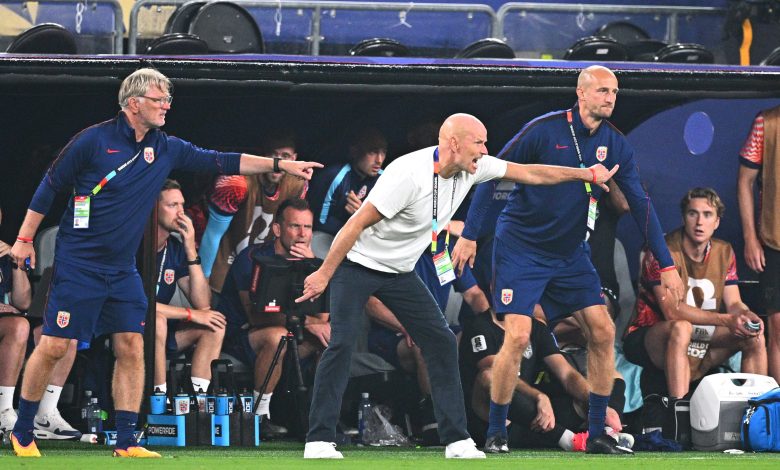
Norway’s players and staff immediately protested. Cameras captured Solbakken in an animated discussion with French referee Clément Turpin at halftime. Reports emerged of the coach hurling a water bottle in frustration on the touchline, narrowly missing a member of his own staff. FIFA later issued a statement claiming sensor data from the “connected ball” showed no evidence of contact with the wire, a defense that did little to quell the outrage.
This incident became instant fodder for pundits and fans. “The Cable of God,” some called it, drawing parallels to infamous VAR controversies of the past. For Norway, it represented another instance where technology — or its inconsistent application — appeared to favor the bigger nation.
Second-Half Drama and the Disallowed Goal
The second half belonged largely to Norway. They created the better chances, with Kristoffer Ajer rattling the crossbar. Then, in the 55th minute, Torbjørn Heggem appeared to put Norway ahead 2-1, bundling home a corner kick scramble. Celebrations were wild — until VAR intervened once more.
Officials reviewed the build-up and ruled that Haaland had committed a foul by shoving England’s Elliot Anderson earlier in the sequence. The decision was marginal at best; footage showed typical set-piece jostling rather than a clear violent act. Solbakken and his players were incensed. The goal was disallowed, the score remained 1-1, and England eventually found a winner in extra time through Bellingham again.
Post-match, Solbakken did not hold back. In comments widely interpreted as the source of the headline quote, the experienced coach lambasted the officials and VAR system. “They get away with everything,” he reportedly fumed, referring to what he saw as repeated favorable decisions for England. In a tearful television interview, he described the evening as “top-level sport at its worst — or best, depending on which side you’re on,” while praising his players’ effort. “We didn’t get the margins today.”
Broader Implications for VAR and the Beautiful Game
This match underscores ongoing frustrations with VAR. Introduced to eliminate clear and obvious errors, the system has increasingly become a source of stop-start football and subjective controversy. Incidents like the cable deflection highlight technological and procedural gaps: not every stadium setup or broadcast angle captures every variable, and sensor data can conflict with visual evidence.
Solbakken has been a vocal critic of VAR’s expansive role in the past, advocating for its use only in the most blatant cases to preserve the game’s flow. His post-match outburst echoes sentiments from coaches across the sport who feel the human element — referee judgment — is being undermined by over-reliance on technology that still requires human interpretation.
For England, the victory propels them toward a potential semifinal, keeping their World Cup hopes alive despite an unconvincing performance. Tuchel’s side showed resilience but will need to improve markedly against stronger opposition. Bellingham’s two goals cemented his status as a big-game player.
For Norway, elimination stings deeply. This generation, featuring superstars like Haaland and Ødegaard, has elevated the national team to new heights. Reaching the quarterfinals is a massive achievement for a country with a population of just over 5 million, and the experience gained will fuel future ambitions. Solbakken, whose own playing and coaching journey includes surviving a heart attack at age 33 and building success across clubs in multiple countries, has forged a resilient squad that believes it belongs at the top table.
The coach’s tactical acumen was evident throughout the tournament. Norway blended defensive organization with quick transitions, often frustrating more illustrious opponents. Against England, they matched the physicality and technical quality expected at this stage, only to be denied by the finest of margins and contentious calls.
Emotional Scenes and National Pride
As the final whistle blew, Norwegian players sank to the turf in disbelief. Haaland, a figurehead for the nation’s footballing renaissance, cut a frustrated figure, while Ødegaard tried to console teammates. Solbakken, ever the fighter, gathered his squad to applaud the traveling supporters who had created a wall of noise despite the result.
In Norway, the reaction was one of immense pride mixed with frustration. Social media buzzed with debates over the cable incident and the disallowed goal, with many calling for greater transparency from FIFA. The team’s run — from group-stage progression to knocking out Brazil and reaching the last eight — has united a football-mad country and inspired a new generation of players.
England will reflect on a hard-fought win that exposed vulnerabilities. While Bellingham’s quality shone through, the team struggled to dominate possession and create clear chances against Norway’s structured defense. Tuchel will know improvements are needed if they are to lift the trophy.
Lessons for the Future of Football
The controversies in this quarterfinal add to a growing list of high-profile VAR debates at major tournaments. Questions remain about consistency in decision-making, the use of broadcast angles versus on-field technology, and the balance between accuracy and the game’s natural flow. Calls for semi-automated offside technology and clearer protocols for external interference are likely to intensify.
Solbakken’s outspoken nature has always been part of his appeal. His willingness to challenge the status quo, whether in squad selections or officiating critiques, stems from a deep passion for the sport and a desire to protect his players. While his comments may draw scrutiny from governing bodies, they resonate with fans tired of decisions that overshadow the action on the pitch.
As the 2026 World Cup progresses, Norway’s players return home as heroes. Their achievement proves that with the right blend of talent, preparation, and belief, even smaller football nations can compete with the giants. For Solbakken, this campaign cements his legacy as the architect of Norway’s modern golden era.
The beautiful game delivered drama, controversy, and excellence in Miami. While England advances, Norway’s spirit and near-miss will linger long after the final is played. In the end, football’s unpredictable nature and the endless debate it provokes are what keep billions captivated.