FIFA announces dismissal of seven staff members after alleged leak of final decision on Jarell Quansah’s red card

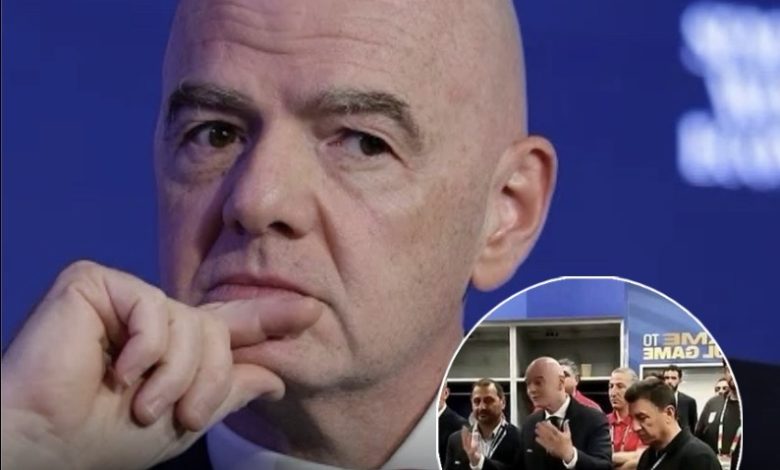
FIFA has once again found itself at the centre of a major controversy after reports emerged claiming that seven members of staff have been dismissed following the alleged leak of confidential information relating to the governing body’s final decision on England defender Jarell Quansah’s World Cup red card.
The incident has added another dramatic twist to an already controversial disciplinary saga that has dominated headlines throughout the 2026 FIFA World Cup. While FIFA has been under intense scrutiny over its handling of disciplinary matters, particularly after the unprecedented suspension of Folarin Balogun’s one-match ban, attention has now shifted to the organisation’s own internal security procedures.
According to the reports, FIFA acted after confidential details surrounding Quansah’s disciplinary case were allegedly shared before the governing body officially communicated its final ruling. Although FIFA has yet to publicly identify those allegedly involved, the reported dismissals demonstrate how seriously the organisation views the protection of confidential disciplinary processes.
Quansah decision sparked worldwide debate
The controversy began during England’s dramatic 3-2 victory over Mexico in the World Cup knockout stages when Jarell Quansah received a straight red card following a VAR review.
Referee Alireza Faghani initially allowed play to continue before being instructed to review the incident on the pitch-side monitor. After examining the footage, he upgraded the challenge to a straight red card, leaving England to finish the match with ten players.
The dismissal immediately ruled Quansah out of England’s quarter-final clash with Norway under FIFA’s disciplinary regulations.
However, the situation became far more controversial after FIFA used Article 27 of its disciplinary code to suspend the punishment handed to United States striker Folarin Balogun, allowing him to feature in his country’s next World Cup match despite also receiving a red card earlier in the tournament. That extraordinary decision led to widespread criticism from football authorities, politicians and supporters, who questioned whether similar treatment should be extended to Quansah. (Reuters)
Internal leak reportedly forced FIFA into action
Against that backdrop, reports now claim that confidential information regarding FIFA’s final position on Quansah’s case was leaked before the official announcement.
For any governing body, maintaining confidentiality throughout disciplinary proceedings is considered essential. Premature disclosure of decisions can undermine trust in judicial processes, fuel unnecessary speculation and create concerns over fairness.
If the reports are accurate, FIFA’s reported dismissal of seven staff members would represent one of the strongest internal disciplinary actions taken by the organisation in recent years.
The alleged move also sends a message that leaks involving confidential disciplinary matters will not be tolerated, particularly during the world’s biggest football tournament where every decision receives global attention.
Pressure had continued to mount
England’s Football Association was reported to be exploring every possible option after Quansah’s dismissal, especially following FIFA’s controversial handling of Balogun’s suspension.
Thomas Tuchel questioned the consistency of FIFA’s disciplinary approach, asking where the governing body should draw the line if one suspension could effectively be paused while others remained in place. Football pundits and former players also debated whether Quansah deserved identical treatment given the precedent created earlier in the tournament. (TalkSport)
Those discussions generated enormous public interest, making any confidential information surrounding FIFA’s deliberations particularly sensitive.
Why confidentiality matters
Major sporting organisations rely heavily on confidential disciplinary procedures to protect the integrity of investigations.
Before decisions become official, multiple departments—including legal teams, disciplinary committees and communications staff—may have access to sensitive documents.
Leaks can create several problems:
- They undermine confidence in the decision-making process.
- They generate confusion before official confirmation.
- They increase speculation across media platforms.
- They place additional pressure on governing bodies before announcements are finalised.
For FIFA, protecting that information is especially important during the World Cup, where disciplinary rulings can directly affect national teams competing for football’s biggest prize.
Fan reaction
The reported development has generated mixed reactions across social media.
Some England supporters believe the focus should remain on ensuring disciplinary consistency rather than internal FIFA investigations. Many continue to argue that Quansah deserved the same consideration afforded to Balogun following FIFA’s unprecedented decision.
Others believe FIFA had little choice but to act decisively if confidential information was indeed leaked, arguing that sporting integrity depends not only on fair decisions but also on secure judicial procedures.
Among Nigerian football fans, discussions have largely centred on the wider issue of transparency within football governance. Many supporters have questioned whether the governing body must now work harder to rebuild confidence following several controversial disciplinary decisions during the tournament.
Bigger implications for FIFA
Regardless of the outcome of Quansah’s disciplinary case, the reported dismissals could have lasting consequences for FIFA’s internal operations.
The governing body may now review its security protocols, restrict access to confidential judicial documents and introduce stronger safeguards to prevent future leaks.
With the World Cup reaching its decisive stages, FIFA will also be eager to ensure that attention returns to football rather than continued controversy surrounding disciplinary matters.
The organisation has repeatedly insisted that its judicial bodies operate independently and that decisions are made according to the regulations. Nevertheless, recent controversies surrounding player suspensions, political scrutiny and now the reported internal leak have placed FIFA under intense public examination. (Reuters)
As football fans await further official clarification, the incident serves as another reminder of how closely every FIFA decision is monitored during a World Cup. Whether the reported dismissal of seven staff members ultimately restores confidence or raises further questions will depend on the governing body’s willingness to provide transparency in the days ahead.