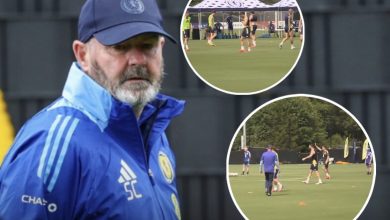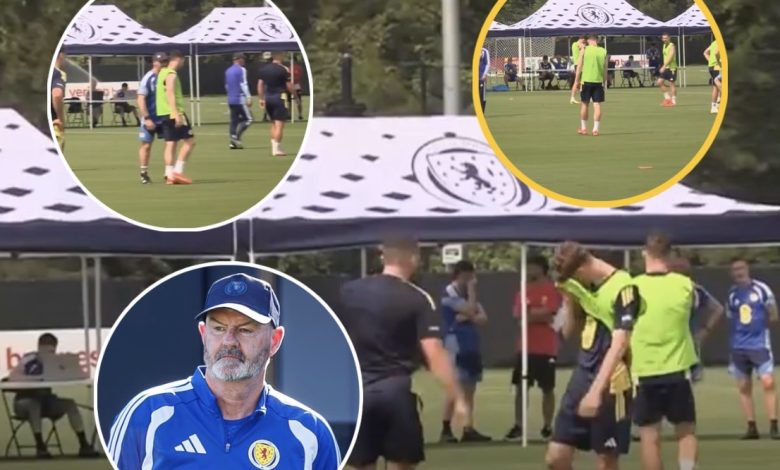
Scotland’s preparations for their upcoming international clash against Haiti have been disrupted after one of the national team’s key players reportedly became unwell during a training session in the United States.
The 25-year-old midfielder was forced to abandon training after repeatedly vomiting on the sidelines, causing immediate concern among teammates, coaching staff, and medical personnel. Witnesses at the session described a worrying scene as the player struggled to complete even basic drills before eventually being escorted away for further assessment.
The Scottish Football Association later confirmed that the player had “taken ill” and would not be available for selection against Haiti as a precautionary measure.
While officials have not disclosed the exact nature of the illness, the incident has sparked widespread discussion among supporters, with many questioning whether the player may have been battling symptoms before Scotland’s arrival in the United States.
The timing could hardly be worse for Scotland, who were hoping to build momentum and fitness ahead of a crucial period on the international calendar.
Disturbing Scenes During Training
Training sessions are usually routine affairs, especially in the final days leading up to a friendly international fixture. However, what began as a normal morning workout quickly turned into a medical concern.
According to reports from the training ground, the midfielder appeared uncomfortable shortly after warm-ups began. Coaches initially believed he might simply be struggling with the heat and humidity, conditions that can often affect players arriving from Europe.
As drills intensified, however, it became clear that something was wrong.
The player reportedly stopped several times to catch his breath before eventually vomiting near the training area. Medical staff rushed to his aid and attempted to assess his condition while training continued elsewhere.
What alarmed observers most was the fact that the vomiting did not appear to be an isolated incident. Sources indicated that the midfielder was sick multiple times over a relatively short period, leading medical personnel to remove him from the session entirely.
The player did not return to training.
Within hours, Scotland’s medical department had begun monitoring his condition closely.
Official Statement Confirms Absence
Later in the day, Scotland officials released a brief statement addressing growing concerns.
The statement confirmed that the player had become ill during training and would not be involved in the upcoming fixture against Haiti.
Importantly, the statement avoided speculation regarding the cause of the illness.
Medical teams are expected to continue evaluating the player over the coming days, with further updates likely depending on his recovery progress.
The decision to withdraw him from the match was reportedly made quickly, with coaching staff unwilling to take risks regarding his health.
Modern football increasingly prioritises player welfare, and national teams rarely gamble with illnesses that could worsen through physical exertion.
For Scotland manager Steve Clarke and his coaching staff, the priority now becomes ensuring the player recovers fully rather than rushing him back into action.
Was He Already Unwell Before Travelling?
One of the biggest questions emerging from the incident concerns whether the player may have been feeling ill before the squad departed for the United States.
Although no evidence has been presented to confirm this theory, some observers have pointed to the sudden severity of the symptoms.
Vomiting repeatedly during training can sometimes indicate a condition that developed over several days rather than hours.
Possible explanations could include:
- A viral infection.
- Food-related illness.
- Travel fatigue.
- Dehydration.
- Heat-related exhaustion.
- Stomach complications aggravated by intense exercise.
Long-haul flights can also place significant strain on athletes.
Changes in sleep patterns, meal schedules, hydration levels, and climate can all impact the body’s ability to perform at peak levels.
If the player had been carrying even minor symptoms before departure, the demands of international travel and training may have intensified the issue.
However, until medical staff provide more details, any suggestion regarding the cause remains purely speculative.
A Major Blow for Scotland
Regardless of the illness itself, the player’s absence represents a significant setback.
At just 25 years old, the midfielder has become one of Scotland’s most important performers.
His energy, work rate, and tactical intelligence have made him a crucial component of Steve Clarke’s system.
Over recent years, Scotland have built much of their success around a disciplined midfield structure capable of competing against technically superior opponents.
The missing midfielder has often been central to that approach.
His ability to break up attacks, retain possession, and support both defensive and attacking phases gives Scotland balance throughout the pitch.
Without him, Clarke may be forced to reshuffle his midfield entirely.
Tactical Impact Against Haiti
The Haiti fixture may be viewed by some as a friendly encounter, but every international match serves a purpose.
Managers use these games to test combinations, evaluate squad depth, and maintain momentum.
Losing a key midfielder shortly before kickoff creates several tactical problems.
Firstly, Scotland lose an experienced presence in central areas.
Midfield is often described as the engine room of a football team, and sudden changes can disrupt established partnerships.
Secondly, replacement players may require adjustments in tactical responsibilities.
A more defensive midfielder might limit Scotland’s attacking threat.
Conversely, a more attack-minded option could leave gaps defensively.
Clarke now faces important decisions regarding formation and personnel.
Should he maintain his preferred structure and simply replace the player?
Or should he alter the system entirely?
These questions become increasingly relevant when key players are unavailable.
Opportunity for Squad Players
Every injury or illness creates opportunities elsewhere.
Several Scotland squad members will now believe they have a chance to impress.
International football differs significantly from club football because opportunities can be limited.
Some players spend months waiting for a start.
The Haiti match may now provide exactly that chance.
Young midfielders in particular will recognise the opportunity to showcase their abilities on the international stage.
Strong performances could influence future squad selections and potentially alter the pecking order moving forward.
Steve Clarke has consistently emphasised competition for places.
The absence of one star therefore creates an opening for another.
Teammates Rally Around Midfielder
One encouraging aspect of the incident has reportedly been the response from teammates.
Several players were said to have checked on the midfielder immediately after training.
The Scotland squad has developed a reputation for unity under Steve Clarke.
That spirit has been a major factor behind the team’s recent progress.
Players frequently speak about the close relationships within the camp and the supportive environment created by coaching staff.
Those qualities become especially important when a teammate is dealing with health concerns.
While football often focuses on results and performances, moments like these serve as reminders that player wellbeing comes first.
Fan Concern Grows Online
News of the illness quickly spread across social media.
Supporters expressed concern for the player’s health while also discussing the impact his absence could have on Scotland’s performance.
Many fans wished him a speedy recovery.
Others debated possible causes, ranging from travel-related fatigue to viral illness.
As is often the case with modern football, speculation spread rapidly.
However, most supporters appeared united in one view: the player’s recovery is more important than any individual match.
International fixtures come and go, but player health remains paramount.
Medical Staff Face Important Decisions
The coming days will likely determine when the midfielder can safely return to training.
Medical teams must establish not only what caused the illness but also whether there is any risk of recurrence.
Elite athletes operate under carefully monitored conditions.
Even minor illnesses can significantly impact performance levels.
Returning too soon could increase the risk of complications.
Consequently, Scotland’s medical staff are expected to take a cautious approach.
The player may require rest, hydration treatment, nutritional monitoring, and further medical examinations before receiving clearance to resume full training.
Looking Ahead
Scotland will now attempt to focus on the Haiti match despite the disruption.
Steve Clarke’s side has overcome setbacks before and possesses enough squad depth to remain competitive.
Nevertheless, losing an influential midfielder so close to kickoff is far from ideal.
The hope throughout the camp will be that the illness proves temporary and that the player can return to action quickly.
For now, though, the image of the Scotland star repeatedly vomiting during training serves as an unwelcome reminder that even elite athletes remain vulnerable to sudden health issues.
As supporters await further updates, the focus remains firmly on recovery.
Scotland may be disappointed to lose a key player for the Haiti clash, but the priority is ensuring that the 25-year-old returns to full health and is ready to contribute again in the weeks ahead.
Until then, Steve Clarke and his squad must adapt, regroup, and prepare for Haiti without one of their most important midfield figures.