SPFL ANNOUNCED SCOTTISH REFEREE DEPARTURE AFTER THEY REVEALED HE HAD WORKS FOR CELTIC FOR WHOLE YEARS
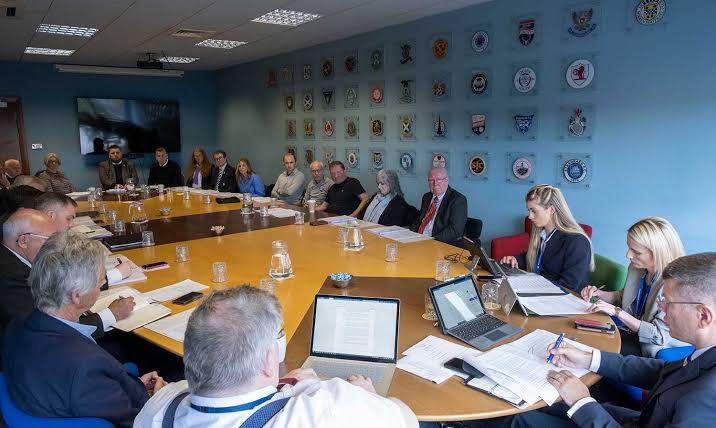
The SPFL’s announcement confirming the departure of a Scottish referee following revelations that he had worked for Celtic for several years has sent shockwaves through Scottish football. Regardless of club loyalties, the situation strikes at the heart of a sport that depends heavily on trust, credibility, and the belief that matches are officiated fairly. When that trust is damaged, the consequences extend far beyond one individual or one club.
At the core of the controversy is not simply the referee’s departure, but the question of transparency. Referees, like players and managers, operate under intense scrutiny. Fans accept mistakes as part of the game, but they struggle to accept decisions when there is even a perception of hidden bias. The revelation that a referee had professional ties to a top club for years inevitably fuels suspicion, particularly in a league where every decision is magnified and often interpreted through the lens of rivalry.
For many supporters, this announcement appears to confirm long-held fears that Scottish football’s officiating structures are not as independent as they should be. Whether those fears are justified or not, perception matters. Once supporters begin to believe the system is compromised, faith in results, league standings, and even disciplinary decisions starts to erode. That is a dangerous place for any competition to be.
The SPFL’s handling of the matter is therefore crucial. While the referee’s exit may be seen as decisive action, it also raises uncomfortable questions. How was this relationship allowed to exist without disclosure? Were safeguards in place to prevent potential conflicts of interest? And perhaps most damaging of all, how many other undisclosed connections might exist within the system? Silence or vague explanations only deepen suspicion and anger among fans.
This episode also highlights the wider challenge facing referees in Scotland. Officials already operate in a hostile environment, where abuse and criticism are commonplace. Situations like this make their job even harder, as every controversial decision will now be viewed with increased cynicism. Honest referees, with no conflicts whatsoever, may find themselves unfairly tarred by association.
For rival clubs and their supporters, the announcement inevitably reopens old wounds. Decisions from previous seasons will be re-examined, controversial calls replayed, and narratives of favoritism reinforced. Even if no wrongdoing occurred on the pitch, the lack of clear boundaries off it allows speculation to flourish unchecked.
Ultimately, this moment should serve as a wake-up call for the SPFL. Stronger governance, clearer disclosure rules, and full transparency around officials’ backgrounds are essential if confidence is to be restored. Scottish football cannot afford to operate in grey areas when credibility is on the line.
If the league is serious about fairness, this should not be the end of the conversation but the beginning of reform. Only through openness and accountability can the SPFL rebuild trust and ensure that the focus returns to football itself, rather than the integrity of those entrusted to officiate it.








Post Comment