DON ROBERTSON HAS FINALLY REVEALED WHY HE FAILS TO AWARD PENALTY TO RANGERS, FANS LEFT FUMING OVER HIS REASONS
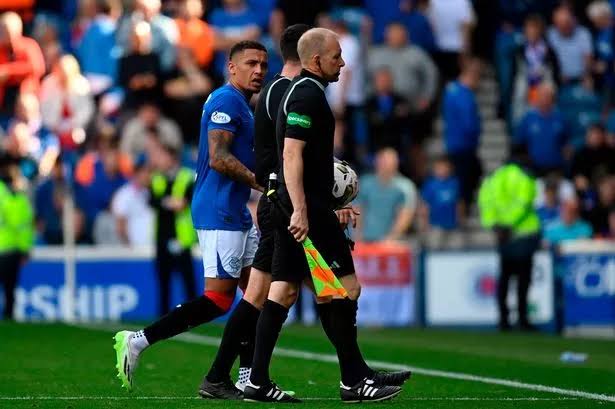
The recent revelation by referee Don Robertson explaining why he failed to award a penalty to Rangers has ignited intense debate across Scottish football, leaving Rangers fans furious and questioning the consistency of officiating in the league. The incident, which occurred during a high-stakes match, was widely viewed as a pivotal moment that could have altered the outcome. For many supporters, the lack of a penalty felt like yet another example of decisions going against Rangers at crucial times.
According to Robertson, his reasoning was based on his interpretation of the Laws of the Game and his on-field assessment of the incident. He stated that, from his angle, there was insufficient contact to justify a penalty and that the player involved appeared to initiate or exaggerate the fall. Robertson emphasized that referees are trained to judge not only contact but also intent, balance, and the natural movement of players. In his view, the challenge did not meet the threshold required for a clear and obvious foul inside the box.
However, this explanation has done little to calm the storm. Rangers fans argue that video replays clearly show contact and that similar incidents in other matches have resulted in penalties being awarded. This has raised familiar concerns about inconsistency, with supporters asking why the same standards are not applied uniformly across games and teams. For them, the issue is not just this single decision but a broader pattern that fuels distrust in officiating.
The controversy also reignites debate around VAR and its role in Scottish football. Many fans believe VAR should have intervened to correct what they see as an obvious error. Robertson’s comments suggest that VAR either agreed with his assessment or did not believe the decision met the criteria for intervention. This has left supporters confused about where the line is drawn and frustrated by the lack of transparency in how VAR decisions are communicated to the public.
From a referee’s perspective, Robertson’s explanation highlights the immense pressure officials face. Decisions are made in real time, often within seconds, and referees must rely on positioning, experience, and instinct. While slow-motion replays can make incidents appear clearer, referees do not have that luxury on the pitch. Still, fans argue that this is precisely why VAR exists—to assist when human error is possible.
Ultimately, the fallout from Robertson’s revelation goes beyond one missed penalty. It touches on trust, accountability, and the relationship between fans and match officials. For Rangers supporters, the feeling of injustice is magnified because results matter deeply in title races and European qualification battles. A single decision can have lasting consequences.
In conclusion, Don Robertson’s reasons for not awarding a penalty may align with his interpretation of the rules, but they have failed to satisfy an already frustrated Rangers fanbase. Until officiating becomes more consistent and transparent, incidents like this will continue to spark outrage, deepen divisions, and dominate conversations long after the final whistle.
Share this content:






Post Comment