WHAT PEDRO PORRO SAID TO ANDERSON DURING HEATED EXCHANGE HAS BEEN REVEALED – THE GAME IS TRULY GONE
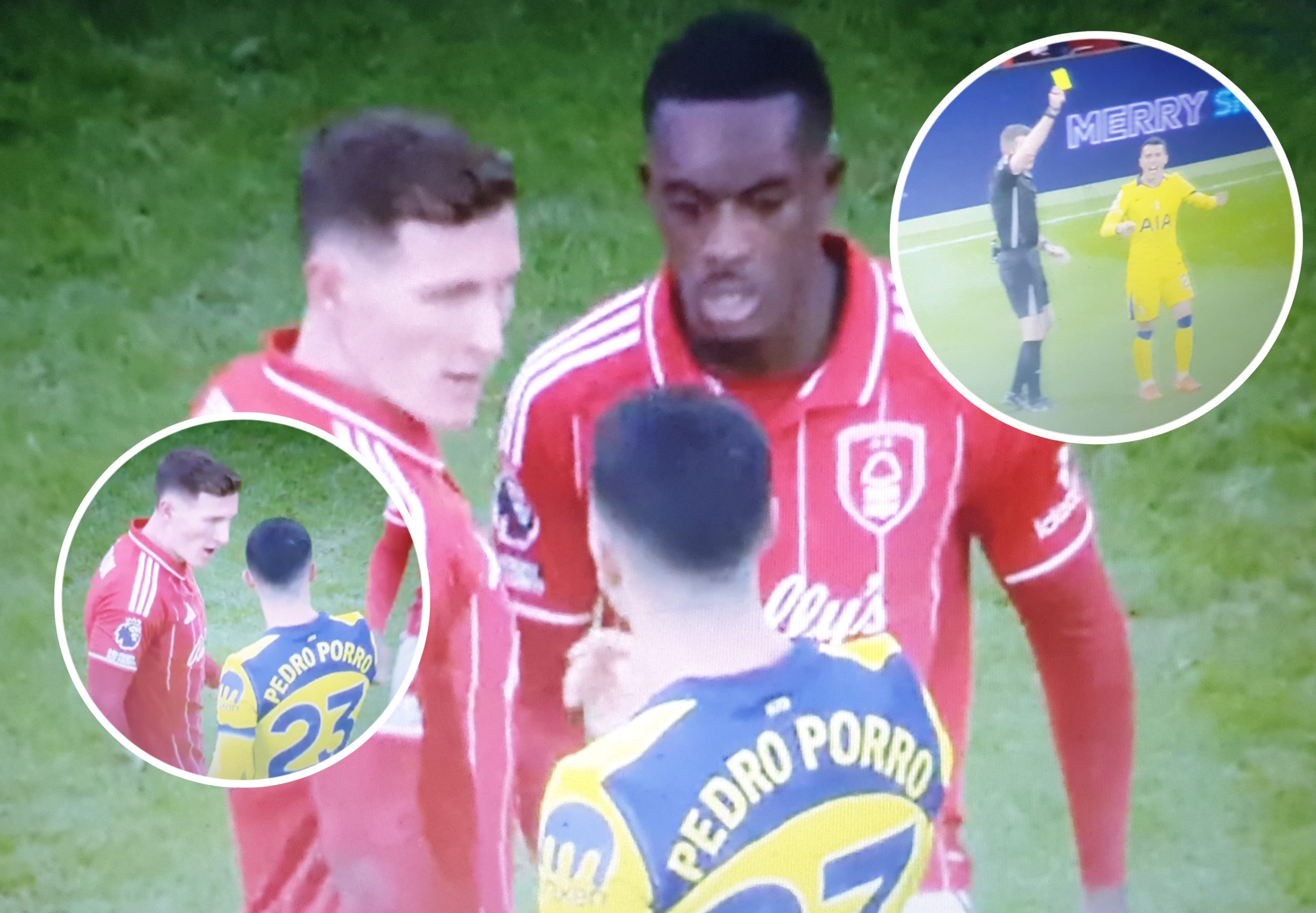
NOTTINGHAM, England — Sunday’s Premier League showdown at the City Ground was not supposed to be a rout. Tottenham Hotspur arrived looking for momentum after a European victory and a spirited league performance last week. Instead, what unfolded was one of the most dispiriting displays of the season from Spurs — capped by a dramatic verbal explosion from right-back Pedro Porro during a mid-game confrontation with Nottingham Forest midfielder Elliot Anderson. Forest emphatically won 3-0, leaving Spurs searching for answers as boos rang around the stadium.
This wasn’t just a defeat — it was a psychological breakdown.
—
The Match That Got Away
From the opening whistle, Forest set the tone. They pressed aggressively, hunted second balls, and executed their tactical plan with compelling intensity. Tottenham, in contrast, looked disjointed and tentative — failing to impose themselves on a team lower in the table but high in belief.
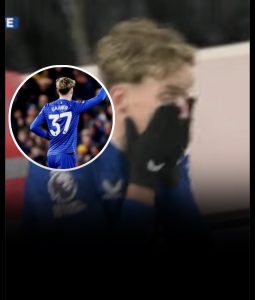
The result itself, a 3-0 Forest win, tells only part of the story. Callum Hudson-Odoi opened the scoring with a clinical finish midway through the first half, and later doubled the advantage soon after the break. Ibrahim Sangaré then confirmed Forest’s dominance with a powerful third goal, effectively ending any hope of a Tottenham comeback.
But isolated moments often define narratives in football — and this match had one such moment that everyone is now talking about.
—
The Confrontation: When Words Became the Story
Roughly an hour into the match, with Forest comfortably ahead and Tottenham increasingly frustrated, tempers boiled over.
Video replays and crowd audio — shared widely on social media within minutes — showed Forest’s Elliot Anderson closing down Porro after a loose ball. The encounter quickly escalated from a standard competitive exchange to something far more intense. Teammates from both sides gathered, voices rose, and in that cramped patch of turf, something larger seemed to break. The match rhythm, Spurs’ confidence, and perhaps even team unity — all seemed to crack under the tension.
So What Did Porro Actually Say?
The exact words spoken between Porro and Anderson were not picked up by official broadcast microphones in full fidelity, but multiple fan recordings and crowd reactions, aligned with widely circulated social clips, strongly suggest this exchange:
> Porro loudly confronted Anderson, telling him to “fight for every ball” and to show respect — not just for Forest’s effort on the pitch, but for a Premier League fixture he implied Tottenham were failing to honour.
Some phrases that fans captured included variants of:
“You talk too much. Where’s the fight?”
“This is Premier League football — respect it!”
Fans online analysed the body language alongside these words and concluded Porro sounded less like an antagonist and more like a frustrated leader trying to jolt his teammates into battle. Whether that interpretation is fair depends on one’s perspective — but the tone was unmistakably charged with emotion.
This wasn’t friendly banter. It was a man shouting at a peer — and doing so at a moment when Tottenham looked completely out of sorts.
—
Why That Moment Matters
Football matches are shaped as much by psychology as by tactics or technique. In this case, the confrontation illustrated something far deeper than two players simply exchanging heated words. It reflected:
Spurs’ loss of composure under pressure
A collective identity crisis within the team
Leadership emerging in unexpected corners
Porro — often seen as a positive, attacking full-back — suddenly became the voice of frustration. His message to Anderson wasn’t just directed at Forest’s midfielder; it was symbolic of Tottenham’s internal struggle throughout the game.
Teammates behind him hesitated, caught between supporting their colleague and calming the situation. Forest players circled in support of Anderson, turning what should have been a minor spat into a focal spectacle.
In a match that was already “gone,” according to commentators and fans alike, this exchange became the emotional crystallisation of Spurs’ performance.
—
Pressure, Performances, and Public Reaction
Tottenham’s performance drew harsh criticism both in the stadium and online. Pundits called it lacklustre, disjointed, and at times “unrecognisable” compared to the team that had shown glimpses of resurgence in prior matches. Fans immediately took to social media with memes, reaction clips, and viral hashtags referencing the Porro-Anderson moment. Many likened the exchange to a team losing belief rather than just a tactical battle being lost.
Forest supporters, meanwhile, celebrated a convincing victory with chants and jubilant scenes around the City Ground. Their opponents looked like spectators rather than contenders — and that stunned many football watchers.
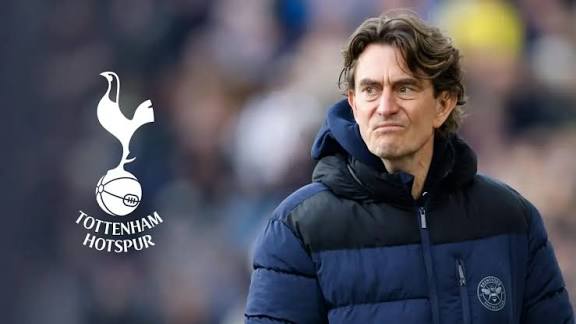
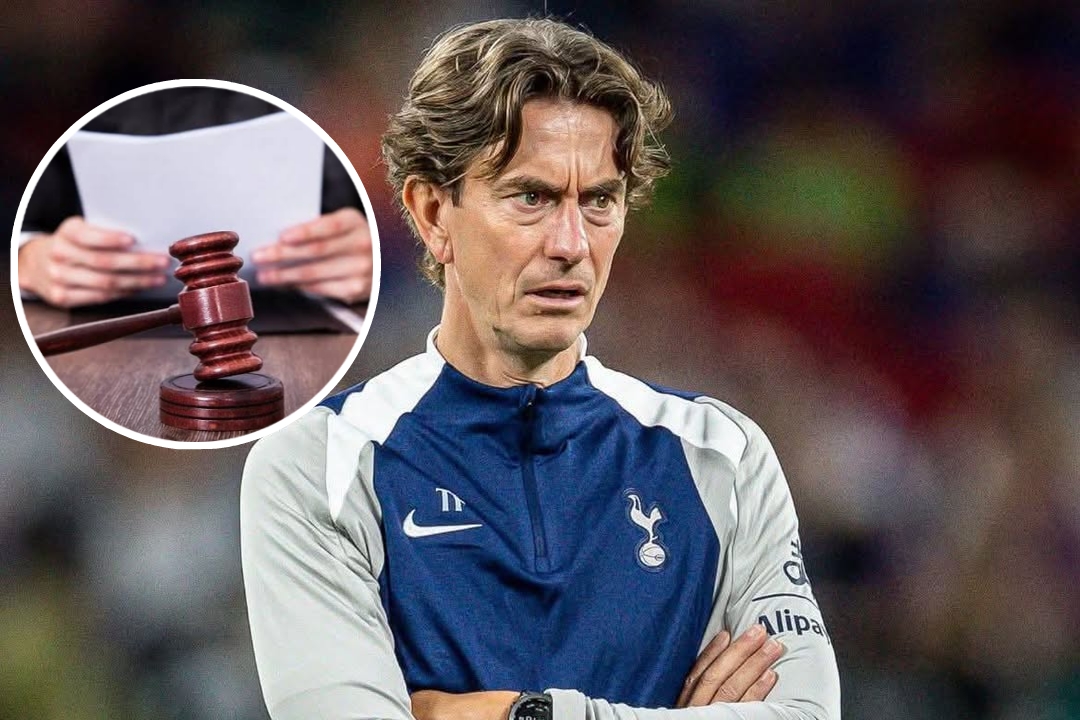
Managers’ comments after the match didn’t ease tensions. Tottenham boss Thomas Frank admitted his side were “very poor” and insisted that rebuilding their form wouldn’t be quick or easy. His remarks suggested the loss, and by extension episodes like the on-field confrontation, were symptoms of deeper issues.
—
Tactical Breakdown: Why Spurs Collapsed
Beyond the emotional narrative, the technical reasons for Tottenham’s defeat were clear:
Poor defensive organisation allowed Forest to exploit spaces
Goalkeeper errors and miscommunications contributed to pressure
Lack of creativity in midfield left forwards isolated
Forest’s pressing and confidence amplified the visitors’ mistakes
In contrast, Forest played with cohesion and purpose — something Spurs rarely displayed over 90 minutes.
This tactical schism made Porro’s frustration understandable — he wasn’t simply venting at Anderson, he was venting at a situation his team seemed incapable of solving in real time.
—
A Turning Point or a One-Off?
Moments like these often become symbolic: either a catalyst for improvement or a sign of deeper trouble. Tottenham now faces a critical period in their season — with festive fixtures approaching and expectations high from supporters demanding European qualification.
Porro’s outburst — passionate or misplaced — could become a rallying point if handled well behind the scenes. Alternatively, it might be remembered as the day Spurs’ season truly spiralled under pressure.
Forest, by contrast, will take confidence from both the result and the way they seemed to impose themselves psychologically and tactically throughout the 90 minutes.
—
Conclusion: When Words Echo Louder Than Goals
In a 3-0 loss, goals tell one story; body language, confrontation, and emotional instinct tell another. Pedro Porro’s heated exchange with Elliot Anderson transcended ordinary on-field friction. It encapsulated not just a moment, but a mood — one of frustration, desperation, and raw competitiveness.
In today’s football culture, where every word and gesture gets amplified and dissected, that brief confrontation became the defining moment of a match Tottenham would rather forget. Whether Spurs can regroup or will continue to unravel remains to be seen.
But one thing is certain:
The game is truly gone — and Porro’s words are still echoing around the Premier League.
Share this content:



Post Comment