SUNDERLAND CHANT NAMED BEST IN ENGLAND AFTER WINNING THE FIRST TYNE–WEAR DERBY AS FANS STUN THE STADIUM OF LIGHT
A Derby Reborn: Historical Context and Cultural Gravity
On 14 December 2025, football fans across England experienced something electric and long-awaited: the rekindling of one of the nation’s fiercest football rivalries. For the first time in nine years, Sunderland A.F.C. and Newcastle United faced off in a Premier League Tyne–Wear derby at the Stadium of Light, the home of Sunderland. The tension, anticipation, and sheer emotional magnitude of the occasion rivalled any domestic fixture this season.
The Tyne–Wear derby occupies a unique place in English cultural life. Beyond the ninety minutes punctuated by tackles and goals, this fixture encapsulates deep social, historical, and regional identities. The proximity of the two cities (just over 15 miles apart) and their intertwined industrial histories have ensured that every encounter between the Black Cats and the Magpies is more than a game: it’s a symbolic contest for regional pride.
In the lead-up to this match, pundits, statisticians, and fans all highlighted the historical significance of the fixture – one that had been dormant in league competition since March 2016. Sunderland, rising from past relegations and working their way back into top-flight relevance, met Newcastle United with confidence and energy amplified by a sold-out Stadium of Light buzzing with anticipation.
The Match That Shook the North East
From a strictly competitive standpoint, the match itself delivered in drama, tension, and a narrative befitting its cultural weight. Despite the high stakes and cauldron-like atmosphere, the game was poised, defensively disciplined, and ultimately decided by an incident that defied conventional expectations.
In the second half, the breakthrough came not through a classic striker’s finish, but via an own goal — a rare, gut-wrenching moment where Newcastle’s Nick Woltemade inadvertently turned the ball into his own net. The unsettled ball ricocheted off Woltemade’s header and into the back of the Newcastle goal, immediately igniting pandemonium among the home support.
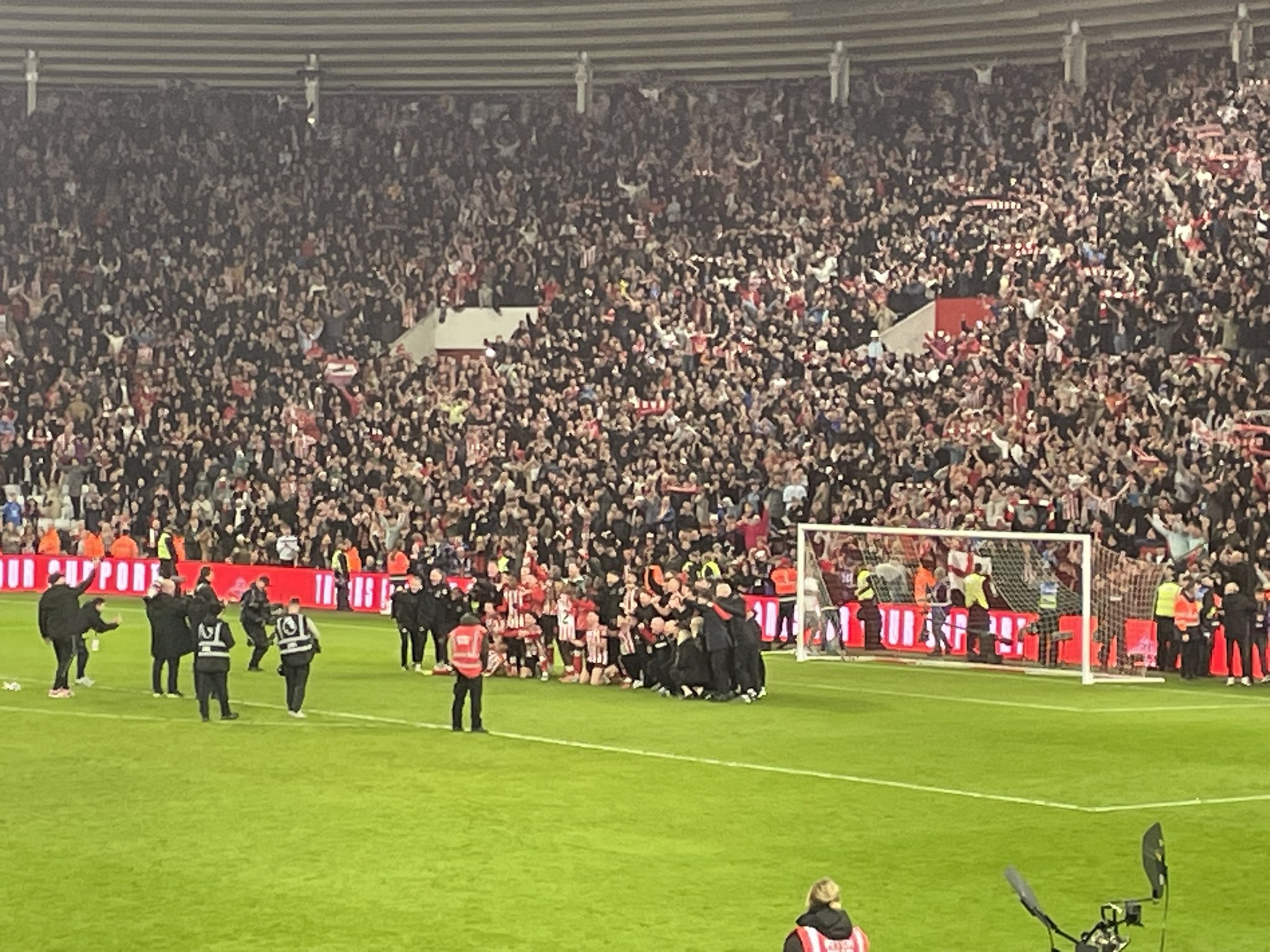
While own goals are often met with awkward silence, this one had the opposite effect: it unified the Sunderland faithful and set the stage for celebrations that would ripple through the stadium. The supporters, long deprived of this derby in the Premier League, erupted. Their collective voice became a force unto itself — rhythmic, passionate, uncompromising.
Fans Stun the Stadium of Light
What followed the decisive moment was not just a celebration of goals, but of chants, rhythms, and an atmosphere that even seasoned football writers have described in superlatives. Sunderland fans have long cultivated a distinctive vocal culture — one rooted in local pride and an unshakable belief in their club’s resilience. Today, that culture was christened at the highest level: a Sunderland chant was lauded across national and social media as “the best in England.” This was not mere hyperbole but rather the result of an extraordinary collective performance, where thousands of voices seamlessly interwove humour, defiance, and emotional intensity.
Video clips circulating immediately after full-time showed fans still chanting long after the final whistle, their voices undiminished, echoing around the concrete bowl of the Stadium of Light. Not even the final whistle could silence them — a testament both to their stamina and to how deeply this moment had resonated. The proclamation that the chant was “best in England” was made not just by partisan voices online, but by commentators and neutrals alike who recognised something unusually magnetic in Sunderland’s vocal supporters.
Implications for Both Clubs
From a purely sporting viewpoint, the result carries significance far beyond regional bragging rights. Sunderland’s victory lifts them solidly into the top half of the Premier League table — a remarkable achievement for a club recently promoted and one that historically has navigated football’s lower divisions. Their unbeaten home form at the Stadium of Light this season has become a defining feature of their campaign.
For Newcastle United, the defeat raises questions about consistency, tactical adaptability, and psychological readiness in high-pressure fixtures. Their squad, filled with high-profile talents and significant financial investment, will undoubtedly reflect on a result where early defensive misfortune became decisive.
Yet, the broader narrative remains one of community, identity, and emotional power. Football in England thrives when it holds both competition and culture. This match — its setting, its result, and especially the overwhelming support — exemplified this uniquely English phenomenon: an ancient rivalry renewed, not with violence or rancour, but with singing, celebration, and collective euphoria.
Conclusion: A Match Remembered for More Than Sport
The first Premier League Tyne–Wear derby in nearly a decade will not be remembered merely as a 1-0 victory on the scoresheet. It will be etched into collective memory for the seismic vocal performance that accompanied it — a Sunderland chant that captivated England, a stadium that shook with unified song, and a triumph that will resonate in the folklore of both clubs.
The significance of this match transcends goals, tables, and statistics. It speaks to the profound role football plays in cultural identity, community cohesion, and emotional expression. In that sense, Sunderland’s supporters did not just watch history: they helped write it.





Post Comment